 English▼



- Battery Manufacturing Equipment
- Battery Laboratory Assembly Equipment
- Battery Pack Assembly Equipment
- Sodium Ion Battery Manufacturing Equipment
- Solid State Cell Production Line
- Dry Electrode Assembly Equipment
- Supercapacitor Assembly Equipment
- Perovskite Solar Cell Lab Equipment
- Li ion Battery Materials
- Ni / Al / Cu Metal Foam
- Customized Electrode
- Cathode Active Materials
- Anode Active Materials
- Coin Cell Parts
- Lithium Chip
- Cylindrical Cell Parts
- Battery Current Collectors
- Battery Conductive Materials
- Electrolyte
- Battery Binder
- Separator and Tape
- Aluminum Laminate Film
- Nickel Strip/Foil
- Battery Tabs
- Graphene Materials
- Cu / Al / Ni / Stainless steel Foil
- Battery Laboratory Equipment
- Li ion Battery Tester
- Battery Safety Tester
- Material Characterization Tester
- Rolling Press Machine
- Electrode Mixer
- Coin Cell Crimping Machine
- Coin Cell Electrode Disc Punching
- Pouch Cell Sealing Machine
- Pouch Cell Stacking Machine
- Pouch Cell Forming Machine
- Pouch Cell Ultrasonic Welder
- Pouch Cell Electrode Die Cutter
- Cylinder Cell Sealing Machine
- Cylinder Cell Grooving Machine
- Electrode Slitting Machine
- Cylinder Cell Winding Machine
- Cylinder Cell Spot Welding Machine
- Electrolyte Filling
- Type Test Cell
- Other Battery Making Machine
- NMP Solvent Treatment System
- Vacuum Glove Box
- Coating Machine
- Lab Furnaces
- Ball Mill
- Laboratory Press
- Laboratory Equipment
- Press Equipment
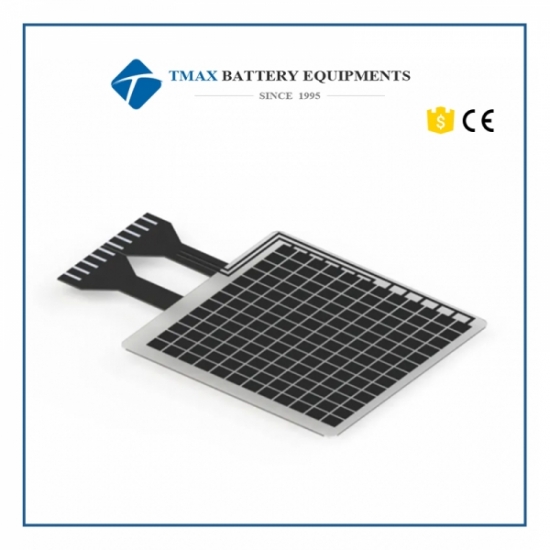
Battery Pressure Distribution Sensor Measure System
Model Number:
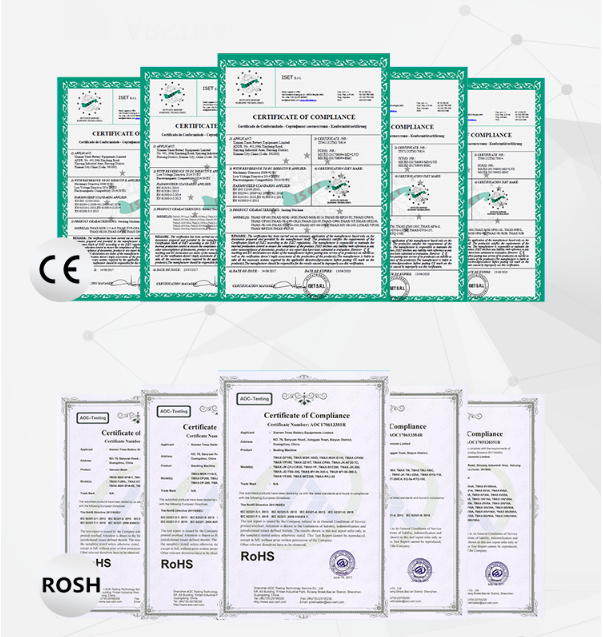
TMAX-BPD1000Compliance:
CE certificateWarranty:
Two Year Limited Warranty With Lifetime SupportPlace of Origin:
ChinaPayment:
T/T, Credit Card, Paypal, LC, Western UnionDelivery Time:
3 Days
Battery Pressure Distribution Sensor Measure System
Introduction
TMAX-BPD is used to quantitatively characterize the difference in stress distribution at different positions on the surface of the battery cell, and evaluate the performance of the battery cell.
Characteristic
1. Use expansion force test fixture or in-situ expansion test equipment to characterize the stress distribution at different positions on the surface of the battery cell during the cycle process;
2. Real-time display of force-time curve
3. Real-time synchronization of charge & discharge data
4. One click test data export
5. Quickly and quantitatively evaluate the surface flatness of the battery cell.
Applications
Expansion force distribution evaluation for soft cases, hard cases, modules, etc.
Description
1. Background
As a common electric energy storage device, lithium-ion battery (LIB) has the advantages of high energy density high specific power, high output voltage, small self-discharge, long service life, etc.which is widely used in electric vehicles, electronic products and other fields. On the one hand, during the manufacturing process of the LIB, the internal stress distrbution or the surtace thickness distribution wll be uneven because the process environment cannot be completely consistent; on the other hand, in the electrochemical cycle process, intercalation and deintercalation of li-ions will lead to the volume expansion and contraction, However, the uneven current density or temperature distribution inside the LIB, wi. lead to the uneven distribution of the stress durina the expansion of the LIB. Thus, the quantitative characterization of the stress distribution on the surface of LIB can provide a deeper perspective for the battery stress analysis, assist technicians to analyze the battery stress distribution, explore the causes of the failure of the LIB, and develop a safer and more reliable LIB.
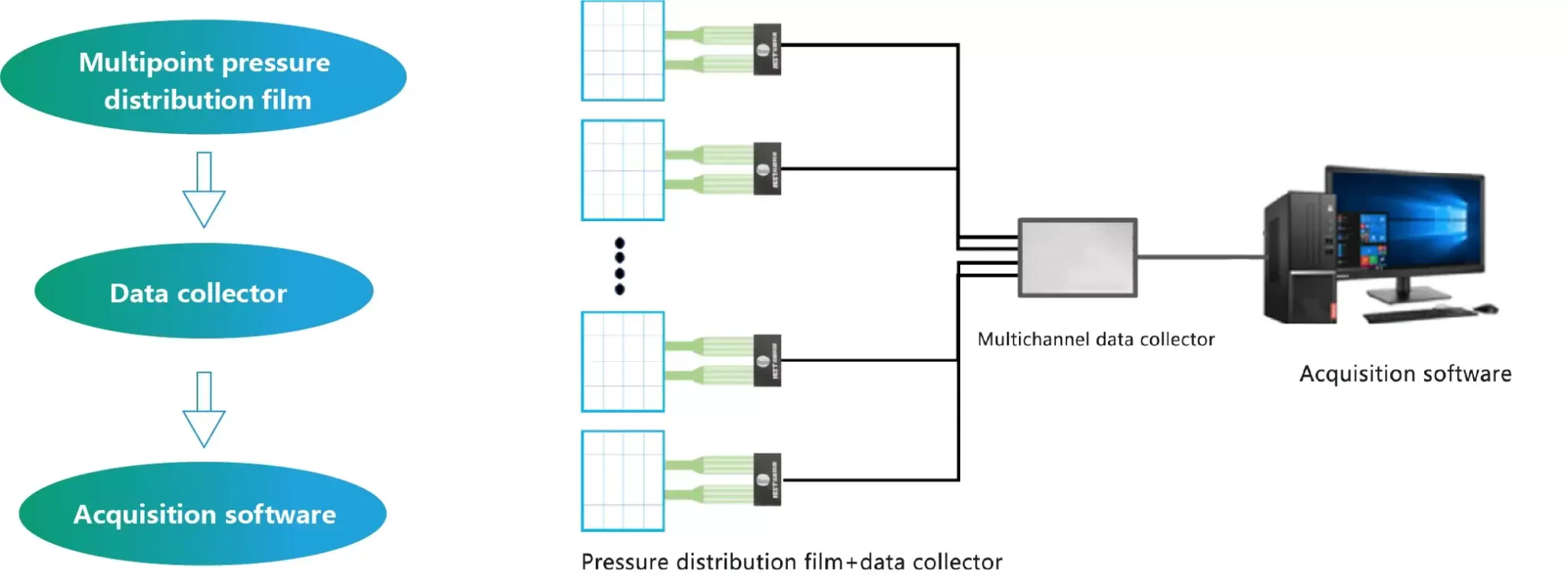
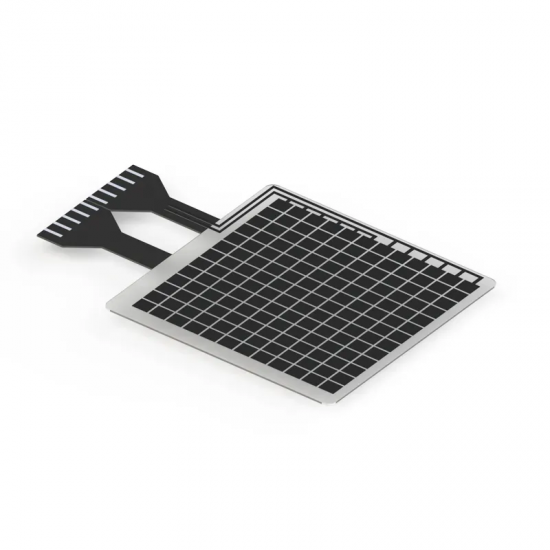
2. Introduction of Pressure Distribution Measure System
Structural composition:
3. Features
1) Display the resultant force curve of eachdetection unit in real time;
2) Select the pressure distribution diagramaccording to the user's actual used area;
3) Synchronize the charging and discharging datain real time;
4) One-click to export the data report;
5) Real-time calibration of pressure (combinedwith in-situ expansion equipment).
Application Cases
1. With the expansion force test fixture or in-situ expansion test equipment, the stress distribution at different positions on the surface of the cell during the cycling process is characterized.
2. Quickly and quantitatively evaluate the surface flatnessof the cell.
Case 1. Test of stress distribution on the surface of the cell during the cycle
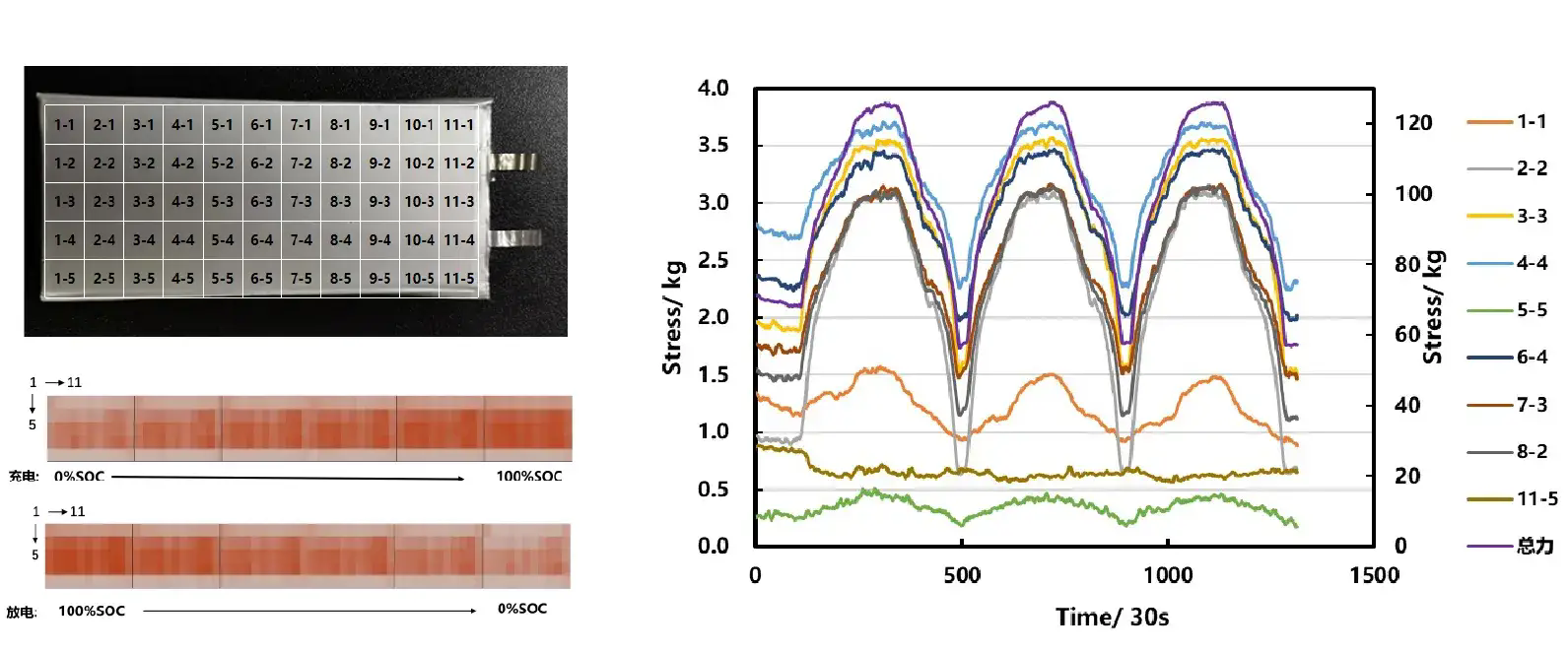
Test information: NCM-Graphite system,3~4.3V, 0.5C, 50kg preload;
Result analysis: It can quantitatively characterize the difference of stress distribution on the surface of the cell, provide a deeper perspective for the stress analysis of the cell, and help technicians analyze the stress distribution in the cell, explore the causes of failure of the cell and develop a safer and more reliable cell.
Case 2. Surface flatness test of fresh cell
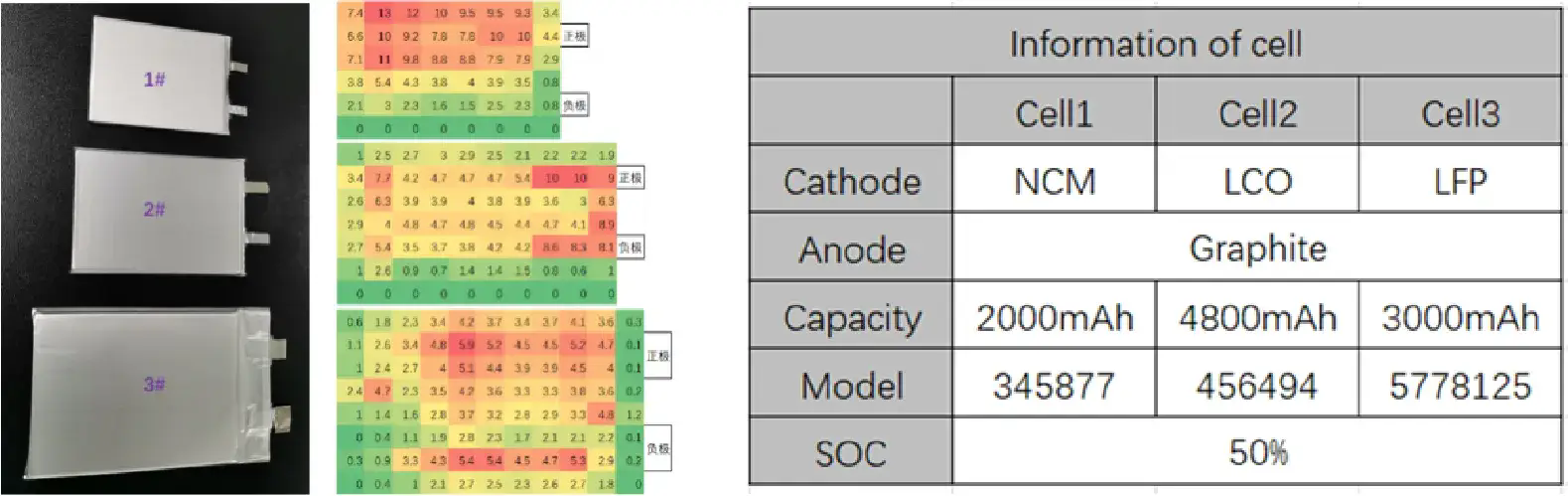
Result analysis: there is a certain correlation between the cell process design and the cell pressure distribution(flatness). Technicians can develop appropriate distribution standards through the pressure distribution system to monitor the batch stability of the delivered cells.
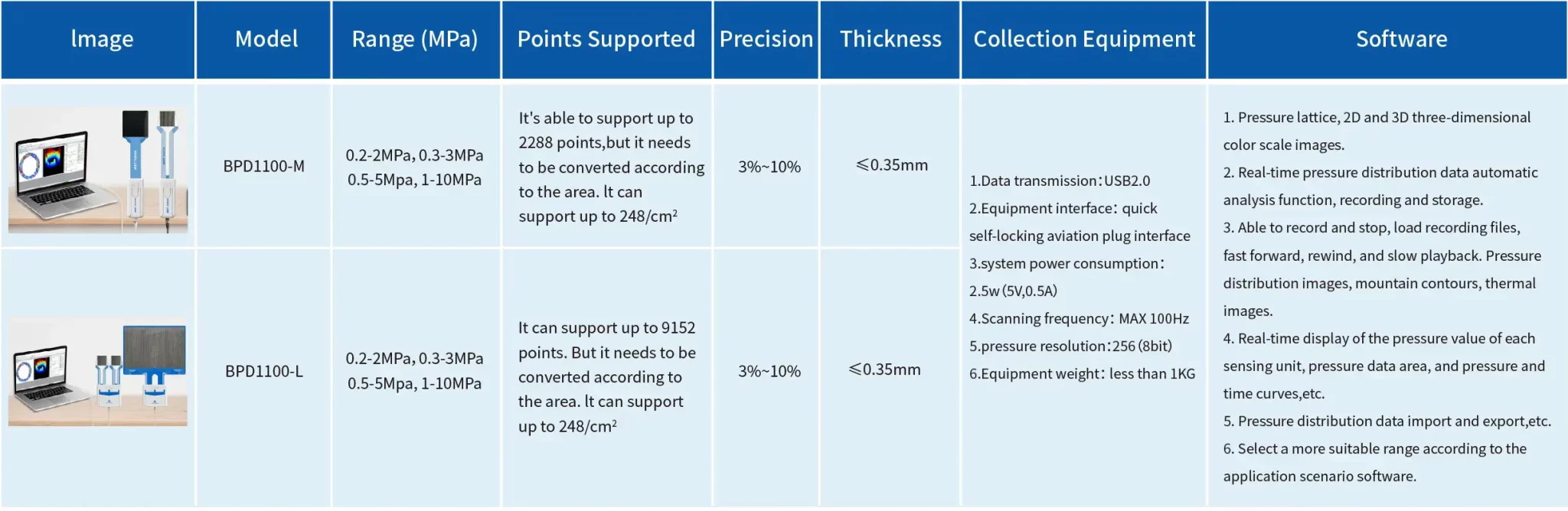
Specifications




 David@battery-equipments.com

