 English▼



- Battery Manufacturing Equipment
- Battery Laboratory Assembly Equipment
- Battery Pack Assembly Equipment
- Sodium Ion Battery Manufacturing Equipment
- Solid State Cell Production Line
- Dry Electrode Assembly Equipment
- Supercapacitor Assembly Equipment
- Perovskite Solar Cell Lab Equipment
- Li ion Battery Materials
- Ni / Al / Cu Metal Foam
- Customized Electrode
- Cathode Active Materials
- Anode Active Materials
- Coin Cell Parts
- Lithium Chip
- Cylindrical Cell Parts
- Battery Current Collectors
- Battery Conductive Materials
- Electrolyte
- Battery Binder
- Separator and Tape
- Aluminum Laminate Film
- Nickel Strip/Foil
- Battery Tabs
- Graphene Materials
- Cu / Al / Ni / Stainless steel Foil
- Battery Laboratory Equipment
- Li ion Battery Tester
- Battery Safety Tester
- Material Characterization Tester
- Rolling Press Machine
- Electrode Mixer
- Coin Cell Crimping Machine
- Coin Cell Electrode Disc Punching
- Pouch Cell Sealing Machine
- Pouch Cell Stacking Machine
- Pouch Cell Forming Machine
- Pouch Cell Ultrasonic Welder
- Pouch Cell Electrode Die Cutter
- Cylinder Cell Sealing Machine
- Cylinder Cell Grooving Machine
- Electrode Slitting Machine
- Cylinder Cell Winding Machine
- Cylinder Cell Spot Welding Machine
- Electrolyte Filling
- Type Test Cell
- Other Battery Making Machine
- NMP Solvent Treatment System
- Vacuum Glove Box
- Coating Machine
- Lab Furnaces
- Ball Mill
- Laboratory Press
- Laboratory Equipment
- Press Equipment
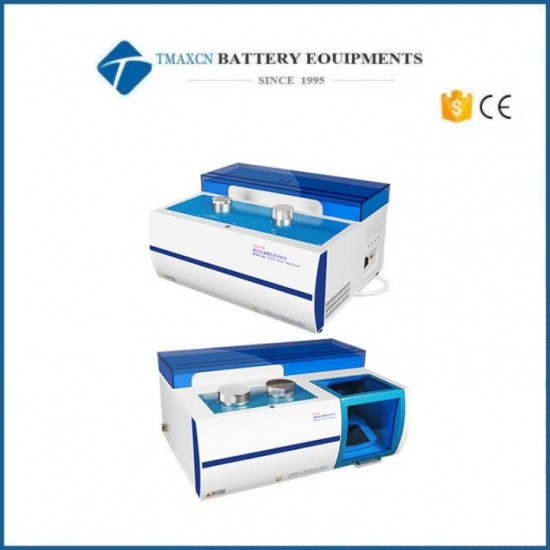
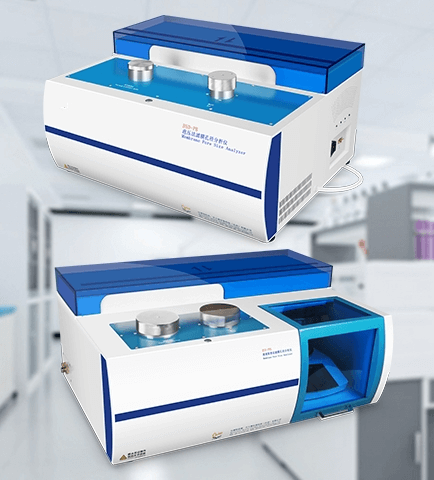
Lab High-precision Membrane Aperture Analyzer Used for Wet And Dry Curve
Model Number:
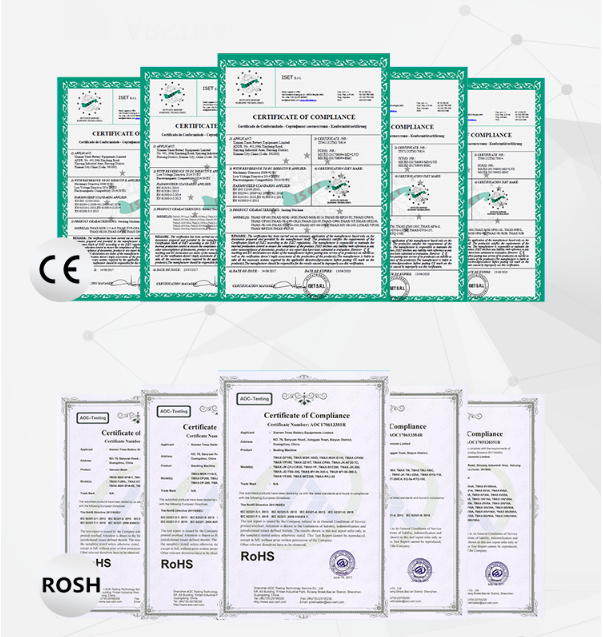
TMAX-BSD-PBLCompliance:
CE certificateWarranty:
Two Year Limited Warranty With Lifetime SupportPayment:
T/T, Credit Card, Paypal, LC, Western UnionDelivery Time:
3 Days
Lab High-precision Membrane Aperture Analyzer Used for Wet And Dry Curve
Product description:
a. Bubble stress
b. Wet film flow-pressure curve (wet curve)
c. Pores of bubble points (maximum aperture)
d. Dry membrane flow-curve (dry curve)
e. Minimum pore
f. Gas penetration
g. Average pore
h. Gas flux
i. How many pores
j. Complete evaluation
k. Pore distribution
l. Fiber membrane rupture pressure
m. Liquid penetration (liquid method function)
n. Liquid flux (liquid method function)
Test Principle Main Function
|
|
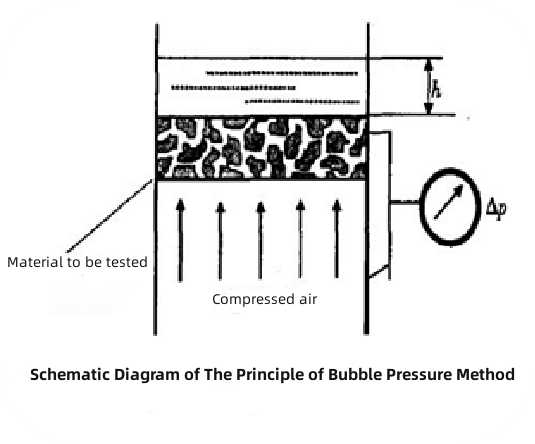
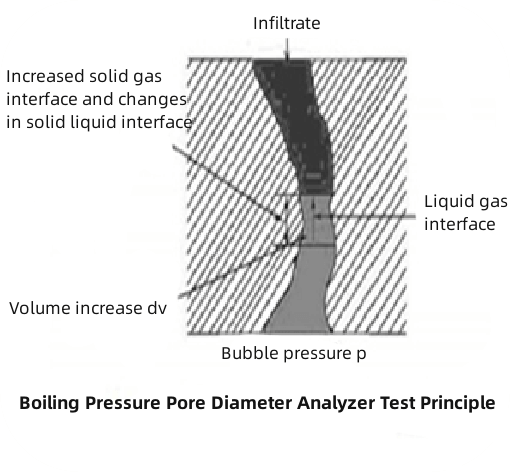
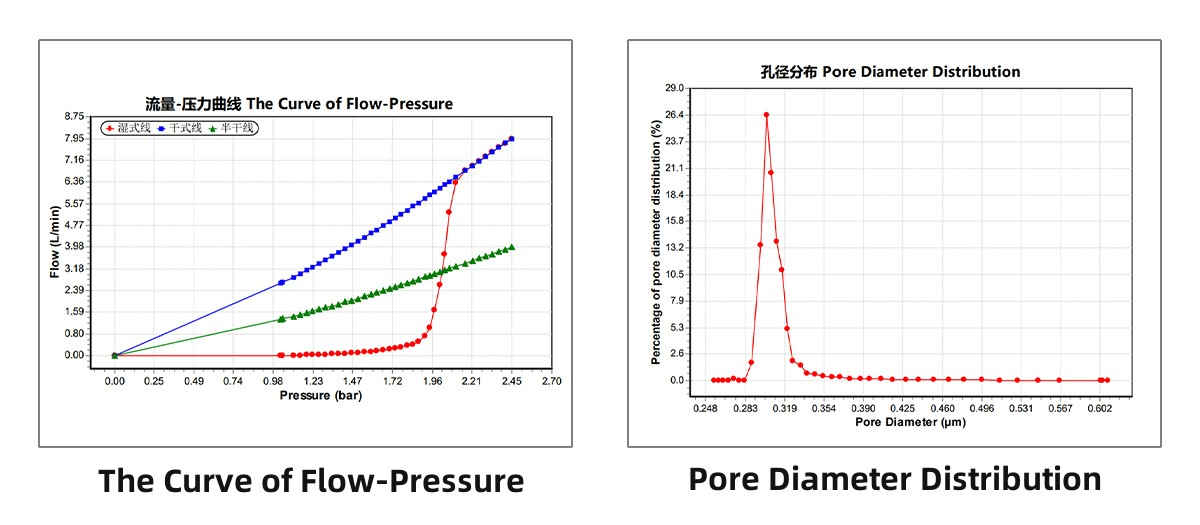
Gas -liquid discharge (bubble pressure method): apply pressure difference to the sides of the membrane, overcome the surface tension of the infiltration liquid in the membrane hole, and drive the infiltration fluid through the tunnel, obtain the pores of the pore throat of the membrane material according to this. At the same time, this method is also the standard method of ASTM thin film measurement. |
|
Example: Take a certain membrane material as an example, the membrane is fully wet with the liquid that can be infiltrated with it. Due to the existence of the surface tension, the infiltration liquid will be bound in the pores of the membrane. The side of the membrane gradually increases the gas pressure. When the pressure of the surface tension of the infiltration liquid greater than the infiltration liquid in a pore diameter is reached, the infiltration liquid in the aperture will be introduced by the gas. Because the smaller the aperture, the higher the pressure of the surface tension, the higher the gas pressure required to launch the infiltration solution. Similarly, it can be seen that the infiltration liquid in the pores with the largest pore diameter will first be launched, causing the gas to pass through, and then as the pressure rises, the pore diameter is introduced from large to small, and the infiltration solution in the pores will be introduced in turn, causing the gas to via through the gases through , Until all the holes are opened, reaching the same rate as the dry membrane. |
|
|
|
Liquid Drive Method: After infiltrating the filter material to be tested with the infiltration liquid that is completely infiltrated, the liquid that is insoluble with the infiltration liquid is used as the driver, and the infiltration liquid is driven out of the pores. Pressure data, obtain the pore data of the filter according to the Washburn formula. Because the interface tension of the liquid is far less than the qi liquid interface tension, Therefore, compared to the gas solution driving method (bubble pressure method), the liquid driving method can test the smaller pore diameter filter material. |
|
The relationship between the aperture and pressure is like Washburn formula: D = 4 γcosθ/p In the formula: d = pore diameter; γ = liquid surface tension; θ = contact angle; P = pressure difference |
|
|
Percent of the flow distribution of the aperture: F (d) = -d [fw/fd) x100]/dd In the formula: FW = Wet sample traffic; FD = dry sample flow |
Scope of application

Filtering membrane, fiber film, filter element, battery diaphragm, fabric, non -woven, paper, ceramic, sintering metal, rock, concrete and other pores such as the hole throat test.
Test function
a. Bubble stress
b. Wet film flow-pressure curve (wet curve)
c. Pores of bubble points (maximum aperture)
d. Dry membrane flow-曲 线 curve (dry curve)
e. Minimum pore
f. Gas penetration
g. Average pore
h. Gas flux
i. How many pores
j. Complete evaluation
k. Pore distribution
l. Fiber membrane rupture pressure
m. Liquid penetration (liquid method function)
n. Liquid flux (liquid method function)
Instrument standard
|
GB/T 32361-2015 |
Separate membrane aperture test method Bubble point and average flow method |
|
ASTM D6767-02 |
Use the fawn tube to determine the feature method |
|
ASTM F316-03 |
Test the test method of the hole size characteristics of the membrane filter through the foam point and average liquidity hole test |
|
ASTM E1288-99 ASTM C-522 ASTM D-726 ASTM D-6539 |
Measuring the gas through the sample through the sample |
|
ASTME1294-89 (1999) |
Test method for testing the aperture characteristics of the film filter with automatic liquid perforated meter meter |
|
BS 7591 -4 : 1993 |
The pore degree and pore size of the material. Part 4-Water Removal Evaluation Method |
|
BS 3321-1986 |
Equivalent pore measurement method of fabric (bubble pressure test) |
|
BS EN240003: 1993 |
Pilling sintering metal material. Testing of porosity in the porosity of the bubble test |
|
HY/T 051-1999 |
Test method of hollow fiber microre filter membrane (in the compilation of membrane technical standards) |
|
HY/T 064-2002 |
Tube ceramic micropores test method (in the compilation of film technology standards) |
|
HY/T20061-2002 |
Hollow fiber micro filter membrane component |
|
GB/T 14041.1-2007 |
Verification of the integrity of the hydraulic transmission filter element and the determination of the initial bubbling point |
|
GB/T 24219-2009 |
Measurement of the woven filter cloth foaming point aperture |
|
GB-T2679.14-1996 |
Measurement of the maximum pores of filter paper and cardboard |
|
ISO 2942-2004 |
Hydraulic transmission-filter element-structural integrity test and first-bubble point measurement |
|
DIN ISO 4003-1990 |
Sonalized sintering metal; determine the size of the aperture with a bubble test |
|
DIN 58355-2-2005 |
Membrane filter. Part 2: Test of the Boom Point |
|
JISK 3832-1900 |
Foaming point test method of membrane filter |
Technical parameter
a. Scope of the aperture: 0.02-500um (gas liquid method); 5-500nm (liquid liquid method)
b. The design of a variety of sample pools for different sizes, special samples can be designed separately;
c. It has a fully automatic vacuum -mourning device, which can greatly accelerate the infiltration time and improve the test efficiency of more than 50%;
d. According to different samples to be tested, a variety of invasive liquids are optional (special infiltration liquid POROFIL or other invasive liquids);
e. High -precision dual traffic sensor, segment measurement of flow, complementary range, automatic switching;
f. High -precision dual pressure sensor, segmented pressure test, program automatic judgment, automatic switching;
g. Full stainless steel pipeline, metal densely seal, good sealing, high pressure resistance, and corrosion resistance;
h. Automatization and intelligent operation throughout the process, no need to be manual, affinity live voice operation prompts;
i. The detailed instrument runs log display and records, which can be accurate to seconds. The full experimental record can be traced back
Data report


 David@battery-equipments.com

