 English▼



- Battery Manufacturing Equipment
- Battery Laboratory Assembly Equipment
- Battery Pack Assembly Equipment
- Sodium Ion Battery Manufacturing Equipment
- Solid State Cell Production Line
- Dry Electrode Assembly Equipment
- Supercapacitor Assembly Equipment
- Perovskite Solar Cell Lab Equipment
- Li ion Battery Materials
- Ni / Al / Cu Metal Foam
- Customized Electrode
- Cathode Active Materials
- Anode Active Materials
- Coin Cell Parts
- Lithium Chip
- Cylindrical Cell Parts
- Battery Current Collectors
- Battery Conductive Materials
- Electrolyte
- Battery Binder
- Separator and Tape
- Aluminum Laminate Film
- Nickel Strip/Foil
- Battery Tabs
- Graphene Materials
- Cu / Al / Ni / Stainless steel Foil
- Battery Laboratory Equipment
- Li ion Battery Tester
- Battery Safety Tester
- Material Characterization Tester
- Rolling Press Machine
- Electrode Mixer
- Coin Cell Crimping Machine
- Coin Cell Electrode Disc Punching
- Pouch Cell Sealing Machine
- Pouch Cell Stacking Machine
- Pouch Cell Forming Machine
- Pouch Cell Ultrasonic Welder
- Pouch Cell Electrode Die Cutter
- Cylinder Cell Sealing Machine
- Cylinder Cell Grooving Machine
- Electrode Slitting Machine
- Cylinder Cell Winding Machine
- Cylinder Cell Spot Welding Machine
- Electrolyte Filling
- Type Test Cell
- Other Battery Making Machine
- NMP Solvent Treatment System
- Vacuum Glove Box
- Coating Machine
- Lab Furnaces
- Ball Mill
- Laboratory Press
- Laboratory Equipment
- Press Equipment
blog
High Energy Ball Milling
High Energy Ball Milling: Advanced Mechanical Equipment for Material Processing
Overview
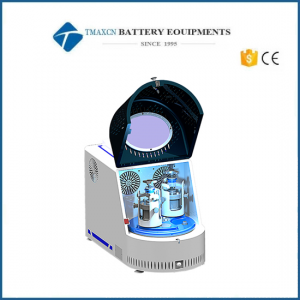
High energy ball milling is a sophisticated mechanical process and equipment system widely used for the production of fine powders, nanomaterials, and advanced composite materials. Unlike conventional milling methods, high energy ball milling involves the use of high-speed rotating or oscillating milling systems that generate intense impact, shear, and friction forces. These forces enable repeated deformation, fracture, and cold welding of particles, leading to significant refinement of grain size and structural transformation.
The equipment typically consists of a sealed milling chamber, grinding media (such as steel or ceramic balls), and a high-speed drive system. It is extensively applied in materials science, metallurgy, ceramics, and energy-related industries, where precise control over particle size and microstructure is essential.
Key Features
High energy ball milling equipment is distinguished by several advanced features that enhance its performance and versatility:
1. High Impact Energy
The equipment operates at high rotational or vibrational speeds, generating substantial kinetic energy. This allows efficient particle size reduction down to the nanometer scale.
2. Closed System Operation
Milling is typically performed in sealed containers, which can be filled with inert gases such as argon to prevent oxidation or contamination of sensitive materials.
3. Versatile Material Processing
The system can process a wide range of materials, including metals, alloys, ceramics, polymers, and composites.
4. Controlled Environment
Parameters such as milling speed, time, ball-to-powder ratio, and atmosphere can be precisely adjusted to achieve desired material properties.
5. Scalability
Equipment is available in laboratory-scale units for research and pilot-scale or industrial systems for mass production.
Processing Mechanism
The high energy ball milling process involves complex physical and mechanical interactions:
1. Particle Deformation
Under repeated impacts, particles undergo plastic deformation, leading to flattening and work hardening.
2. Cold Welding
Ductile particles may stick together due to high pressure and temperature at impact points, forming larger agglomerates.
3. Fracture and Refinement
Continued impacts cause brittle fracture of particles, reducing their size and creating new surfaces.
4. Dynamic Equilibrium
A balance between cold welding and fracture eventually results in a steady-state particle size distribution.
5. Phase Transformation
In some cases, the process induces solid-state reactions, alloying, or amorphization, enabling the synthesis of novel materials.
Process Workflow
A typical high energy ball milling operation includes the following steps:
1. Material Loading
Raw powders and milling media are loaded into the milling chamber according to a specified ball-to-powder ratio.
2. Atmosphere Control
The chamber is sealed and purged with inert gas if required to avoid oxidation.
3. Milling Operation
The machine is operated at predetermined speed and duration. Energy transfer occurs through collisions between balls and powders.
4. Cooling and Monitoring
Temperature is monitored to prevent overheating, which could alter material properties.
5. Powder Collection
After milling, the processed powder is collected and may undergo further treatment such as sieving or heat treatment.
High energy ball milling equipment is widely used in various advanced industries:
1. Nanomaterial Synthesis
It is one of the most effective methods for producing nanoparticles and nanocrystalline materials with controlled grain sizes.
2. Mechanical Alloying
The process enables the formation of alloys that are difficult or impossible to produce by conventional melting techniques.
3. Battery Materials
High energy ball milling is used to prepare electrode materials for lithium-ion and solid-state batteries, improving electrochemical performance.
4. Catalysts and Functional Materials
It enhances surface area and reactivity, making it suitable for catalyst preparation and functional material development.
5. Powder Metallurgy
The equipment is essential for producing uniform powders used in sintering and advanced manufacturing processes.
Advantages
High energy ball milling offers several key advantages compared to traditional material processing methods:
1. Ultra-Fine Particle Production
Capable of achieving nanometer-scale particle sizes with high uniformity.
2. Enhanced Material Properties
Improved mechanical strength, hardness, and chemical reactivity due to refined microstructure.
3. Versatility and Flexibility
Suitable for a wide range of materials and applications.
4. Solid-State Processing
Eliminates the need for high-temperature melting, reducing energy consumption and avoiding contamination.
5. Cost-Effectiveness
Relatively simple equipment design and operation make it an economical solution for both research and industrial use.
Conclusion
High energy ball milling represents a powerful and versatile technology in modern material processing. Its ability to produce ultrafine powders, induce phase transformations, and enable mechanical alloying makes it indispensable in advanced manufacturing and research. As demand for high-performance materials continues to grow, especially in energy storage, electronics, and nanotechnology, high energy ball milling equipment will play an increasingly critical role. Future developments are expected to focus on improved energy efficiency, process control, and scalability, further enhancing its industrial applicability and contribution to technological innovation.
- 2026-06-23
Xiamen Tmax Battery Equipments Limited was set up as a manufacturer in 1995, dealing with lithium battery equipments, technology, etc. We have total manufacturing facilities of around 200000 square foot and more than 230 staff. Owning a group of experie-nced engineers and staffs, we can bring you not only reliable products and technology, but also excellent services and real value you will expect and enjoy.
High Energy Ball Milling: Advanced Mechanical Equipment for Material Processing
Overview
High energy ball milling is a sophisticated mechanical process and equipment system widely used for the production of fine powders, nanomaterials, and advanced composite materials. Unlike conventional milling methods, high energy ball milling involves the use of high-speed rotating or oscillating milling systems that generate intense impact, shear, and friction forces. These forces enable repeated deformation, fracture, and cold welding of particles, leading to significant refinement of grain size and structural transformation.
The equipment typically consists of a sealed milling chamber, grinding media (such as steel or ceramic balls), and a high-speed drive system. It is extensively applied in materials science, metallurgy, ceramics, and energy-related industries, where precise control over particle size and microstructure is essential.
Key Features
High energy ball milling equipment is distinguished by several advanced features that enhance its performance and versatility:
1. High Impact Energy
The equipment operates at high rotational or vibrational speeds, generating substantial kinetic energy. This allows efficient particle size reduction down to the nanometer scale.
2. Closed System Operation
Milling is typically performed in sealed containers, which can be filled with inert gases such as argon to prevent oxidation or contamination of sensitive materials.
3. Versatile Material Processing
The system can process a wide range of materials, including metals, alloys, ceramics, polymers, and composites.
4. Controlled Environment
Parameters such as milling speed, time, ball-to-powder ratio, and atmosphere can be precisely adjusted to achieve desired material properties.
5. Scalability
Equipment is available in laboratory-scale units for research and pilot-scale or industrial systems for mass production.
Processing Mechanism
The high energy ball milling process involves complex physical and mechanical interactions:
1. Particle Deformation
Under repeated impacts, particles undergo plastic deformation, leading to flattening and work hardening.
2. Cold Welding
Ductile particles may stick together due to high pressure and temperature at impact points, forming larger agglomerates.
3. Fracture and Refinement
Continued impacts cause brittle fracture of particles, reducing their size and creating new surfaces.
4. Dynamic Equilibrium
A balance between cold welding and fracture eventually results in a steady-state particle size distribution.
5. Phase Transformation
In some cases, the process induces solid-state reactions, alloying, or amorphization, enabling the synthesis of novel materials.
Process Workflow
A typical high energy ball milling operation includes the following steps:
1. Material Loading
Raw powders and milling media are loaded into the milling chamber according to a specified ball-to-powder ratio.
2. Atmosphere Control
The chamber is sealed and purged with inert gas if required to avoid oxidation.
3. Milling Operation
The machine is operated at predetermined speed and duration. Energy transfer occurs through collisions between balls and powders.
4. Cooling and Monitoring
Temperature is monitored to prevent overheating, which could alter material properties.
5. Powder Collection
After milling, the processed powder is collected and may undergo further treatment such as sieving or heat treatment.
High energy ball milling equipment is widely used in various advanced industries:
1. Nanomaterial Synthesis
It is one of the most effective methods for producing nanoparticles and nanocrystalline materials with controlled grain sizes.
2. Mechanical Alloying
The process enables the formation of alloys that are difficult or impossible to produce by conventional melting techniques.
3. Battery Materials
High energy ball milling is used to prepare electrode materials for lithium-ion and solid-state batteries, improving electrochemical performance.
4. Catalysts and Functional Materials
It enhances surface area and reactivity, making it suitable for catalyst preparation and functional material development.
5. Powder Metallurgy
The equipment is essential for producing uniform powders used in sintering and advanced manufacturing processes.
Advantages
High energy ball milling offers several key advantages compared to traditional material processing methods:
1. Ultra-Fine Particle Production
Capable of achieving nanometer-scale particle sizes with high uniformity.
2. Enhanced Material Properties
Improved mechanical strength, hardness, and chemical reactivity due to refined microstructure.
3. Versatility and Flexibility
Suitable for a wide range of materials and applications.
4. Solid-State Processing
Eliminates the need for high-temperature melting, reducing energy consumption and avoiding contamination.
5. Cost-Effectiveness
Relatively simple equipment design and operation make it an economical solution for both research and industrial use.
Conclusion
High energy ball milling represents a powerful and versatile technology in modern material processing. Its ability to produce ultrafine powders, induce phase transformations, and enable mechanical alloying makes it indispensable in advanced manufacturing and research. As demand for high-performance materials continues to grow, especially in energy storage, electronics, and nanotechnology, high energy ball milling equipment will play an increasingly critical role. Future developments are expected to focus on improved energy efficiency, process control, and scalability, further enhancing its industrial applicability and contribution to technological innovation.
HOT PRODUCTS
-
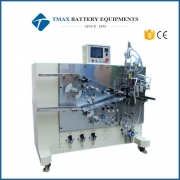 Automatic Cylinderical Battery Electrode Winding Machine
Read More
Automatic Cylinderical Battery Electrode Winding Machine
Read More
-
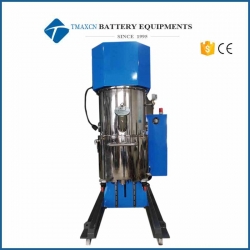 100-200L Double Planetary Vacuum Mixing Machine for Lithium Battery Slurry
Read More
100-200L Double Planetary Vacuum Mixing Machine for Lithium Battery Slurry
Read More
-
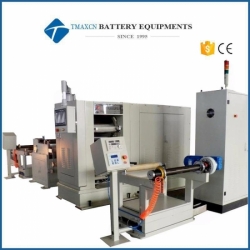 Large Heating Roller Press Machine Calender For Li ion Battery Production Line
Read More
Large Heating Roller Press Machine Calender For Li ion Battery Production Line
Read More
-
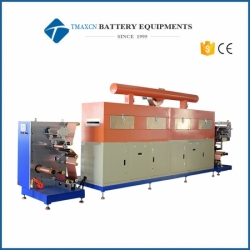 Large 3 Rollers Battery Electrode Film Intermittent Coating Machine for Pilot Production Line
Read More
Large 3 Rollers Battery Electrode Film Intermittent Coating Machine for Pilot Production Line
Read More
-
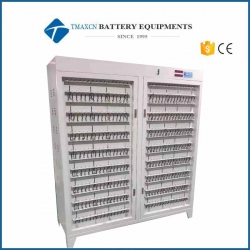 512 Channel 5V3A Battery Grading Machine/Battery Charge Discharge Machine Tester
Read More
512 Channel 5V3A Battery Grading Machine/Battery Charge Discharge Machine Tester
Read More
 David@battery-equipments.com

