 English▼



- Battery Manufacturing Equipment
- Battery Laboratory Assembly Equipment
- Battery Pack Assembly Equipment
- Sodium Ion Battery Manufacturing Equipment
- Solid State Cell Production Line
- Dry Electrode Assembly Equipment
- Supercapacitor Assembly Equipment
- Perovskite Solar Cell Lab Equipment
- Li ion Battery Materials
- Ni / Al / Cu Metal Foam
- Customized Electrode
- Cathode Active Materials
- Anode Active Materials
- Coin Cell Parts
- Lithium Chip
- Cylindrical Cell Parts
- Battery Current Collectors
- Battery Conductive Materials
- Electrolyte
- Battery Binder
- Separator and Tape
- Aluminum Laminate Film
- Nickel Strip/Foil
- Battery Tabs
- Graphene Materials
- Cu / Al / Ni / Stainless steel Foil
- Battery Laboratory Equipment
- Li ion Battery Tester
- Battery Safety Tester
- Material Characterization Tester
- Rolling Press Machine
- Electrode Mixer
- Coin Cell Crimping Machine
- Coin Cell Electrode Disc Punching
- Pouch Cell Sealing Machine
- Pouch Cell Stacking Machine
- Pouch Cell Forming Machine
- Pouch Cell Ultrasonic Welder
- Pouch Cell Electrode Die Cutter
- Cylinder Cell Sealing Machine
- Cylinder Cell Grooving Machine
- Electrode Slitting Machine
- Cylinder Cell Winding Machine
- Cylinder Cell Spot Welding Machine
- Electrolyte Filling
- Type Test Cell
- Other Battery Making Machine
- NMP Solvent Treatment System
- Vacuum Glove Box
- Coating Machine
- Lab Furnaces
- Ball Mill
- Laboratory Press
- Laboratory Equipment
- Press Equipment
blog
Planetary Ball Mills
- 2026-05-08
Xiamen Tmax Battery Equipments Limited was set up as a manufacturer in 1995, dealing with lithium battery equipments, technology, etc. We have total manufacturing facilities of around 200000 square foot and more than 230 staff. Owning a group of experie-nced engineers and staffs, we can bring you not only reliable products and technology, but also excellent services and real value you will expect and enjoy.
Overview
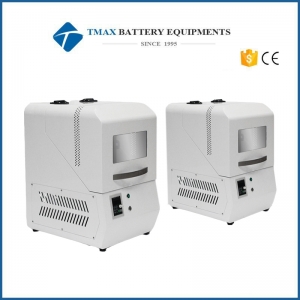
Planetary ball mills are high-energy mechanical devices widely used for fine grinding, mixing, and mechanical alloying of materials. Their name derives from the unique kinematic motion in which grinding jars rotate on their own axes while simultaneously revolving around a central axis, similar to the motion of planets. This dual-motion mechanism generates significant centrifugal forces and impact energy, enabling the efficient size reduction of particles down to the micro- and nanometer scale. Due to their capability to produce highly uniform and fine powders, planetary ball mills have become indispensable in materials science, nanotechnology, chemistry, and industrial manufacturing.
Features
Planetary ball mills possess several distinctive features that contribute to their superior performance:
1. High Energy Density: The combination of rotational and revolutionary motion creates intense impact and friction forces, leading to rapid particle size reduction.
2. Fine Grinding Capability: These mills can achieve particle sizes in the submicron or even nanometer range, making them suitable for advanced material preparation.
3. Versatile Material Compatibility: Planetary ball mills can process a wide range of materials, including metals, ceramics, polymers, and composites.
4. Adjustable Parameters: Users can control rotational speed, grinding time, ball-to-powder ratio, and direction of rotation to optimize the milling process.
5. Multiple Grinding Stations: Typically equipped with several jars, allowing simultaneous processing of multiple samples under identical conditions.
Process
The operation of planetary ball mills involves several well-defined steps to ensure efficient grinding and mixing:
1. Material Loading: The sample material is placed into grinding jars along with grinding media (balls) made of materials such as stainless steel, zirconia, or tungsten carbide.
2. Parameter Configuration: Key parameters such as rotation speed, milling duration, and ball-to-powder ratio are set based on the desired outcome and material characteristics.
3. Milling Phase: During operation, the jars rotate around their own axes while revolving around the central axis. This motion generates high-energy collisions between the grinding balls and the material, resulting in particle fracture and size reduction.
4. Cooling and Intervals: For heat-sensitive materials, intermittent milling or cooling systems may be employed to prevent overheating.
5. Sample Collection: After milling, the fine powder is collected and may undergo further processing such as sieving, classification, or characterization.
Planetary ball mills are used in a wide range of scientific and industrial applications:
1. Nanomaterial Synthesis: Widely used to produce nanoparticles and nanocomposites with controlled size and morphology.
2. Mechanical Alloying: Enables the formation of new alloys and metastable phases through repeated cold welding and fracturing.
3. Ceramic Processing: Facilitates the preparation of fine ceramic powders for sintering and advanced structural applications.
4. Pharmaceutical Industry: Used for particle size reduction and homogenization of active pharmaceutical ingredients (APIs).
5. Battery Materials: Essential for preparing electrode materials in lithium-ion and solid-state batteries, ensuring uniform mixing and improved electrochemical performance.
6. Geology and Mineralogy: Employed for grinding geological samples to fine powders for analysis.
Advantages
Planetary ball mills offer several advantages compared to conventional milling equipment:
1. High Efficiency: The intense mechanical forces enable rapid and effective grinding, reducing processing time.
2. Ultra-Fine Particle Production: Capable of achieving extremely fine particle sizes that are difficult to obtain with other methods.
3. Reproducibility: Precise control of operational parameters ensures consistent and repeatable results.
4. Compact Design: Despite their high performance, planetary ball mills are relatively compact and suitable for laboratory environments.
5. Versatility: Suitable for a wide range of materials and applications, from research to industrial production.
6. Scalability: Processes developed on a laboratory scale can often be adapted for larger-scale production.
Conclusion
Planetary ball mills represent a powerful and versatile tool in modern material processing. Their unique dual-motion mechanism enables the generation of high-energy impacts, facilitating efficient grinding, mixing, and mechanical alloying. With applications spanning nanotechnology, ceramics, pharmaceuticals, and energy storage, these mills play a crucial role in advancing both scientific research and industrial production. Their advantages in terms of efficiency, precision, and versatility make them a preferred choice for producing high-quality fine powders. As technology continues to evolve, further improvements in planetary ball mill design and automation are expected to enhance their performance and broaden their application scope, solidifying their importance in advanced materials engineering.
Overview
Planetary ball mills are high-energy mechanical devices widely used for fine grinding, mixing, and mechanical alloying of materials. Their name derives from the unique kinematic motion in which grinding jars rotate on their own axes while simultaneously revolving around a central axis, similar to the motion of planets. This dual-motion mechanism generates significant centrifugal forces and impact energy, enabling the efficient size reduction of particles down to the micro- and nanometer scale. Due to their capability to produce highly uniform and fine powders, planetary ball mills have become indispensable in materials science, nanotechnology, chemistry, and industrial manufacturing.
Features
Planetary ball mills possess several distinctive features that contribute to their superior performance:
1. High Energy Density: The combination of rotational and revolutionary motion creates intense impact and friction forces, leading to rapid particle size reduction.
2. Fine Grinding Capability: These mills can achieve particle sizes in the submicron or even nanometer range, making them suitable for advanced material preparation.
3. Versatile Material Compatibility: Planetary ball mills can process a wide range of materials, including metals, ceramics, polymers, and composites.
4. Adjustable Parameters: Users can control rotational speed, grinding time, ball-to-powder ratio, and direction of rotation to optimize the milling process.
5. Multiple Grinding Stations: Typically equipped with several jars, allowing simultaneous processing of multiple samples under identical conditions.
Process
The operation of planetary ball mills involves several well-defined steps to ensure efficient grinding and mixing:
1. Material Loading: The sample material is placed into grinding jars along with grinding media (balls) made of materials such as stainless steel, zirconia, or tungsten carbide.
2. Parameter Configuration: Key parameters such as rotation speed, milling duration, and ball-to-powder ratio are set based on the desired outcome and material characteristics.
3. Milling Phase: During operation, the jars rotate around their own axes while revolving around the central axis. This motion generates high-energy collisions between the grinding balls and the material, resulting in particle fracture and size reduction.
4. Cooling and Intervals: For heat-sensitive materials, intermittent milling or cooling systems may be employed to prevent overheating.
5. Sample Collection: After milling, the fine powder is collected and may undergo further processing such as sieving, classification, or characterization.
Planetary ball mills are used in a wide range of scientific and industrial applications:
1. Nanomaterial Synthesis: Widely used to produce nanoparticles and nanocomposites with controlled size and morphology.
2. Mechanical Alloying: Enables the formation of new alloys and metastable phases through repeated cold welding and fracturing.
3. Ceramic Processing: Facilitates the preparation of fine ceramic powders for sintering and advanced structural applications.
4. Pharmaceutical Industry: Used for particle size reduction and homogenization of active pharmaceutical ingredients (APIs).
5. Battery Materials: Essential for preparing electrode materials in lithium-ion and solid-state batteries, ensuring uniform mixing and improved electrochemical performance.
6. Geology and Mineralogy: Employed for grinding geological samples to fine powders for analysis.
Advantages
Planetary ball mills offer several advantages compared to conventional milling equipment:
1. High Efficiency: The intense mechanical forces enable rapid and effective grinding, reducing processing time.
2. Ultra-Fine Particle Production: Capable of achieving extremely fine particle sizes that are difficult to obtain with other methods.
3. Reproducibility: Precise control of operational parameters ensures consistent and repeatable results.
4. Compact Design: Despite their high performance, planetary ball mills are relatively compact and suitable for laboratory environments.
5. Versatility: Suitable for a wide range of materials and applications, from research to industrial production.
6. Scalability: Processes developed on a laboratory scale can often be adapted for larger-scale production.
Conclusion
Planetary ball mills represent a powerful and versatile tool in modern material processing. Their unique dual-motion mechanism enables the generation of high-energy impacts, facilitating efficient grinding, mixing, and mechanical alloying. With applications spanning nanotechnology, ceramics, pharmaceuticals, and energy storage, these mills play a crucial role in advancing both scientific research and industrial production. Their advantages in terms of efficiency, precision, and versatility make them a preferred choice for producing high-quality fine powders. As technology continues to evolve, further improvements in planetary ball mill design and automation are expected to enhance their performance and broaden their application scope, solidifying their importance in advanced materials engineering.
HOT PRODUCTS
-
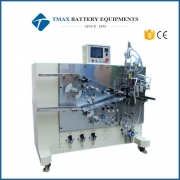 Automatic Cylinderical Battery Electrode Winding Machine
Read More
Automatic Cylinderical Battery Electrode Winding Machine
Read More
-
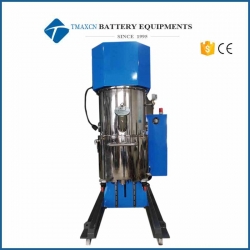 100-200L Double Planetary Vacuum Mixing Machine for Lithium Battery Slurry
Read More
100-200L Double Planetary Vacuum Mixing Machine for Lithium Battery Slurry
Read More
-
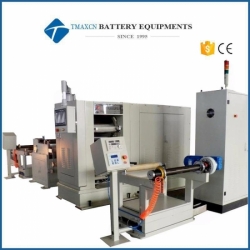 Large Heating Roller Press Machine Calender For Li ion Battery Production Line
Read More
Large Heating Roller Press Machine Calender For Li ion Battery Production Line
Read More
-
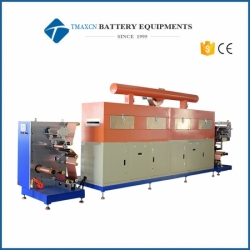 Large 3 Rollers Battery Electrode Film Intermittent Coating Machine for Pilot Production Line
Read More
Large 3 Rollers Battery Electrode Film Intermittent Coating Machine for Pilot Production Line
Read More
-
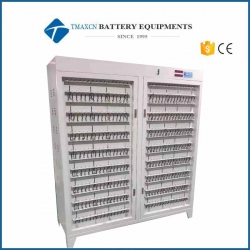 512 Channel 5V3A Battery Grading Machine/Battery Charge Discharge Machine Tester
Read More
512 Channel 5V3A Battery Grading Machine/Battery Charge Discharge Machine Tester
Read More
 David@battery-equipments.com

