 English▼



- Battery Manufacturing Equipment
- Battery Laboratory Assembly Equipment
- Battery Pack Assembly Equipment
- Sodium Ion Battery Manufacturing Equipment
- Solid State Cell Production Line
- Dry Electrode Assembly Equipment
- Supercapacitor Assembly Equipment
- Perovskite Solar Cell Lab Equipment
- Li ion Battery Materials
- Ni / Al / Cu Metal Foam
- Customized Electrode
- Cathode Active Materials
- Anode Active Materials
- Coin Cell Parts
- Lithium Chip
- Cylindrical Cell Parts
- Battery Current Collectors
- Battery Conductive Materials
- Electrolyte
- Battery Binder
- Separator and Tape
- Aluminum Laminate Film
- Nickel Strip/Foil
- Battery Tabs
- Graphene Materials
- Cu / Al / Ni / Stainless steel Foil
- Battery Laboratory Equipment
- Li ion Battery Tester
- Battery Safety Tester
- Material Characterization Tester
- Rolling Press Machine
- Electrode Mixer
- Coin Cell Crimping Machine
- Coin Cell Electrode Disc Punching
- Pouch Cell Sealing Machine
- Pouch Cell Stacking Machine
- Pouch Cell Forming Machine
- Pouch Cell Ultrasonic Welder
- Pouch Cell Electrode Die Cutter
- Cylinder Cell Sealing Machine
- Cylinder Cell Grooving Machine
- Electrode Slitting Machine
- Cylinder Cell Winding Machine
- Cylinder Cell Spot Welding Machine
- Electrolyte Filling
- Type Test Cell
- Other Battery Making Machine
- NMP Solvent Treatment System
- Vacuum Glove Box
- Coating Machine
- Lab Furnaces
- Ball Mill
- Laboratory Press
- Laboratory Equipment
- Press Equipment
blog
Coin Cell Crimping Machine
Overview
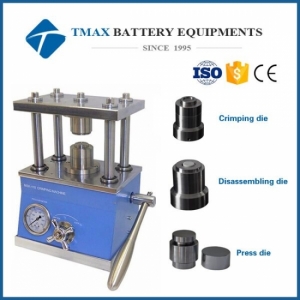
A coin cell crimping machine is a specialized mechanical device designed to assemble and seal coin cells, also known as button cells, with high precision and efficiency. Coin cells are widely used in portable electronics, medical devices, sensors, and research applications due to their compact size and reliable performance. The crimping machine plays a crucial role in ensuring mechanical integrity, electrical connectivity, and hermetic sealing of these small batteries, which directly impacts their performance, safety, and longevity.
Modern coin cell crimping machines are suitable for both laboratory-scale production and industrial manufacturing. They provide a controlled and repeatable crimping process, reducing the risk of short circuits, electrolyte leakage, and defective cells. By automating the sealing process, these machines also enhance productivity and maintain consistent quality across large production volumes.
Features
Coin cell crimping machines are designed with a range of features to optimize performance, reliability, and safety:
1. High Precision Crimping
Equipped with adjustable crimping heads and dies, the machine applies uniform pressure to seal the coin cell casing without damaging internal components.
2. Adjustable Pressure and Speed Control
Operators can fine-tune crimping force, speed, and dwell time to accommodate different cell sizes, thicknesses, and electrode configurations.
3. Automated Feeding and Alignment
Some models integrate automatic feeding systems to position coin cell components accurately before crimping, improving efficiency and reducing manual handling errors.
4. Safety Features
Equipped with overload protection, interlocks, and emergency stop functions to prevent damage to both operators and sensitive battery components.
5. Compact and Flexible Design
Many machines are suitable for laboratory benchtops as well as industrial production lines, supporting a wide range of coin cell formats, such as CR2032, CR2025, and CR2016.
6. User-Friendly Interface
Digital controls, touchscreens, or software interfaces allow operators to set parameters, monitor crimping cycles, and maintain process records.
Process
The coin cell crimping process is a carefully controlled sequence to ensure a secure, reliable seal:
1. Component Preparation
Coin cell components, including the top and bottom casing, electrode materials, separator, and electrolyte, are loaded and aligned.
2. Cell Alignment
The machine positions the components accurately in the crimping chamber, ensuring concentric alignment to prevent short circuits.
3. Crimping Operation
The machine applies controlled mechanical pressure around the coin cell’s edge, folding the metal casing to create a hermetic seal. Adjustable dies ensure uniform crimping without damaging the internal layers.
4. Quality Inspection
Some machines include in-line visual or mechanical inspection to verify the integrity of the crimped seal, checking for leaks, misalignment, or deformation.
5. Collection and Handling
Applications
Coin cell crimping machines are widely used in both research and industrial applications:
* Battery Research and Development
Essential for assembling experimental coin cells to test new electrode materials, electrolytes, or separator configurations.
* Industrial Manufacturing
Used in high-volume production of coin cells for watches, calculators, medical devices, IoT sensors, and small electronics.
* Quality Control and Prototyping
Enables rapid assembly of prototype cells for performance testing and evaluation in laboratory or pilot production settings.
* Educational and Training Facilities
Supports teaching and training in battery assembly, electrochemistry, and materials research.
Advantages
Coin cell crimping machines provide multiple benefits that make them indispensable for battery assembly:
1. Precision and Consistency
Uniform crimping pressure ensures mechanical stability, consistent electrical contact, and reliable hermetic sealing.
2. Enhanced Safety
Properly sealed coin cells reduce the risk of electrolyte leakage, internal short circuits, and fire hazards.
3. High Efficiency
Automated or semi-automated systems increase throughput and reduce manual labor.
4. Versatility
Compatible with a wide range of coin cell sizes, materials, and configurations, enabling flexible research and production applications.
5. Reduced Defects
Automated alignment and pressure control minimize miscrimping, deformation, and internal damage to electrodes or separators.
6. User-Friendly Operation
Digital interfaces and pre-set programs simplify operation, parameter adjustment, and maintenance.
Conclusion
The coin cell crimping machine is a critical mechanical system in the assembly of small-format batteries. By providing precise, reliable, and efficient sealing, it ensures the mechanical integrity, electrical performance, and safety of coin cells used in electronics, medical devices, and research applications.
With applications spanning laboratory prototyping, industrial-scale manufacturing, and educational use, coin cell crimping machines enhance productivity, reduce defects, and support the development of high-quality energy storage devices. Their automation, precision, and versatility make them an indispensable tool for the modern battery industry, enabling consistent performance and long-term reliability of coin cell batteries.
- 2026-04-14
Xiamen Tmax Battery Equipments Limited was set up as a manufacturer in 1995, dealing with lithium battery equipments, technology, etc. We have total manufacturing facilities of around 200000 square foot and more than 230 staff. Owning a group of experie-nced engineers and staffs, we can bring you not only reliable products and technology, but also excellent services and real value you will expect and enjoy.
Coin Cell Crimping Machine: Precision Mechanical Equipment for Battery Assembly
Overview
A coin cell crimping machine is a specialized mechanical device designed to assemble and seal coin cells, also known as button cells, with high precision and efficiency. Coin cells are widely used in portable electronics, medical devices, sensors, and research applications due to their compact size and reliable performance. The crimping machine plays a crucial role in ensuring mechanical integrity, electrical connectivity, and hermetic sealing of these small batteries, which directly impacts their performance, safety, and longevity.
Modern coin cell crimping machines are suitable for both laboratory-scale production and industrial manufacturing. They provide a controlled and repeatable crimping process, reducing the risk of short circuits, electrolyte leakage, and defective cells. By automating the sealing process, these machines also enhance productivity and maintain consistent quality across large production volumes.
Features
Coin cell crimping machines are designed with a range of features to optimize performance, reliability, and safety:
1. High Precision Crimping
Equipped with adjustable crimping heads and dies, the machine applies uniform pressure to seal the coin cell casing without damaging internal components.
2. Adjustable Pressure and Speed Control
Operators can fine-tune crimping force, speed, and dwell time to accommodate different cell sizes, thicknesses, and electrode configurations.
3. Automated Feeding and Alignment
Some models integrate automatic feeding systems to position coin cell components accurately before crimping, improving efficiency and reducing manual handling errors.
4. Safety Features
Equipped with overload protection, interlocks, and emergency stop functions to prevent damage to both operators and sensitive battery components.
5. Compact and Flexible Design
Many machines are suitable for laboratory benchtops as well as industrial production lines, supporting a wide range of coin cell formats, such as CR2032, CR2025, and CR2016.
6. User-Friendly Interface
Digital controls, touchscreens, or software interfaces allow operators to set parameters, monitor crimping cycles, and maintain process records.
Process
The coin cell crimping process is a carefully controlled sequence to ensure a secure, reliable seal:
1. Component Preparation
Coin cell components, including the top and bottom casing, electrode materials, separator, and electrolyte, are loaded and aligned.
2. Cell Alignment
The machine positions the components accurately in the crimping chamber, ensuring concentric alignment to prevent short circuits.
3. Crimping Operation
The machine applies controlled mechanical pressure around the coin cell’s edge, folding the metal casing to create a hermetic seal. Adjustable dies ensure uniform crimping without damaging the internal layers.
4. Quality Inspection
Some machines include in-line visual or mechanical inspection to verify the integrity of the crimped seal, checking for leaks, misalignment, or deformation.
5. Collection and Handling
Sealed coin cells are automatically ejected or manually collected for further testing or packaging.
Applications
Coin cell crimping machines are widely used in both research and industrial applications:
* Battery Research and Development
Essential for assembling experimental coin cells to test new electrode materials, electrolytes, or separator configurations.
* Industrial Manufacturing
Used in high-volume production of coin cells for watches, calculators, medical devices, IoT sensors, and small electronics.
* Quality Control and Prototyping
Enables rapid assembly of prototype cells for performance testing and evaluation in laboratory or pilot production settings.
* Educational and Training Facilities
Supports teaching and training in battery assembly, electrochemistry, and materials research.
Advantages
Coin cell crimping machines provide multiple benefits that make them indispensable for battery assembly:
1. Precision and Consistency
Uniform crimping pressure ensures mechanical stability, consistent electrical contact, and reliable hermetic sealing.
2. Enhanced Safety
Properly sealed coin cells reduce the risk of electrolyte leakage, internal short circuits, and fire hazards.
3. High Efficiency
Automated or semi-automated systems increase throughput and reduce manual labor.
4. Versatility
Compatible with a wide range of coin cell sizes, materials, and configurations, enabling flexible research and production applications.
5. Reduced Defects
Automated alignment and pressure control minimize miscrimping, deformation, and internal damage to electrodes or separators.
6. User-Friendly Operation
Digital interfaces and pre-set programs simplify operation, parameter adjustment, and maintenance.
Conclusion
The coin cell crimping machine is a critical mechanical system in the assembly of small-format batteries. By providing precise, reliable, and efficient sealing, it ensures the mechanical integrity, electrical performance, and safety of coin cells used in electronics, medical devices, and research applications.
With applications spanning laboratory prototyping, industrial-scale manufacturing, and educational use, coin cell crimping machines enhance productivity, reduce defects, and support the development of high-quality energy storage devices. Their automation, precision, and versatility make them an indispensable tool for the modern battery industry, enabling consistent performance and long-term reliability of coin cell batteries.
HOT PRODUCTS
-
 Automatic Cylinderical Battery Electrode Winding Machine
Read More
Automatic Cylinderical Battery Electrode Winding Machine
Read More
-
 100-200L Double Planetary Vacuum Mixing Machine for Lithium Battery Slurry
Read More
100-200L Double Planetary Vacuum Mixing Machine for Lithium Battery Slurry
Read More
-
 Large Heating Roller Press Machine Calender For Li ion Battery Production Line
Read More
Large Heating Roller Press Machine Calender For Li ion Battery Production Line
Read More
-
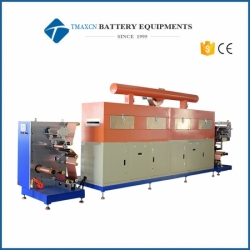 Large 3 Rollers Battery Electrode Film Intermittent Coating Machine for Pilot Production Line
Read More
Large 3 Rollers Battery Electrode Film Intermittent Coating Machine for Pilot Production Line
Read More
-
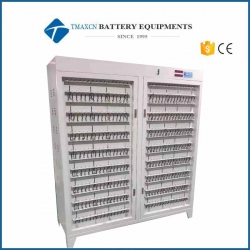 512 Channel 5V3A Battery Grading Machine/Battery Charge Discharge Machine Tester
Read More
512 Channel 5V3A Battery Grading Machine/Battery Charge Discharge Machine Tester
Read More
 David@battery-equipments.com

