 English▼



- Battery Manufacturing Equipment
- Battery Laboratory Assembly Equipment
- Battery Pack Assembly Equipment
- Sodium Ion Battery Manufacturing Equipment
- Solid State Cell Production Line
- Dry Electrode Assembly Equipment
- Supercapacitor Assembly Equipment
- Perovskite Solar Cell Lab Equipment
- Li ion Battery Materials
- Ni / Al / Cu Metal Foam
- Customized Electrode
- Cathode Active Materials
- Anode Active Materials
- Coin Cell Parts
- Lithium Chip
- Cylindrical Cell Parts
- Battery Current Collectors
- Battery Conductive Materials
- Electrolyte
- Battery Binder
- Separator and Tape
- Aluminum Laminate Film
- Nickel Strip/Foil
- Battery Tabs
- Graphene Materials
- Cu / Al / Ni / Stainless steel Foil
- Battery Laboratory Equipment
- Li ion Battery Tester
- Battery Safety Tester
- Material Characterization Tester
- Rolling Press Machine
- Electrode Mixer
- Coin Cell Crimping Machine
- Coin Cell Electrode Disc Punching
- Pouch Cell Sealing Machine
- Pouch Cell Stacking Machine
- Pouch Cell Forming Machine
- Pouch Cell Ultrasonic Welder
- Pouch Cell Electrode Die Cutter
- Cylinder Cell Sealing Machine
- Cylinder Cell Grooving Machine
- Electrode Slitting Machine
- Cylinder Cell Winding Machine
- Cylinder Cell Spot Welding Machine
- Electrolyte Filling
- Type Test Cell
- Other Battery Making Machine
- NMP Solvent Treatment System
- Vacuum Glove Box
- Coating Machine
- Lab Furnaces
- Ball Mill
- Laboratory Press
- Laboratory Equipment
- Press Equipment
blog
Coin Cell Parts
Overview
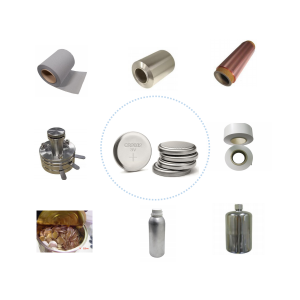
Coin cell parts are the fundamental components used to assemble coin-type batteries for laboratory research, material evaluation, prototype development, and quality testing. Coin cells, also known as button cells, are among the most widely used battery formats in research laboratories due to their compact size, simple structure, low material consumption, and excellent repeatability. They are extensively employed in the development of lithium-ion batteries, sodium-ion batteries, solid-state batteries, lithium-metal batteries, zinc-ion batteries, and other advanced electrochemical energy storage systems.
A complete set of coin cell parts typically includes the cell case (cap and can), spacer, spring, sealing gasket, insulating ring, current collector, and optional accessories depending on the battery chemistry and cell configuration. These precision-engineered components work together to provide reliable electrical contact, airtight sealing, mechanical stability, and consistent electrochemical performance.
Manufactured from high-quality materials such as stainless steel, nickel-plated steel, polypropylene (PP), polyether ether ketone (PEEK), and PTFE, modern coin cell parts are designed to meet the stringent requirements of laboratory-scale battery assembly. They are compatible with standard coin cell sizes such as CR2016, CR2025, CR2032, CR2430, and customized research formats.
As battery technology continues to evolve, high-quality coin cell parts play an increasingly important role in ensuring accurate experimental results and accelerating the development of next-generation energy storage materials.
---
Key Characteristics
High-performance coin cell parts are manufactured with strict quality standards to ensure reliable assembly and consistent battery performance.
High Dimensional Precision
Coin cell components are produced using precision machining and stamping technologies with extremely tight dimensional tolerances. Accurate dimensions ensure proper alignment during assembly, improving sealing performance and reducing contact resistance.
Superior Corrosion Resistance
Most metal components are manufactured from stainless steel (such as SUS304 or SUS316), offering excellent resistance to electrolyte corrosion and oxidation. This helps maintain stable electrochemical performance throughout battery testing.
Excellent Mechanical Strength
The cell case, spacer, and spring are designed to withstand the pressure generated during crimping while maintaining structural integrity during repeated charge and discharge cycles.
Reliable Sealing Performance
High-quality sealing gaskets made from polypropylene, nylon, or PTFE provide excellent resistance to electrolyte leakage and moisture penetration, protecting sensitive electrode materials from contamination.
High Electrical Conductivity
Metallic components such as the cell cap, can, and current collectors provide low-resistance electrical pathways, minimizing energy loss and ensuring accurate electrochemical measurements.
Compatibility with Multiple Chemistries
Modern coin cell parts are suitable for assembling a wide variety of battery systems, including lithium-ion, sodium-ion, lithium-sulfur, solid-state, magnesium-ion, and zinc-based batteries.
---
Manufacturing Process
The production of precision coin cell parts involves several advanced manufacturing processes to ensure dimensional accuracy, material consistency, and long-term reliability.
Material Selection
Production begins with carefully selected raw materials according to the intended battery application. Common materials include:
* Stainless steel (304, 316)
* Nickel-plated steel
* Polypropylene (PP)
* PTFE
* PEEK
* Nylon
Each material is chosen for its mechanical strength, chemical stability, and compatibility with battery electrolytes.
Precision Stamping
Metal components such as the battery cap and can are manufactured using high-speed precision stamping equipment. Progressive dies ensure uniform dimensions and smooth edges while maintaining high production efficiency.
Deep Drawing
For battery cases requiring greater depth and structural strength, deep drawing technology is employed. This process produces seamless metal containers with excellent mechanical properties.
Surface Treatment
Metal parts may undergo surface polishing, ultrasonic cleaning, passivation, or nickel plating to improve corrosion resistance, cleanliness, and electrical conductivity.
Injection Molding
Insulating components and sealing gaskets are produced through precision injection molding, ensuring consistent dimensions and reliable sealing characteristics.
Quality Inspection
Every batch of coin cell parts undergoes comprehensive quality testing, including:
* Dimensional measurement
* Surface inspection
* Corrosion resistance testing
* Hardness testing
* Electrical conductivity verification
* Leak-proof sealing evaluation
* Cleanliness inspection
Strict quality control ensures that each component meets laboratory and industrial standards.
---
Coin Cell Assembly Process
The assembly of a laboratory coin cell follows a standardized procedure designed to produce reproducible and reliable electrochemical performance.
First, the stainless steel battery case is cleaned and prepared. The cathode electrode is placed inside the case, by the separator and electrolyte. Next, the anode material is carefully positioned on top of the separator. A spacer is inserted to distribute pressure evenly, while a spring provides continuous mechanical contact between the electrodes and the cell cap.
Finally, the sealing gasket is positioned around the edge of the battery case before the entire assembly is crimped using a precision coin cell crimping machine. The completed cell is then subjected to aging, electrochemical testing, and performance evaluation.
Proper assembly using high-quality coin cell parts is essential for minimizing internal resistance, preventing electrolyte leakage, and ensuring consistent experimental results.
Applications
The versatility of coin cell parts makes them indispensable in battery research and materials science.
Battery Materials Research
Researchers use coin cell components to evaluate:
* Cathode materials
* Anode materials
* Solid electrolytes
* Conductive additives
* Separator materials
* Electrolyte formulations
Solid-State Battery Development
Coin cells provide a convenient platform for investigating ionic conductivity, interfacial stability, and cycling performance in all-solid-state battery systems.
Sodium-Ion Battery Research
Universities and research institutes employ coin cell assemblies to study sodium-ion electrode materials, electrolyte compatibility, and long-term cycling behavior.
Electrochemical Testing
Coin cells are widely used for:
* Charge-discharge cycling
* Rate capability evaluation
* Coulombic efficiency measurement
* Cyclic voltammetry
* Electrochemical impedance spectroscopy (EIS)
Quality Control
Battery manufacturers use standardized coin cell parts for material screening, process validation, and quality assurance during product development.
Educational Laboratories
Coin cell assembly kits provide students with hands-on experience in battery fabrication, electrochemistry, and materials characterization.
---
Advantages
Using high-quality coin cell parts offers numerous technical and operational benefits.
* Excellent Experimental Repeatability: Precision-manufactured components ensure consistent assembly conditions, improving the reliability of research data.
* Reliable Airtight Sealing: High-quality gaskets effectively prevent electrolyte leakage and moisture ingress, extending cell stability.
* Low Internal Resistance: Accurate dimensions and conductive materials promote efficient current flow and reproducible electrochemical performance.
* Wide Compatibility: Standardized components support various coin cell sizes and chemistries, making them suitable for diverse research applications.
* Cost-Effective Prototyping: Coin cells require only small amounts of active materials, reducing development costs while enabling rapid testing.
* Easy Assembly: Standardized designs simplify the fabrication process and reduce the risk of assembly errors.
* Support for Advanced Battery Development: Precision coin cell components provide a dependable platform for evaluating innovative electrode materials, solid electrolytes, and next-generation energy storage technologies.
---
Conclusion
Coin cell parts are indispensable components in modern battery research, providing the mechanical structure, electrical connectivity, and sealing performance required for reliable laboratory-scale cell assembly. Their precision manufacturing, excellent corrosion resistance, and compatibility with a wide range of battery chemistries make them essential for developing and evaluating advanced energy storage systems.
From lithium-ion and sodium-ion batteries to emerging solid-state and metal-based technologies, high-quality coin cell components enable researchers to generate accurate, reproducible electrochemical data while minimizing material consumption and development costs. As battery innovation continues to accelerate, precision-engineered coin cell parts will remain a cornerstone of laboratory testing, prototype validation, and next-generation battery development, supporting scientific discovery and the commercialization of safer, higher-performance energy storage solutions.
- 2026-07-07
Xiamen Tmax Battery Equipments Limited was set up as a manufacturer in 1995, dealing with lithium battery equipments, technology, etc. We have total manufacturing facilities of around 200000 square foot and more than 230 staff. Owning a group of experie-nced engineers and staffs, we can bring you not only reliable products and technology, but also excellent services and real value you will expect and enjoy.
Coin Cell Parts: Essential Components for Precision Battery Assembly and Laboratory Research
Overview
Coin cell parts are the fundamental components used to assemble coin-type batteries for laboratory research, material evaluation, prototype development, and quality testing. Coin cells, also known as button cells, are among the most widely used battery formats in research laboratories due to their compact size, simple structure, low material consumption, and excellent repeatability. They are extensively employed in the development of lithium-ion batteries, sodium-ion batteries, solid-state batteries, lithium-metal batteries, zinc-ion batteries, and other advanced electrochemical energy storage systems.
A complete set of coin cell parts typically includes the cell case (cap and can), spacer, spring, sealing gasket, insulating ring, current collector, and optional accessories depending on the battery chemistry and cell configuration. These precision-engineered components work together to provide reliable electrical contact, airtight sealing, mechanical stability, and consistent electrochemical performance.
Manufactured from high-quality materials such as stainless steel, nickel-plated steel, polypropylene (PP), polyether ether ketone (PEEK), and PTFE, modern coin cell parts are designed to meet the stringent requirements of laboratory-scale battery assembly. They are compatible with standard coin cell sizes such as CR2016, CR2025, CR2032, CR2430, and customized research formats.
As battery technology continues to evolve, high-quality coin cell parts play an increasingly important role in ensuring accurate experimental results and accelerating the development of next-generation energy storage materials.
---
Key Characteristics
High-performance coin cell parts are manufactured with strict quality standards to ensure reliable assembly and consistent battery performance.
High Dimensional Precision
Coin cell components are produced using precision machining and stamping technologies with extremely tight dimensional tolerances. Accurate dimensions ensure proper alignment during assembly, improving sealing performance and reducing contact resistance.
Superior Corrosion Resistance
Most metal components are manufactured from stainless steel (such as SUS304 or SUS316), offering excellent resistance to electrolyte corrosion and oxidation. This helps maintain stable electrochemical performance throughout battery testing.
Excellent Mechanical Strength
The cell case, spacer, and spring are designed to withstand the pressure generated during crimping while maintaining structural integrity during repeated charge and discharge cycles.
Reliable Sealing Performance
High-quality sealing gaskets made from polypropylene, nylon, or PTFE provide excellent resistance to electrolyte leakage and moisture penetration, protecting sensitive electrode materials from contamination.
High Electrical Conductivity
Metallic components such as the cell cap, can, and current collectors provide low-resistance electrical pathways, minimizing energy loss and ensuring accurate electrochemical measurements.
Compatibility with Multiple Chemistries
Modern coin cell parts are suitable for assembling a wide variety of battery systems, including lithium-ion, sodium-ion, lithium-sulfur, solid-state, magnesium-ion, and zinc-based batteries.
---
Manufacturing Process
The production of precision coin cell parts involves several advanced manufacturing processes to ensure dimensional accuracy, material consistency, and long-term reliability.
Material Selection
Production begins with carefully selected raw materials according to the intended battery application. Common materials include:
* Stainless steel (304, 316)
* Nickel-plated steel
* Polypropylene (PP)
* PTFE
* PEEK
* Nylon
Each material is chosen for its mechanical strength, chemical stability, and compatibility with battery electrolytes.
Precision Stamping
Metal components such as the battery cap and can are manufactured using high-speed precision stamping equipment. Progressive dies ensure uniform dimensions and smooth edges while maintaining high production efficiency.
Deep Drawing
For battery cases requiring greater depth and structural strength, deep drawing technology is employed. This process produces seamless metal containers with excellent mechanical properties.
Surface Treatment
Metal parts may undergo surface polishing, ultrasonic cleaning, passivation, or nickel plating to improve corrosion resistance, cleanliness, and electrical conductivity.
Injection Molding
Insulating components and sealing gaskets are produced through precision injection molding, ensuring consistent dimensions and reliable sealing characteristics.
Quality Inspection
Every batch of coin cell parts undergoes comprehensive quality testing, including:
* Dimensional measurement
* Surface inspection
* Corrosion resistance testing
* Hardness testing
* Electrical conductivity verification
* Leak-proof sealing evaluation
* Cleanliness inspection
Strict quality control ensures that each component meets laboratory and industrial standards.
---
Coin Cell Assembly Process
The assembly of a laboratory coin cell follows a standardized procedure designed to produce reproducible and reliable electrochemical performance.
First, the stainless steel battery case is cleaned and prepared. The cathode electrode is placed inside the case, by the separator and electrolyte. Next, the anode material is carefully positioned on top of the separator. A spacer is inserted to distribute pressure evenly, while a spring provides continuous mechanical contact between the electrodes and the cell cap.
Finally, the sealing gasket is positioned around the edge of the battery case before the entire assembly is crimped using a precision coin cell crimping machine. The completed cell is then subjected to aging, electrochemical testing, and performance evaluation.
Proper assembly using high-quality coin cell parts is essential for minimizing internal resistance, preventing electrolyte leakage, and ensuring consistent experimental results.
Applications
The versatility of coin cell parts makes them indispensable in battery research and materials science.
Battery Materials Research
Researchers use coin cell components to evaluate:
* Cathode materials
* Anode materials
* Solid electrolytes
* Conductive additives
* Separator materials
* Electrolyte formulations
Solid-State Battery Development
Coin cells provide a convenient platform for investigating ionic conductivity, interfacial stability, and cycling performance in all-solid-state battery systems.
Sodium-Ion Battery Research
Universities and research institutes employ coin cell assemblies to study sodium-ion electrode materials, electrolyte compatibility, and long-term cycling behavior.
Electrochemical Testing
Coin cells are widely used for:
* Charge-discharge cycling
* Rate capability evaluation
* Coulombic efficiency measurement
* Cyclic voltammetry
* Electrochemical impedance spectroscopy (EIS)
Quality Control
Battery manufacturers use standardized coin cell parts for material screening, process validation, and quality assurance during product development.
Educational Laboratories
Coin cell assembly kits provide students with hands-on experience in battery fabrication, electrochemistry, and materials characterization.
---
Advantages
Using high-quality coin cell parts offers numerous technical and operational benefits.
* Excellent Experimental Repeatability: Precision-manufactured components ensure consistent assembly conditions, improving the reliability of research data.
* Reliable Airtight Sealing: High-quality gaskets effectively prevent electrolyte leakage and moisture ingress, extending cell stability.
* Low Internal Resistance: Accurate dimensions and conductive materials promote efficient current flow and reproducible electrochemical performance.
* Wide Compatibility: Standardized components support various coin cell sizes and chemistries, making them suitable for diverse research applications.
* Cost-Effective Prototyping: Coin cells require only small amounts of active materials, reducing development costs while enabling rapid testing.
* Easy Assembly: Standardized designs simplify the fabrication process and reduce the risk of assembly errors.
* Support for Advanced Battery Development: Precision coin cell components provide a dependable platform for evaluating innovative electrode materials, solid electrolytes, and next-generation energy storage technologies.
---
Conclusion
Coin cell parts are indispensable components in modern battery research, providing the mechanical structure, electrical connectivity, and sealing performance required for reliable laboratory-scale cell assembly. Their precision manufacturing, excellent corrosion resistance, and compatibility with a wide range of battery chemistries make them essential for developing and evaluating advanced energy storage systems.
From lithium-ion and sodium-ion batteries to emerging solid-state and metal-based technologies, high-quality coin cell components enable researchers to generate accurate, reproducible electrochemical data while minimizing material consumption and development costs. As battery innovation continues to accelerate, precision-engineered coin cell parts will remain a cornerstone of laboratory testing, prototype validation, and next-generation battery development, supporting scientific discovery and the commercialization of safer, higher-performance energy storage solutions.
HOT PRODUCTS
-
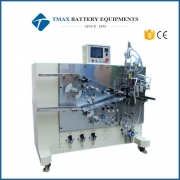 Automatic Cylinderical Battery Electrode Winding Machine
Read More
Automatic Cylinderical Battery Electrode Winding Machine
Read More
-
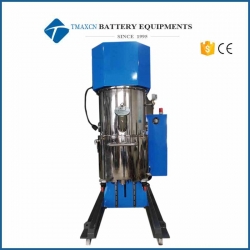 100-200L Double Planetary Vacuum Mixing Machine for Lithium Battery Slurry
Read More
100-200L Double Planetary Vacuum Mixing Machine for Lithium Battery Slurry
Read More
-
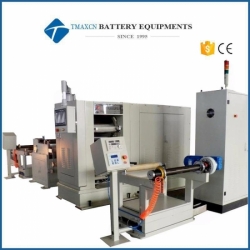 Large Heating Roller Press Machine Calender For Li ion Battery Production Line
Read More
Large Heating Roller Press Machine Calender For Li ion Battery Production Line
Read More
-
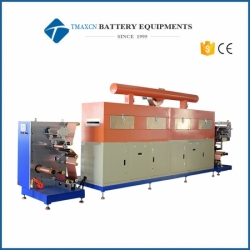 Large 3 Rollers Battery Electrode Film Intermittent Coating Machine for Pilot Production Line
Read More
Large 3 Rollers Battery Electrode Film Intermittent Coating Machine for Pilot Production Line
Read More
-
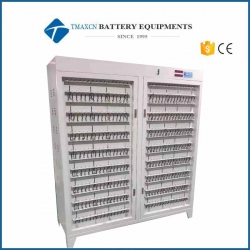 512 Channel 5V3A Battery Grading Machine/Battery Charge Discharge Machine Tester
Read More
512 Channel 5V3A Battery Grading Machine/Battery Charge Discharge Machine Tester
Read More
 David@battery-equipments.com

