 English▼



- Battery Manufacturing Equipment
- Battery Laboratory Assembly Equipment
- Battery Pack Assembly Equipment
- Sodium Ion Battery Manufacturing Equipment
- Solid State Cell Production Line
- Dry Electrode Assembly Equipment
- Supercapacitor Assembly Equipment
- Perovskite Solar Cell Lab Equipment
- Li ion Battery Materials
- Ni / Al / Cu Metal Foam
- Customized Electrode
- Cathode Active Materials
- Anode Active Materials
- Coin Cell Parts
- Lithium Chip
- Cylindrical Cell Parts
- Battery Current Collectors
- Battery Conductive Materials
- Electrolyte
- Battery Binder
- Separator and Tape
- Aluminum Laminate Film
- Nickel Strip/Foil
- Battery Tabs
- Graphene Materials
- Cu / Al / Ni / Stainless steel Foil
- Battery Laboratory Equipment
- Li ion Battery Tester
- Battery Safety Tester
- Material Characterization Tester
- Rolling Press Machine
- Electrode Mixer
- Coin Cell Crimping Machine
- Coin Cell Electrode Disc Punching
- Pouch Cell Sealing Machine
- Pouch Cell Stacking Machine
- Pouch Cell Forming Machine
- Pouch Cell Ultrasonic Welder
- Pouch Cell Electrode Die Cutter
- Cylinder Cell Sealing Machine
- Cylinder Cell Grooving Machine
- Electrode Slitting Machine
- Cylinder Cell Winding Machine
- Cylinder Cell Spot Welding Machine
- Electrolyte Filling
- Type Test Cell
- Other Battery Making Machine
- NMP Solvent Treatment System
- Vacuum Glove Box
- Coating Machine
- Lab Furnaces
- Ball Mill
- Laboratory Press
- Laboratory Equipment
- Press Equipment
blog
Ball Mill Jar
Overview
A ball mill jar is a critical component of ball milling systems used in laboratories, research institutions, universities, and industrial production facilities. Designed to hold grinding media and material samples during the milling process, the ball mill jar plays a vital role in achieving efficient particle size reduction, homogeneous mixing, mechanical alloying, and material activation. It is widely used in industries such as advanced ceramics, battery materials, metallurgy, mining, pharmaceuticals, chemicals, nanotechnology, and powder metallurgy.
The performance of a ball mill depends not only on the milling machine itself but also on the quality, material, and design of the ball mill jar. Selecting the appropriate jar material is essential to prevent contamination, maximize grinding efficiency, and ensure compatibility with different sample materials. Modern ball mill jars are manufactured from a variety of materials, including stainless steel, zirconia, agate, alumina, tungsten carbide, nylon, PTFE, polyurethane, and hardened steel, each offering unique properties for specific milling applications.
As material science and nanotechnology continue to advance, high-performance ball mill jars have become indispensable tools for producing ultrafine powders and developing next-generation functional materials.
---
Key Characteristics
A high-quality ball mill jar is engineered to deliver reliable performance under demanding grinding conditions. Several important characteristics distinguish premium milling jars from standard containers.
Excellent Wear Resistance
One of the most critical features is superior wear resistance. Since grinding media continuously impact both the sample and the inner wall of the jar, durable materials are essential for minimizing wear and extending service life. Materials such as zirconia, tungsten carbide, and alumina offer exceptional hardness for abrasive applications.
Chemical Compatibility
Different materials require different jar compositions to avoid contamination. Chemically inert materials such as agate, PTFE, and zirconia are ideal for high-purity laboratory research where contamination must be minimized.
High Mechanical Strength
A ball mill jar must withstand repeated impact forces, centrifugal motion, and vibration without deformation or cracking. Precision manufacturing ensures excellent structural integrity even during long milling cycles.
Leak-Proof Sealing
Modern ball mill jars are equipped with precision sealing systems that prevent powder leakage and protect sensitive materials from moisture and atmospheric contamination. Vacuum-compatible and gas-tight designs are also available for air-sensitive materials.
Multiple Capacity Options
Ball mill jars are available in a wide range of capacities, typically from 50 mL to several liters, allowing users to perform everything from small-scale laboratory experiments to pilot-scale material preparation.
Excellent Dimensional Accuracy
High manufacturing precision ensures balanced rotation, smooth operation, and uniform grinding performance, reducing equipment vibration and improving milling efficiency.
---
Manufacturing Process
The production of a high-quality ball mill jar involves several carefully controlled manufacturing steps designed to ensure durability, precision, and contamination-free performance.
Material Selection
Manufacturing begins with selecting the appropriate material according to the intended application. Common materials include:
Stainless steel
Zirconia
Alumina
Agate
Tungsten carbide
Nylon
PTFE
Polyurethane
Hardened steel
Each material offers different hardness, chemical resistance, and wear characteristics.
Precision Forming
Depending on the material, jars are produced using machining, ceramic molding, isostatic pressing, sintering, or precision casting. Advanced CNC machining ensures tight dimensional tolerances and smooth internal surfaces.
Heat Treatment and Sintering
Metal jars often undergo heat treatment to improve hardness and wear resistance, while ceramic jars are sintered at high temperatures to achieve maximum density and mechanical strength.
Surface Finishing
The interior and exterior surfaces are polished to reduce friction, facilitate cleaning, and minimize sample contamination. Some laboratory-grade jars receive mirror polishing for ultra-clean applications.
Seal Assembly
Precision lids, sealing rings, and fastening mechanisms are installed to provide secure closure during high-speed milling. Optional vacuum sealing systems allow controlled-atmosphere grinding.
Quality Inspection
Each ball mill jar undergoes comprehensive quality testing, including:
Dimensional accuracy
Surface finish
Leak testing
Hardness measurement
Impact resistance
Wear resistance
Material purity verification
These inspections ensure consistent performance and long operational life.
---
Working Principle and Milling Process
A ball mill jar functions as the grinding chamber in a planetary ball mill, roller ball mill, or tumbler mill.
First, the material to be processed is loaded into the jar together with grinding balls made from compatible materials. The filling ratio is carefully optimized according to the sample characteristics and desired particle size.
During operation, the milling equipment rotates or revolves the jar, causing the grinding balls to move continuously inside the chamber. The material is subjected to repeated impact, friction, shearing, and compression between the balls and the inner wall of the jar.
As milling continues, particles become progressively smaller while simultaneously achieving excellent mixing and homogenization. Depending on the application, milling may be performed under ambient conditions, vacuum, or inert gases such as argon or nitrogen to protect oxygen-sensitive materials.
After milling, the jar is opened, and the processed powder is collected for subsequent characterization or manufacturing processes.
Applications
The versatility of the ball mill jar makes it an indispensable laboratory accessory across numerous research and industrial fields.
Battery Materials Research
Ball mill jars are widely used in preparing:
Cathode materials
Anode materials
Solid electrolytes
Silicon composites
Conductive additives
Battery precursor powders
Controlled milling improves particle size distribution and material homogeneity.
Ceramic Engineering
Researchers utilize ball mill jars to process:
Alumina
Zirconia
Silicon carbide
Boron carbide
Advanced ceramic composites
Uniform milling enhances sintering performance and mechanical properties.
Nanomaterial Synthesis
Ball milling is an effective technique for producing nanostructured materials, graphene composites, metal nanoparticles, and nano-ceramics through mechanical size reduction and alloying.
Powder Metallurgy
Ball mill jars support the preparation of alloy powders, mechanical alloying, and composite materials used in aerospace, automotive, and structural applications.
Pharmaceutical Research
Laboratories use ball mill jars for grinding pharmaceutical ingredients, improving particle uniformity, and enhancing dissolution characteristics during formulation development.
Chemical Processing
Chemical researchers employ milling jars for mixing catalysts, pigments, minerals, catalysts, polymers, and specialty chemicals while maintaining excellent compositional consistency.
---
Advantages
The ball mill jar provides numerous benefits that contribute to efficient laboratory and industrial milling operations.
High Grinding Efficiency: Optimized geometry and durable construction promote effective particle size reduction and homogeneous mixing.
Low Contamination Risk: A wide selection of chemically compatible materials minimizes sample contamination, making the jars suitable for high-purity research.
Excellent Durability: Wear-resistant materials provide long service life even under intensive milling conditions.
Versatile Material Options: Users can choose the most appropriate jar material based on sample hardness, chemical compatibility, and experimental requirements.
Wide Capacity Range: Available in multiple sizes to support laboratory research, pilot production, and industrial processing.
Easy Cleaning and Maintenance: Smooth interior surfaces facilitate rapid cleaning and reduce cross-contamination between experiments.
Compatibility with Multiple Mill Types: Ball mill jars are designed for use with planetary ball mills, roller mills, and other laboratory milling systems, offering flexibility across different research and production environments.
---
Conclusion
The ball mill jar is far more than a simple container—it is a precision-engineered component that directly influences milling efficiency, product purity, and experimental reliability. Through careful material selection, precision manufacturing, and robust sealing systems, modern ball mill jars provide the durability, chemical compatibility, and performance required for demanding laboratory and industrial applications.
From battery materials and advanced ceramics to pharmaceuticals, nanotechnology, and powder metallurgy, the ball mill jar continues to play a vital role in scientific innovation and high-performance material processing. As research increasingly focuses on finer particle sizes, cleaner processing, and advanced functional materials, high-quality ball mill jars will remain indispensable tools for achieving consistent, reproducible, and contamination-free milling results. Their adaptability, long service life, and superior grinding performance make them an essential investment for laboratories and manufacturers seeking precision and efficiency in modern material preparation.
- 2026-06-30
Xiamen Tmax Battery Equipments Limited was set up as a manufacturer in 1995, dealing with lithium battery equipments, technology, etc. We have total manufacturing facilities of around 200000 square foot and more than 230 staff. Owning a group of experie-nced engineers and staffs, we can bring you not only reliable products and technology, but also excellent services and real value you will expect and enjoy.
Ball Mill Jar: An Essential Grinding Container for Laboratory and Industrial Milling Applications
Overview
A ball mill jar is a critical component of ball milling systems used in laboratories, research institutions, universities, and industrial production facilities. Designed to hold grinding media and material samples during the milling process, the ball mill jar plays a vital role in achieving efficient particle size reduction, homogeneous mixing, mechanical alloying, and material activation. It is widely used in industries such as advanced ceramics, battery materials, metallurgy, mining, pharmaceuticals, chemicals, nanotechnology, and powder metallurgy.
The performance of a ball mill depends not only on the milling machine itself but also on the quality, material, and design of the ball mill jar. Selecting the appropriate jar material is essential to prevent contamination, maximize grinding efficiency, and ensure compatibility with different sample materials. Modern ball mill jars are manufactured from a variety of materials, including stainless steel, zirconia, agate, alumina, tungsten carbide, nylon, PTFE, polyurethane, and hardened steel, each offering unique properties for specific milling applications.
As material science and nanotechnology continue to advance, high-performance ball mill jars have become indispensable tools for producing ultrafine powders and developing next-generation functional materials.
---
Key Characteristics
A high-quality ball mill jar is engineered to deliver reliable performance under demanding grinding conditions. Several important characteristics distinguish premium milling jars from standard containers.
Excellent Wear Resistance
One of the most critical features is superior wear resistance. Since grinding media continuously impact both the sample and the inner wall of the jar, durable materials are essential for minimizing wear and extending service life. Materials such as zirconia, tungsten carbide, and alumina offer exceptional hardness for abrasive applications.
Chemical Compatibility
Different materials require different jar compositions to avoid contamination. Chemically inert materials such as agate, PTFE, and zirconia are ideal for high-purity laboratory research where contamination must be minimized.
High Mechanical Strength
A ball mill jar must withstand repeated impact forces, centrifugal motion, and vibration without deformation or cracking. Precision manufacturing ensures excellent structural integrity even during long milling cycles.
Leak-Proof Sealing
Modern ball mill jars are equipped with precision sealing systems that prevent powder leakage and protect sensitive materials from moisture and atmospheric contamination. Vacuum-compatible and gas-tight designs are also available for air-sensitive materials.
Multiple Capacity Options
Ball mill jars are available in a wide range of capacities, typically from 50 mL to several liters, allowing users to perform everything from small-scale laboratory experiments to pilot-scale material preparation.
Excellent Dimensional Accuracy
High manufacturing precision ensures balanced rotation, smooth operation, and uniform grinding performance, reducing equipment vibration and improving milling efficiency.
---
Manufacturing Process
The production of a high-quality ball mill jar involves several carefully controlled manufacturing steps designed to ensure durability, precision, and contamination-free performance.
Material Selection
Manufacturing begins with selecting the appropriate material according to the intended application. Common materials include:
Stainless steel
Zirconia
Alumina
Agate
Tungsten carbide
Nylon
PTFE
Polyurethane
Hardened steel
Each material offers different hardness, chemical resistance, and wear characteristics.
Precision Forming
Depending on the material, jars are produced using machining, ceramic molding, isostatic pressing, sintering, or precision casting. Advanced CNC machining ensures tight dimensional tolerances and smooth internal surfaces.
Heat Treatment and Sintering
Metal jars often undergo heat treatment to improve hardness and wear resistance, while ceramic jars are sintered at high temperatures to achieve maximum density and mechanical strength.
Surface Finishing
The interior and exterior surfaces are polished to reduce friction, facilitate cleaning, and minimize sample contamination. Some laboratory-grade jars receive mirror polishing for ultra-clean applications.
Seal Assembly
Precision lids, sealing rings, and fastening mechanisms are installed to provide secure closure during high-speed milling. Optional vacuum sealing systems allow controlled-atmosphere grinding.
Quality Inspection
Each ball mill jar undergoes comprehensive quality testing, including:
Dimensional accuracy
Surface finish
Leak testing
Hardness measurement
Impact resistance
Wear resistance
Material purity verification
These inspections ensure consistent performance and long operational life.
---
Working Principle and Milling Process
A ball mill jar functions as the grinding chamber in a planetary ball mill, roller ball mill, or tumbler mill.
First, the material to be processed is loaded into the jar together with grinding balls made from compatible materials. The filling ratio is carefully optimized according to the sample characteristics and desired particle size.
During operation, the milling equipment rotates or revolves the jar, causing the grinding balls to move continuously inside the chamber. The material is subjected to repeated impact, friction, shearing, and compression between the balls and the inner wall of the jar.
As milling continues, particles become progressively smaller while simultaneously achieving excellent mixing and homogenization. Depending on the application, milling may be performed under ambient conditions, vacuum, or inert gases such as argon or nitrogen to protect oxygen-sensitive materials.
After milling, the jar is opened, and the processed powder is collected for subsequent characterization or manufacturing processes.
Applications
The versatility of the ball mill jar makes it an indispensable laboratory accessory across numerous research and industrial fields.
Battery Materials Research
Ball mill jars are widely used in preparing:
Cathode materials
Anode materials
Solid electrolytes
Silicon composites
Conductive additives
Battery precursor powders
Controlled milling improves particle size distribution and material homogeneity.
Ceramic Engineering
Researchers utilize ball mill jars to process:
Alumina
Zirconia
Silicon carbide
Boron carbide
Advanced ceramic composites
Uniform milling enhances sintering performance and mechanical properties.
Nanomaterial Synthesis
Ball milling is an effective technique for producing nanostructured materials, graphene composites, metal nanoparticles, and nano-ceramics through mechanical size reduction and alloying.
Powder Metallurgy
Ball mill jars support the preparation of alloy powders, mechanical alloying, and composite materials used in aerospace, automotive, and structural applications.
Pharmaceutical Research
Laboratories use ball mill jars for grinding pharmaceutical ingredients, improving particle uniformity, and enhancing dissolution characteristics during formulation development.
Chemical Processing
Chemical researchers employ milling jars for mixing catalysts, pigments, minerals, catalysts, polymers, and specialty chemicals while maintaining excellent compositional consistency.
---
Advantages
The ball mill jar provides numerous benefits that contribute to efficient laboratory and industrial milling operations.
High Grinding Efficiency: Optimized geometry and durable construction promote effective particle size reduction and homogeneous mixing.
Low Contamination Risk: A wide selection of chemically compatible materials minimizes sample contamination, making the jars suitable for high-purity research.
Excellent Durability: Wear-resistant materials provide long service life even under intensive milling conditions.
Versatile Material Options: Users can choose the most appropriate jar material based on sample hardness, chemical compatibility, and experimental requirements.
Wide Capacity Range: Available in multiple sizes to support laboratory research, pilot production, and industrial processing.
Easy Cleaning and Maintenance: Smooth interior surfaces facilitate rapid cleaning and reduce cross-contamination between experiments.
Compatibility with Multiple Mill Types: Ball mill jars are designed for use with planetary ball mills, roller mills, and other laboratory milling systems, offering flexibility across different research and production environments.
---
Conclusion
The ball mill jar is far more than a simple container—it is a precision-engineered component that directly influences milling efficiency, product purity, and experimental reliability. Through careful material selection, precision manufacturing, and robust sealing systems, modern ball mill jars provide the durability, chemical compatibility, and performance required for demanding laboratory and industrial applications.
From battery materials and advanced ceramics to pharmaceuticals, nanotechnology, and powder metallurgy, the ball mill jar continues to play a vital role in scientific innovation and high-performance material processing. As research increasingly focuses on finer particle sizes, cleaner processing, and advanced functional materials, high-quality ball mill jars will remain indispensable tools for achieving consistent, reproducible, and contamination-free milling results. Their adaptability, long service life, and superior grinding performance make them an essential investment for laboratories and manufacturers seeking precision and efficiency in modern material preparation.
HOT PRODUCTS
-
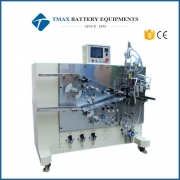 Automatic Cylinderical Battery Electrode Winding Machine
Read More
Automatic Cylinderical Battery Electrode Winding Machine
Read More
-
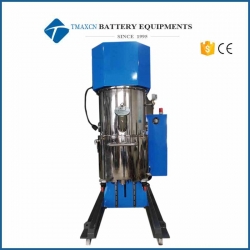 100-200L Double Planetary Vacuum Mixing Machine for Lithium Battery Slurry
Read More
100-200L Double Planetary Vacuum Mixing Machine for Lithium Battery Slurry
Read More
-
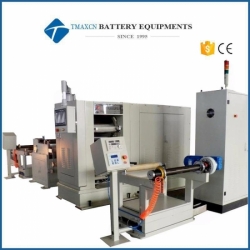 Large Heating Roller Press Machine Calender For Li ion Battery Production Line
Read More
Large Heating Roller Press Machine Calender For Li ion Battery Production Line
Read More
-
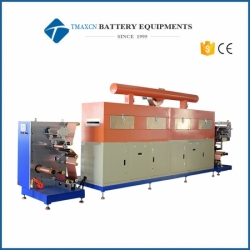 Large 3 Rollers Battery Electrode Film Intermittent Coating Machine for Pilot Production Line
Read More
Large 3 Rollers Battery Electrode Film Intermittent Coating Machine for Pilot Production Line
Read More
-
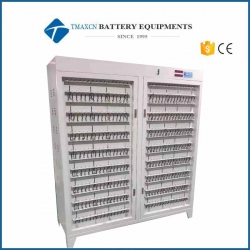 512 Channel 5V3A Battery Grading Machine/Battery Charge Discharge Machine Tester
Read More
512 Channel 5V3A Battery Grading Machine/Battery Charge Discharge Machine Tester
Read More
 David@battery-equipments.com

