 English▼



- Battery Manufacturing Equipment
- Battery Laboratory Assembly Equipment
- Battery Pack Assembly Equipment
- Sodium Ion Battery Manufacturing Equipment
- Solid State Cell Production Line
- Dry Electrode Assembly Equipment
- Supercapacitor Assembly Equipment
- Perovskite Solar Cell Lab Equipment
- Li ion Battery Materials
- Ni / Al / Cu Metal Foam
- Customized Electrode
- Cathode Active Materials
- Anode Active Materials
- Coin Cell Parts
- Lithium Chip
- Cylindrical Cell Parts
- Battery Current Collectors
- Battery Conductive Materials
- Electrolyte
- Battery Binder
- Separator and Tape
- Aluminum Laminate Film
- Nickel Strip/Foil
- Battery Tabs
- Graphene Materials
- Cu / Al / Ni / Stainless steel Foil
- Battery Laboratory Equipment
- Li ion Battery Tester
- Battery Safety Tester
- Material Characterization Tester
- Rolling Press Machine
- Electrode Mixer
- Coin Cell Crimping Machine
- Coin Cell Electrode Disc Punching
- Pouch Cell Sealing Machine
- Pouch Cell Stacking Machine
- Pouch Cell Forming Machine
- Pouch Cell Ultrasonic Welder
- Pouch Cell Electrode Die Cutter
- Cylinder Cell Sealing Machine
- Cylinder Cell Grooving Machine
- Electrode Slitting Machine
- Cylinder Cell Winding Machine
- Cylinder Cell Spot Welding Machine
- Electrolyte Filling
- Type Test Cell
- Other Battery Making Machine
- NMP Solvent Treatment System
- Vacuum Glove Box
- Coating Machine
- Lab Furnaces
- Ball Mill
- Laboratory Press
- Laboratory Equipment
- Press Equipment
blog
Doctor Blade (Dr Blade) Coating System
Overview
A doctor blade, commonly referred to as a Dr Blade, is a precision mechanical device used for the controlled deposition of liquid or slurry materials onto substrates to form uniform thin films. This equipment is widely employed in industries and research laboratories focused on energy storage, electronics, coatings, and functional materials. The Dr Blade system is a fundamental tool for the fabrication of battery electrodes, conductive films, sensors, and other thin-film devices due to its simplicity, accuracy, and reproducibility.
In a typical doctor blade setup, a slurry is deposited onto a moving or stationary substrate, and a blade, positioned at a precise gap, spreads the material into a uniform layer. By adjusting parameters such as blade gap, coating speed, and slurry viscosity, operators can control the thickness and homogeneity of the deposited film, making the Dr Blade system ideal for both experimental and small-scale production purposes.
Features
Modern doctor blade systems integrate several features to enhance precision, flexibility, and operational efficiency:
1. Adjustable Blade Gap
The gap between the blade and the substrate can be finely tuned, allowing precise control of film thickness ranging from a few micrometers to several hundred micrometers.
2. Variable Coating Speed
Substrate movement speed can be adjusted to influence film uniformity, drying behavior, and deposition rate.
3. Substrate Compatibility
Doctor blade systems accommodate various substrate materials, including glass, metal foils, polymer films, and flexible substrates.
4. Temperature-Controlled Platforms
Some advanced systems incorporate heated substrates or blades to improve wetting, reduce solvent evaporation issues, and achieve smoother films.
5. Automated and Manual Operation
Laboratory Dr Blade systems may support both automated motorized coating for reproducibility and manual operation for flexibility in small-scale experiments.
6. Easy Cleaning and Maintenance
Blades are typically made of stainless steel, ceramic, or polymer materials, allowing easy cleaning and replacement to minimize contamination and maintain high-quality films.
Process
The Dr Blade coating process is a straightforward yet highly controlled procedure that ensures uniform film formation:
1. Substrate Preparation
The substrate is cleaned and positioned on the coating platform, sometimes with a vacuum or adhesive system to hold it in place.
2. Slurry Deposition
A pre-mixed slurry or solution, often containing active materials, binders, and solvents, is deposited at the edge of the substrate or between defined boundaries.
3. Blade Spreading
The doctor blade spreads the slurry evenly across the substrate. The film thickness is determined by the gap between the blade and the substrate, the viscosity of the slurry, and the coating speed.
4. Drying and Solidification
The coated layer is dried under controlled conditions to remove solvents, forming a uniform, solid thin film suitable for subsequent processing or testing.
5. Optional Post-Treatment
Additional steps, such as calendaring, sintering, or annealing, can improve film density, adhesion, and surface properties depending on the application.
Doctor blade systems are widely applied across research, experimental, and industrial fields:
* Battery and Energy Storage
Fabrication of electrodes for lithium-ion, sodium-ion, and solid-state batteries with uniform thickness and high reproducibility.
* Printed Electronics
Deposition of conductive inks, polymer layers, or dielectric coatings for flexible electronics, sensors, and thin-film transistors.
* Functional Coatings
Production of barrier layers, optical coatings, and protective films for industrial and packaging applications.
* Photovoltaics
Coating of perovskite, organic, or other thin-film solar cell layers to achieve uniform light-absorbing films.
* Research and Prototyping
Laboratory-scale deposition of experimental formulations for testing material properties, device performance, or process optimization.
Advantages
The doctor blade system offers multiple benefits for thin-film deposition and material processing:
1. High Precision
Adjustable blade gap and controlled substrate motion allow highly uniform film thickness and smooth surfaces.
2. Versatility
Compatible with various substrates, slurries, and coating materials, supporting a wide range of applications.
3. Cost-Effectiveness
Simple design, easy maintenance, and minimal material waste make it ideal for laboratory and small-scale production.
4. Reproducibility
Automated systems ensure consistent deposition across multiple samples, enhancing experimental accuracy.
5. Scalability
Process parameters can be optimized in the laboratory and scaled to roll-to-roll or industrial coating systems.
6. Ease of Operation
Both manual and automated systems are user-friendly, enabling rapid prototyping and material testing.
Conclusion
The doctor blade (Dr Blade) system is a critical mechanical tool for precise, uniform thin-film deposition. By integrating adjustable blade control, substrate movement, and optional environmental or thermal regulation, it enables reproducible fabrication of electrodes, functional coatings, and thin films for a variety of applications.
With applications spanning energy storage, printed electronics, photovoltaics, and materials research, Dr Blade systems offer versatility, precision, and cost-effective operation. They provide an essential platform for both experimental development and small-scale production, enabling innovation in next-generation functional materials and thin-film devices.

- 2026-04-21
Xiamen Tmax Battery Equipments Limited was set up as a manufacturer in 1995, dealing with lithium battery equipments, technology, etc. We have total manufacturing facilities of around 200000 square foot and more than 230 staff. Owning a group of experie-nced engineers and staffs, we can bring you not only reliable products and technology, but also excellent services and real value you will expect and enjoy.
Doctor Blade (Dr Blade) Coating System: Precision Mechanical Equipment for Thin Film Deposition
Overview
A doctor blade, commonly referred to as a Dr Blade, is a precision mechanical device used for the controlled deposition of liquid or slurry materials onto substrates to form uniform thin films. This equipment is widely employed in industries and research laboratories focused on energy storage, electronics, coatings, and functional materials. The Dr Blade system is a fundamental tool for the fabrication of battery electrodes, conductive films, sensors, and other thin-film devices due to its simplicity, accuracy, and reproducibility.
In a typical doctor blade setup, a slurry is deposited onto a moving or stationary substrate, and a blade, positioned at a precise gap, spreads the material into a uniform layer. By adjusting parameters such as blade gap, coating speed, and slurry viscosity, operators can control the thickness and homogeneity of the deposited film, making the Dr Blade system ideal for both experimental and small-scale production purposes.
Features
Modern doctor blade systems integrate several features to enhance precision, flexibility, and operational efficiency:
1. Adjustable Blade Gap
The gap between the blade and the substrate can be finely tuned, allowing precise control of film thickness ranging from a few micrometers to several hundred micrometers.
2. Variable Coating Speed
Substrate movement speed can be adjusted to influence film uniformity, drying behavior, and deposition rate.
3. Substrate Compatibility
Doctor blade systems accommodate various substrate materials, including glass, metal foils, polymer films, and flexible substrates.
4. Temperature-Controlled Platforms
Some advanced systems incorporate heated substrates or blades to improve wetting, reduce solvent evaporation issues, and achieve smoother films.
5. Automated and Manual Operation
Laboratory Dr Blade systems may support both automated motorized coating for reproducibility and manual operation for flexibility in small-scale experiments.
6. Easy Cleaning and Maintenance
Blades are typically made of stainless steel, ceramic, or polymer materials, allowing easy cleaning and replacement to minimize contamination and maintain high-quality films.
Process
The Dr Blade coating process is a straightforward yet highly controlled procedure that ensures uniform film formation:
1. Substrate Preparation
The substrate is cleaned and positioned on the coating platform, sometimes with a vacuum or adhesive system to hold it in place.
2. Slurry Deposition
A pre-mixed slurry or solution, often containing active materials, binders, and solvents, is deposited at the edge of the substrate or between defined boundaries.
3. Blade Spreading
The doctor blade spreads the slurry evenly across the substrate. The film thickness is determined by the gap between the blade and the substrate, the viscosity of the slurry, and the coating speed.
4. Drying and Solidification
The coated layer is dried under controlled conditions to remove solvents, forming a uniform, solid thin film suitable for subsequent processing or testing.
5. Optional Post-Treatment
Additional steps, such as calendaring, sintering, or annealing, can improve film density, adhesion, and surface properties depending on the application.
Doctor blade systems are widely applied across research, experimental, and industrial fields:
* Battery and Energy Storage
Fabrication of electrodes for lithium-ion, sodium-ion, and solid-state batteries with uniform thickness and high reproducibility.
* Printed Electronics
Deposition of conductive inks, polymer layers, or dielectric coatings for flexible electronics, sensors, and thin-film transistors.
* Functional Coatings
Production of barrier layers, optical coatings, and protective films for industrial and packaging applications.
* Photovoltaics
Coating of perovskite, organic, or other thin-film solar cell layers to achieve uniform light-absorbing films.
* Research and Prototyping
Laboratory-scale deposition of experimental formulations for testing material properties, device performance, or process optimization.
Advantages
The doctor blade system offers multiple benefits for thin-film deposition and material processing:
1. High Precision
Adjustable blade gap and controlled substrate motion allow highly uniform film thickness and smooth surfaces.
2. Versatility
Compatible with various substrates, slurries, and coating materials, supporting a wide range of applications.
3. Cost-Effectiveness
Simple design, easy maintenance, and minimal material waste make it ideal for laboratory and small-scale production.
4. Reproducibility
Automated systems ensure consistent deposition across multiple samples, enhancing experimental accuracy.
5. Scalability
Process parameters can be optimized in the laboratory and scaled to roll-to-roll or industrial coating systems.
6. Ease of Operation
Both manual and automated systems are user-friendly, enabling rapid prototyping and material testing.
Conclusion
The doctor blade (Dr Blade) system is a critical mechanical tool for precise, uniform thin-film deposition. By integrating adjustable blade control, substrate movement, and optional environmental or thermal regulation, it enables reproducible fabrication of electrodes, functional coatings, and thin films for a variety of applications.
With applications spanning energy storage, printed electronics, photovoltaics, and materials research, Dr Blade systems offer versatility, precision, and cost-effective operation. They provide an essential platform for both experimental development and small-scale production, enabling innovation in next-generation functional materials and thin-film devices.
HOT PRODUCTS
-
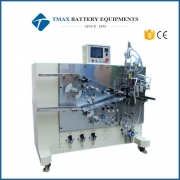 Automatic Cylinderical Battery Electrode Winding Machine
Read More
Automatic Cylinderical Battery Electrode Winding Machine
Read More
-
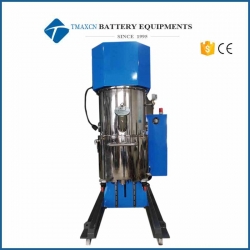 100-200L Double Planetary Vacuum Mixing Machine for Lithium Battery Slurry
Read More
100-200L Double Planetary Vacuum Mixing Machine for Lithium Battery Slurry
Read More
-
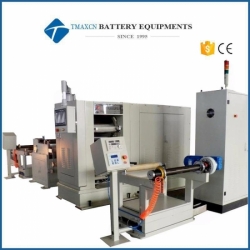 Large Heating Roller Press Machine Calender For Li ion Battery Production Line
Read More
Large Heating Roller Press Machine Calender For Li ion Battery Production Line
Read More
-
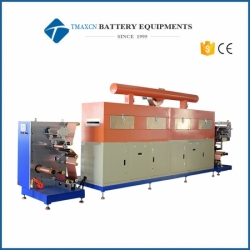 Large 3 Rollers Battery Electrode Film Intermittent Coating Machine for Pilot Production Line
Read More
Large 3 Rollers Battery Electrode Film Intermittent Coating Machine for Pilot Production Line
Read More
-
 512 Channel 5V3A Battery Grading Machine/Battery Charge Discharge Machine Tester
Read More
512 Channel 5V3A Battery Grading Machine/Battery Charge Discharge Machine Tester
Read More
 David@battery-equipments.com

