 English▼



- Battery Manufacturing Equipment
- Battery Laboratory Assembly Equipment
- Battery Pack Assembly Equipment
- Sodium Ion Battery Manufacturing Equipment
- Solid State Cell Production Line
- Dry Electrode Assembly Equipment
- Supercapacitor Assembly Equipment
- Perovskite Solar Cell Lab Equipment
- Li ion Battery Materials
- Ni / Al / Cu Metal Foam
- Customized Electrode
- Cathode Active Materials
- Anode Active Materials
- Coin Cell Parts
- Lithium Chip
- Cylindrical Cell Parts
- Battery Current Collectors
- Battery Conductive Materials
- Electrolyte
- Battery Binder
- Separator and Tape
- Aluminum Laminate Film
- Nickel Strip/Foil
- Battery Tabs
- Graphene Materials
- Cu / Al / Ni / Stainless steel Foil
- Battery Laboratory Equipment
- Li ion Battery Tester
- Battery Safety Tester
- Material Characterization Tester
- Rolling Press Machine
- Electrode Mixer
- Coin Cell Crimping Machine
- Coin Cell Electrode Disc Punching
- Pouch Cell Sealing Machine
- Pouch Cell Stacking Machine
- Pouch Cell Forming Machine
- Pouch Cell Ultrasonic Welder
- Pouch Cell Electrode Die Cutter
- Cylinder Cell Sealing Machine
- Cylinder Cell Grooving Machine
- Electrode Slitting Machine
- Cylinder Cell Winding Machine
- Cylinder Cell Spot Welding Machine
- Electrolyte Filling
- Type Test Cell
- Other Battery Making Machine
- NMP Solvent Treatment System
- Vacuum Glove Box
- Coating Machine
- Lab Furnaces
- Ball Mill
- Laboratory Press
- Laboratory Equipment
- Press Equipment
- 2026-03-06
Xiamen Tmax Battery Equipments Limited was set up as a manufacturer in 1995, dealing with lithium battery equipments, technology, etc. We have total manufacturing facilities of around 200000 square foot and more than 230 staff. Owning a group of experie-nced engineers and staffs, we can bring you not only reliable products and technology, but also excellent services and real value you will expect and enjoy.
Cold Isostatic Pressing: Overview, Features, Manufacturing Process, Applications, Advantages, and Conclusion
Cold isostatic pressing (CIP) is a high-precision powder compaction technique widely used in the production of ceramics, metals, composites, and advanced materials. Unlike conventional pressing methods, CIP applies uniform pressure from all directions, allowing for the fabrication of complex-shaped components with high density, minimal defects, and excellent mechanical properties. This technology is essential in industries requiring high-performance materials with consistent quality and reliability.
Overview
Cold isostatic pressing uses a flexible mold or container filled with powder material, which is then submerged in a fluid medium such as water or oil. Hydraulic pressure is applied uniformly to the mold from all directions, compacting the powder into a dense, cohesive preform at room or near-room temperature. Unlike hot pressing, CIP does not rely on elevated temperatures during compaction, preserving material properties and enabling subsequent sintering or heat treatment. CIP is widely used for preparing billets, ceramic parts, battery electrodes, and powder metallurgy components.
Key Features of Cold Isostatic Pressing Equipment
CIP equipment is characterized by several important features:
Uniform Pressure Application: Hydrostatic pressure ensures isotropic compaction, minimizing density gradients and defects.
High-Density Compaction: Achieves superior green density compared to uniaxial pressing, improving mechanical strength after sintering.
Complex Shape Capability: Can compact intricate and near-net-shape components without additional machining.
Flexible Mold Design: Supports various geometries, sizes, and materials.
Safety and Reliability: Designed to withstand high pressures, often exceeding 200 MPa, with robust containment and monitoring systems.
Process Control: Digital or automated control systems enable precise pressure application, dwell time, and cycle monitoring.
Manufacturing Process
The cold isostatic pressing process generally involves several steps:
Powder Preparation: Powder materials are mixed, milled, and homogenized to ensure uniform particle size and distribution.
Mold Loading: The powder is placed into a flexible mold, typically made of rubber or polymer, capable of withstanding high-pressure fluid.
Isostatic Pressing: The mold is submerged in a pressure vessel filled with hydraulic fluid. Pressure is applied uniformly around the mold, compacting the powder into a dense preform.
De-Molding: After the pressure cycle, the preform is carefully removed from the mold for subsequent processing.
Post-Processing: The green compact can undergo sintering, heat treatment, or machining to achieve final material properties and dimensions.
Advanced CIP systems may include automated powder handling, programmable pressure profiles, and integrated monitoring for reproducible and high-throughput operations.
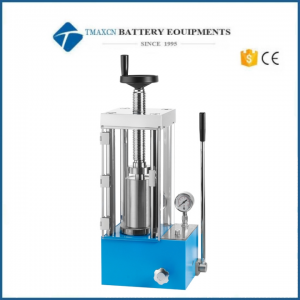
Manual Cold Isostatic Pressing
Cold isostatic pressing is used across various industries due to its ability to produce high-quality, dense, and complex components:
Ceramics: Fabrication of advanced ceramic parts for electronics, biomedical implants, and wear-resistant components.
Powder Metallurgy: Production of dense metal parts and composites with uniform microstructure.
Battery Industry: Compacting electrodes for lithium-ion, solid-state, and other battery types to enhance energy density.
Aerospace and Defense: Manufacturing of high-performance components requiring precise geometry and strength.
Automotive: Production of high-strength powder-metal parts and structural components.
Medical Devices: Fabrication of precision implants, prosthetics, and dental components.
Advantages
The main advantages of cold isostatic pressing include:
Uniform Density: Reduces defects and improves mechanical properties.
Complex Geometry Capability: Supports near-net-shape production with minimal machining.
High Efficiency: Capable of producing large and intricate components in a single pressing cycle.
Material Versatility: Suitable for metals, ceramics, composites, and battery materials.
Scalability: Adaptable for laboratory research, pilot production, and industrial manufacturing.
Cost-Effectiveness: Minimizes material waste and reduces post-processing requirements.
Conclusion
In conclusion, cold isostatic pressing is a versatile and high-performance powder compaction technique that provides uniform density, precise geometry, and superior mechanical properties. Its ability to compact metals, ceramics, composites, and battery materials into complex shapes makes it invaluable in industries ranging from aerospace and automotive to electronics and medical devices. By combining isotropic pressure application, flexible mold design, and precise process control, CIP enables the production of high-quality components with minimal defects, optimized performance, and enhanced reliability. As material technology continues to advance, cold isostatic pressing remains a critical tool in modern manufacturing and research for achieving high-performance, cost-effective, and reproducible components.
-
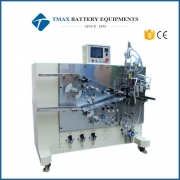 Automatic Cylinderical Battery Electrode Winding Machine
Read More
Automatic Cylinderical Battery Electrode Winding Machine
Read More
-
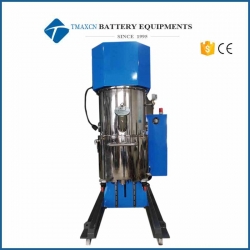 100-200L Double Planetary Vacuum Mixing Machine for Lithium Battery Slurry
Read More
100-200L Double Planetary Vacuum Mixing Machine for Lithium Battery Slurry
Read More
-
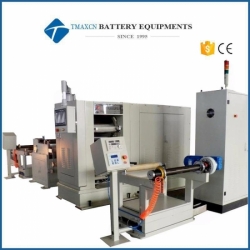 Large Heating Roller Press Machine Calender For Li ion Battery Production Line
Read More
Large Heating Roller Press Machine Calender For Li ion Battery Production Line
Read More
-
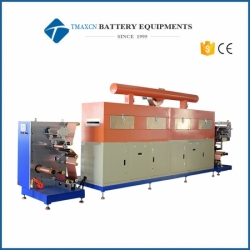 Large 3 Rollers Battery Electrode Film Intermittent Coating Machine for Pilot Production Line
Read More
Large 3 Rollers Battery Electrode Film Intermittent Coating Machine for Pilot Production Line
Read More
-
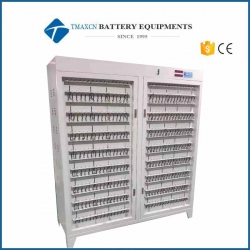 512 Channel 5V3A Battery Grading Machine/Battery Charge Discharge Machine Tester
Read More
512 Channel 5V3A Battery Grading Machine/Battery Charge Discharge Machine Tester
Read More
 David@battery-equipments.com

