 English▼



- Battery Manufacturing Equipment
- Battery Laboratory Assembly Equipment
- Battery Pack Assembly Equipment
- Sodium Ion Battery Manufacturing Equipment
- Solid State Cell Production Line
- Dry Electrode Assembly Equipment
- Supercapacitor Assembly Equipment
- Perovskite Solar Cell Lab Equipment
- Li ion Battery Materials
- Ni / Al / Cu Metal Foam
- Customized Electrode
- Cathode Active Materials
- Anode Active Materials
- Coin Cell Parts
- Lithium Chip
- Cylindrical Cell Parts
- Battery Current Collectors
- Battery Conductive Materials
- Electrolyte
- Battery Binder
- Separator and Tape
- Aluminum Laminate Film
- Nickel Strip/Foil
- Battery Tabs
- Graphene Materials
- Cu / Al / Ni / Stainless steel Foil
- Battery Laboratory Equipment
- Li ion Battery Tester
- Battery Safety Tester
- Material Characterization Tester
- Rolling Press Machine
- Electrode Mixer
- Coin Cell Crimping Machine
- Coin Cell Electrode Disc Punching
- Pouch Cell Sealing Machine
- Pouch Cell Stacking Machine
- Pouch Cell Forming Machine
- Pouch Cell Ultrasonic Welder
- Pouch Cell Electrode Die Cutter
- Cylinder Cell Sealing Machine
- Cylinder Cell Grooving Machine
- Electrode Slitting Machine
- Cylinder Cell Winding Machine
- Cylinder Cell Spot Welding Machine
- Electrolyte Filling
- Type Test Cell
- Other Battery Making Machine
- NMP Solvent Treatment System
- Vacuum Glove Box
- Coating Machine
- Lab Furnaces
- Ball Mill
- Laboratory Press
- Laboratory Equipment
- Press Equipment
blog
Nickel Foam
Nickel Foam: A High-Performance Porous Material for Advanced Experimental Applications
Overview
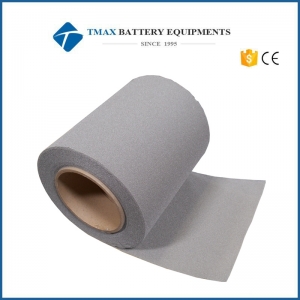
Nickel foam is a highly porous, lightweight metallic material composed of an interconnected three-dimensional network of nickel ligaments. Its open-cell structure, large surface area, and excellent electrical and thermal conductivity make it an essential material in scientific research, electrochemical studies, and industrial development. Due to its unique combination of mechanical stability and chemical resistance, nickel foam has become a preferred substrate for energy storage experiments, catalyst support studies, battery electrode fabrication, filtration research, and various laboratory prototypes.
Material Characteristics
One of the most notable characteristics of nickel foam is its exceptionally high porosity, commonly ranging from 85% to 98%. This porosity leads to a significantly expanded internal surface area, allowing enhanced interaction between the material and electrolytes, reactants, or gases in experimental environments. The uniform pore distribution also ensures consistent flow and diffusion behavior, which is crucial for controlled laboratory testing.
Another defining property is excellent electrical conductivity. Unlike carbon-based porous materials, nickel foam conducts electricity efficiently while remaining structurally robust. This makes it an ideal current collector in batteries, supercapacitors, and catalytic electrode research.
Nickel foam also exhibits outstanding thermal stability. It can withstand high temperatures, harsh environments, and high-current operations without structural degradation. Combined with nickel’s inherent corrosion resistance, researchers can employ nickel foam in strong alkaline, acidic, and oxidizing conditions.
Manufacturing Process
The production of nickel foam primarily follows two major processes: the polyurethane template method and electrodeposition.
1. Polyurethane Template Method
In this commonly used technique, a polyurethane foam skeleton serves as the initial template. The foam is coated with a nickel slurry and subjected to repeated impregnation to ensure uniform coverage. After drying and sintering, the organic template decomposes, leaving behind a network of pure metallic nickel. This process results in an open-cell foam structure with excellent mechanical strength and consistency.
2. Electrodeposition Foam (Electroplated Foam)
Another manufacturing method involves electrodepositing nickel onto a conductive pore-forming substrate. The pores are subsequently removed through chemical dissolution or heating. This method allows precise control over pore size, thickness, and density, making it suitable for applications requiring tailored microstructures.
Both processes ultimately produce nickel foam with adjustable porosity, cell size, and thickness to meet various research needs.
Nickel foam has become a core experimental material across numerous fields:
* Battery and Supercapacitor Research
Nickel foam is widely used as a current collector, especially in lithium-ion, nickel-metal hydride (NiMH), and nickel-cadmium (NiCd) battery development. Its porous structure facilitates efficient charge transfer and enables uniform electrode material loading. In supercapacitor studies, nickel foam enhances ion transport and improves cycling stability.
* Catalyst Support and Electrocatalysis
In hydrogen evolution, oxygen evolution, CO₂ reduction, and fuel cell research, nickel foam serves as an effective catalyst support. Its high surface area provides abundant active sites for catalytic materials such as nickel hydroxide, cobalt oxides, or noble metals.
* Thermal and Acoustic Management Studies
Due to its excellent heat dissipation properties, nickel foam is used in experimental heat exchangers, cooling systems, and sound absorption projects.
* Filtration and Fluid Dynamics Research
Nickel foam is frequently applied in gas filtration, liquid purification, and flow modeling experiments. Its interconnected pores allow researchers to examine permeability, turbulence, and reactive flow behaviors.
* Laboratory Electrode Fabrication
Nickel foam is a preferred substrate for constructing custom electrodes, allowing easy material deposition through plating, coating, or spraying.
Advantages
Nickel foam provides several advantages over other porous materials:
* High electrical conductivity, enabling efficient current collection and reduced internal resistance.
* Large specific surface area, improving catalytic performance and electrode activity.
* Mechanical robustness, allowing repeated cycling, bending, and high-pressure operation.
* Chemical stability, making it suitable for aggressive electrolytes and testing environments.
* Lightweight structure, contributing to improved device energy density in experimental setups.
* Ease of modification, allowing researchers to tailor pore size, surface coatings, and structure for specific applications.
Conclusion
Nickel foam is a versatile and high-performance material with significant importance in experimental and industrial research. Its combination of porosity, conductivity, chemical durability, and structural flexibility enables advancements in energy storage, catalysis, filtration, and thermal management. As scientific research continues to expand into more complex electrochemical and functional material systems, nickel foam will remain a critical component supporting next-generation innovations.
- 2025-12-16
Xiamen Tmax Battery Equipments Limited was set up as a manufacturer in 1995, dealing with lithium battery equipments, technology, etc. We have total manufacturing facilities of around 200000 square foot and more than 230 staff. Owning a group of experie-nced engineers and staffs, we can bring you not only reliable products and technology, but also excellent services and real value you will expect and enjoy.
Nickel Foam: A High-Performance Porous Material for Advanced Experimental Applications
Overview
Nickel foam is a highly porous, lightweight metallic material composed of an interconnected three-dimensional network of nickel ligaments. Its open-cell structure, large surface area, and excellent electrical and thermal conductivity make it an essential material in scientific research, electrochemical studies, and industrial development. Due to its unique combination of mechanical stability and chemical resistance, nickel foam has become a preferred substrate for energy storage experiments, catalyst support studies, battery electrode fabrication, filtration research, and various laboratory prototypes.
Material Characteristics
One of the most notable characteristics of nickel foam is its exceptionally high porosity, commonly ranging from 85% to 98%. This porosity leads to a significantly expanded internal surface area, allowing enhanced interaction between the material and electrolytes, reactants, or gases in experimental environments. The uniform pore distribution also ensures consistent flow and diffusion behavior, which is crucial for controlled laboratory testing.
Another defining property is excellent electrical conductivity. Unlike carbon-based porous materials, nickel foam conducts electricity efficiently while remaining structurally robust. This makes it an ideal current collector in batteries, supercapacitors, and catalytic electrode research.
Nickel foam also exhibits outstanding thermal stability. It can withstand high temperatures, harsh environments, and high-current operations without structural degradation. Combined with nickel’s inherent corrosion resistance, researchers can employ nickel foam in strong alkaline, acidic, and oxidizing conditions.
Manufacturing Process
The production of nickel foam primarily follows two major processes: the polyurethane template method and electrodeposition.
1. Polyurethane Template Method
In this commonly used technique, a polyurethane foam skeleton serves as the initial template. The foam is coated with a nickel slurry and subjected to repeated impregnation to ensure uniform coverage. After drying and sintering, the organic template decomposes, leaving behind a network of pure metallic nickel. This process results in an open-cell foam structure with excellent mechanical strength and consistency.
2. Electrodeposition Foam (Electroplated Foam)
Another manufacturing method involves electrodepositing nickel onto a conductive pore-forming substrate. The pores are subsequently removed through chemical dissolution or heating. This method allows precise control over pore size, thickness, and density, making it suitable for applications requiring tailored microstructures.
Both processes ultimately produce nickel foam with adjustable porosity, cell size, and thickness to meet various research needs.
Nickel foam has become a core experimental material across numerous fields:
* Battery and Supercapacitor Research
Nickel foam is widely used as a current collector, especially in lithium-ion, nickel-metal hydride (NiMH), and nickel-cadmium (NiCd) battery development. Its porous structure facilitates efficient charge transfer and enables uniform electrode material loading. In supercapacitor studies, nickel foam enhances ion transport and improves cycling stability.
* Catalyst Support and Electrocatalysis
In hydrogen evolution, oxygen evolution, CO₂ reduction, and fuel cell research, nickel foam serves as an effective catalyst support. Its high surface area provides abundant active sites for catalytic materials such as nickel hydroxide, cobalt oxides, or noble metals.
* Thermal and Acoustic Management Studies
Due to its excellent heat dissipation properties, nickel foam is used in experimental heat exchangers, cooling systems, and sound absorption projects.
* Filtration and Fluid Dynamics Research
Nickel foam is frequently applied in gas filtration, liquid purification, and flow modeling experiments. Its interconnected pores allow researchers to examine permeability, turbulence, and reactive flow behaviors.
* Laboratory Electrode Fabrication
Nickel foam is a preferred substrate for constructing custom electrodes, allowing easy material deposition through plating, coating, or spraying.
Advantages
Nickel foam provides several advantages over other porous materials:
* High electrical conductivity, enabling efficient current collection and reduced internal resistance.
* Large specific surface area, improving catalytic performance and electrode activity.
* Mechanical robustness, allowing repeated cycling, bending, and high-pressure operation.
* Chemical stability, making it suitable for aggressive electrolytes and testing environments.
* Lightweight structure, contributing to improved device energy density in experimental setups.
* Ease of modification, allowing researchers to tailor pore size, surface coatings, and structure for specific applications.
Conclusion
Nickel foam is a versatile and high-performance material with significant importance in experimental and industrial research. Its combination of porosity, conductivity, chemical durability, and structural flexibility enables advancements in energy storage, catalysis, filtration, and thermal management. As scientific research continues to expand into more complex electrochemical and functional material systems, nickel foam will remain a critical component supporting next-generation innovations.
HOT PRODUCTS
-
 Automatic Cylinderical Battery Electrode Winding Machine
Read More
Automatic Cylinderical Battery Electrode Winding Machine
Read More
-
 100-200L Double Planetary Vacuum Mixing Machine for Lithium Battery Slurry
Read More
100-200L Double Planetary Vacuum Mixing Machine for Lithium Battery Slurry
Read More
-
 Large Heating Roller Press Machine Calender For Li ion Battery Production Line
Read More
Large Heating Roller Press Machine Calender For Li ion Battery Production Line
Read More
-
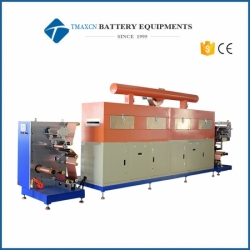 Large 3 Rollers Battery Electrode Film Intermittent Coating Machine for Pilot Production Line
Read More
Large 3 Rollers Battery Electrode Film Intermittent Coating Machine for Pilot Production Line
Read More
-
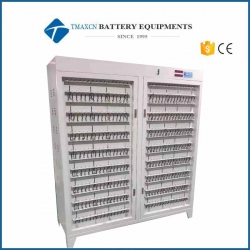 512 Channel 5V3A Battery Grading Machine/Battery Charge Discharge Machine Tester
Read More
512 Channel 5V3A Battery Grading Machine/Battery Charge Discharge Machine Tester
Read More
 David@battery-equipments.com

