 English▼



- Battery Manufacturing Equipment
- Battery Laboratory Assembly Equipment
- Battery Pack Assembly Equipment
- Sodium Ion Battery Manufacturing Equipment
- Solid State Cell Production Line
- Dry Electrode Assembly Equipment
- Supercapacitor Assembly Equipment
- Perovskite Solar Cell Lab Equipment
- Li ion Battery Materials
- Ni / Al / Cu Metal Foam
- Customized Electrode
- Cathode Active Materials
- Anode Active Materials
- Coin Cell Parts
- Lithium Chip
- Cylindrical Cell Parts
- Battery Current Collectors
- Battery Conductive Materials
- Electrolyte
- Battery Binder
- Separator and Tape
- Aluminum Laminate Film
- Nickel Strip/Foil
- Battery Tabs
- Graphene Materials
- Cu / Al / Ni / Stainless steel Foil
- Battery Laboratory Equipment
- Li ion Battery Tester
- Battery Safety Tester
- Material Characterization Tester
- Rolling Press Machine
- Electrode Mixer
- Coin Cell Crimping Machine
- Coin Cell Electrode Disc Punching
- Pouch Cell Sealing Machine
- Pouch Cell Stacking Machine
- Pouch Cell Forming Machine
- Pouch Cell Ultrasonic Welder
- Pouch Cell Electrode Die Cutter
- Cylinder Cell Sealing Machine
- Cylinder Cell Grooving Machine
- Electrode Slitting Machine
- Cylinder Cell Winding Machine
- Cylinder Cell Spot Welding Machine
- Electrolyte Filling
- Type Test Cell
- Other Battery Making Machine
- NMP Solvent Treatment System
- Vacuum Glove Box
- Coating Machine
- Lab Furnaces
- Ball Mill
- Laboratory Press
- Laboratory Equipment
- Press Equipment
- 2026-01-20
Xiamen Tmax Battery Equipments Limited was set up as a manufacturer in 1995, dealing with lithium battery equipments, technology, etc. We have total manufacturing facilities of around 200000 square foot and more than 230 staff. Owning a group of experie-nced engineers and staffs, we can bring you not only reliable products and technology, but also excellent services and real value you will expect and enjoy.
Ball Mill: Overview, Features, Manufacturing Process, Applications, Advantages, and Conclusion
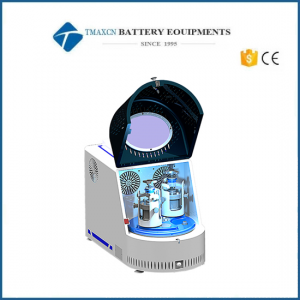
A ball mill is a widely used grinding and milling machine in the industrial and chemical processing sectors. It is designed to grind materials into fine powder or achieve particle size reduction for various applications. The ball mill operates on the principle of impact and attrition, where grinding media (usually steel or ceramic balls) rotate inside a cylindrical drum, crushing and grinding the material into fine particles. Its versatility, efficiency, and robust design make it an essential piece of equipment in mining, pharmaceuticals, chemicals, and material engineering industries.
Overview
A ball mill consists of a rotating cylindrical shell partially filled with grinding media and the material to be processed. The drum rotates around a horizontal or slightly inclined axis, causing the grinding media to lift and drop onto the material. This continuous motion results in efficient size reduction and mixing of the raw material. Ball mills can operate in either wet or dry conditions and are available in various sizes, ranging from small laboratory models to large industrial mills.
Key Features of Ball Mills
Ball mills exhibit several distinctive characteristics that make them suitable for industrial use:
Versatile Material Processing: Can grind a wide range of materials, including ores, chemicals, ceramics, and pharmaceuticals.
Multiple Operation Modes: Supports wet and dry grinding processes.
Adjustable Rotation Speed: Enables control over grinding efficiency and particle size distribution.
Robust and Durable Construction: Designed to withstand heavy-duty industrial use.
Uniform Particle Size: Ensures consistent material quality and processing outcomes.
Energy Efficiency: Optimized designs reduce energy consumption while maintaining high performance.
Manufacturing Process
The operation of a ball mill involves several steps:
Material Loading: The raw material and appropriate grinding media are loaded into the cylindrical drum.
Rotation: The drum rotates at a set speed, causing the grinding media to cascade and impact the material.
Grinding and Mixing: The repeated impact, friction, and attrition of the media reduce particle size and homogenize the mixture.
Discharge: The processed material is collected through a discharge port once the desired fineness is achieved.
Optional Classification: For some applications, materials are classified or sieved after grinding to achieve uniform particle size.
Advanced ball mills may also incorporate variable frequency drives, liners for abrasion resistance, and automated control systems to enhance efficiency and output.
Ball mills are extensively used across industries due to their adaptability:
Mining and Mineral Processing: Grinding ores to prepare for extraction of metals.
Cement and Construction Materials: Producing fine powders for cement, ceramics, and building materials.
Chemical Industry: Grinding chemicals for catalysts, pigments, and powder-based products.
Pharmaceuticals: Producing fine powders for medications, supplements, and active ingredients.
Material Science and Nanotechnology: Reducing particle size for advanced materials, coatings, and nanocomposites.
Laboratory Research: Small-scale ball mills are used for sample preparation and experimental grinding.
Advantages
The main advantages of ball mills include:
High Grinding Efficiency: Effective for fine and uniform particle size reduction.
Versatility: Capable of processing a wide variety of materials under different conditions.
Continuous Operation: Suitable for both batch and continuous processing.
Scalable Design: Available in laboratory, pilot, and industrial scales.
Durability and Low Maintenance: Designed for long-term operation in heavy-duty environments.
Customizable: Grinding media, drum size, and rotation speed can be adjusted to optimize performance.
Conclusion
In conclusion, the ball mill is a critical piece of equipment for material size reduction, blending, and fine grinding across multiple industries. Its robust construction, versatility, and ability to produce uniform particle sizes make it indispensable in mining, chemical processing, pharmaceuticals, cement production, and advanced material research. With adjustable operating parameters, energy-efficient designs, and scalable models, ball mills continue to provide reliable, high-performance solutions for modern industrial and laboratory applications.
-
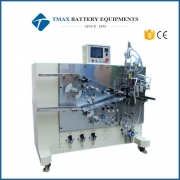 Automatic Cylinderical Battery Electrode Winding Machine
Read More
Automatic Cylinderical Battery Electrode Winding Machine
Read More
-
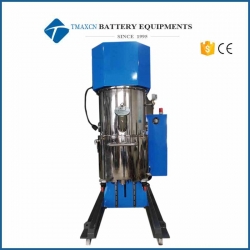 100-200L Double Planetary Vacuum Mixing Machine for Lithium Battery Slurry
Read More
100-200L Double Planetary Vacuum Mixing Machine for Lithium Battery Slurry
Read More
-
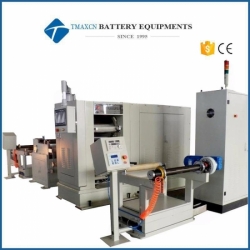 Large Heating Roller Press Machine Calender For Li ion Battery Production Line
Read More
Large Heating Roller Press Machine Calender For Li ion Battery Production Line
Read More
-
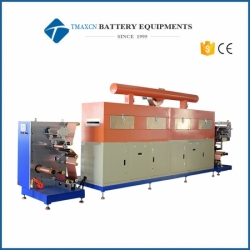 Large 3 Rollers Battery Electrode Film Intermittent Coating Machine for Pilot Production Line
Read More
Large 3 Rollers Battery Electrode Film Intermittent Coating Machine for Pilot Production Line
Read More
-
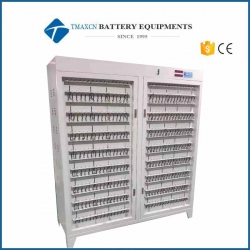 512 Channel 5V3A Battery Grading Machine/Battery Charge Discharge Machine Tester
Read More
512 Channel 5V3A Battery Grading Machine/Battery Charge Discharge Machine Tester
Read More
 David@battery-equipments.com

