 English▼



- Battery Manufacturing Equipment
- Battery Laboratory Assembly Equipment
- Battery Pack Assembly Equipment
- Sodium Ion Battery Manufacturing Equipment
- Solid State Cell Production Line
- Dry Electrode Assembly Equipment
- Supercapacitor Assembly Equipment
- Perovskite Solar Cell Lab Equipment
- Li ion Battery Materials
- Ni / Al / Cu Metal Foam
- Customized Electrode
- Cathode Active Materials
- Anode Active Materials
- Coin Cell Parts
- Lithium Chip
- Cylindrical Cell Parts
- Battery Current Collectors
- Battery Conductive Materials
- Electrolyte
- Battery Binder
- Separator and Tape
- Aluminum Laminate Film
- Nickel Strip/Foil
- Battery Tabs
- Graphene Materials
- Cu / Al / Ni / Stainless steel Foil
- Battery Laboratory Equipment
- Li ion Battery Tester
- Battery Safety Tester
- Material Characterization Tester
- Rolling Press Machine
- Electrode Mixer
- Coin Cell Crimping Machine
- Coin Cell Electrode Disc Punching
- Pouch Cell Sealing Machine
- Pouch Cell Stacking Machine
- Pouch Cell Forming Machine
- Pouch Cell Ultrasonic Welder
- Pouch Cell Electrode Die Cutter
- Cylinder Cell Sealing Machine
- Cylinder Cell Grooving Machine
- Electrode Slitting Machine
- Cylinder Cell Winding Machine
- Cylinder Cell Spot Welding Machine
- Electrolyte Filling
- Type Test Cell
- Other Battery Making Machine
- NMP Solvent Treatment System
- Vacuum Glove Box
- Coating Machine
- Lab Furnaces
- Ball Mill
- Laboratory Press
- Laboratory Equipment
- Press Equipment
blog
Coin Cell Crimper
Coin Cell Crimper: A Comprehensive Introduction to Precision Battery Sealing Equipment
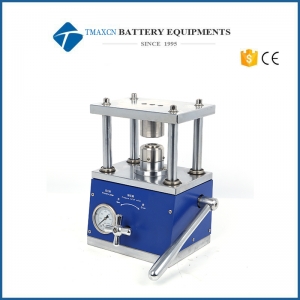
A coin cell crimper is a specialized mechanical device designed for assembling and sealing cointype lithium, sodium, and other smallformat batteries such as CR2032, CR2025, and CR2016. Widely used in laboratories, research centers, and pilotscale battery production lines, the coin cell crimper plays a critical role in ensuring the structural integrity, airtightness, and longterm performance of coin cells. Its accuracy, stability, and userfriendly operation make it indispensable in electrochemical research, material evaluation, and battery prototype development.
Overview
The coin cell crimper is engineered to deliver precise and uniform pressure to seal the positive and negative caps of a coin cell with its internal components—electrodes, separators, and electrolyte. It typically consists of a durable steel frame, a highprecision hydraulic or pneumatic system, and interchangeable die sets tailored to different coin cell formats. Through controlled crimping force and welldesigned sealing mechanisms, the crimper ensures consistent battery structure, preventing leakage and ensuring superior electrochemical performance.
Most advanced models integrate safety interlocks, digital pressure control, and ergonomic features to support repeatable, researchgrade operation. As a result, the coin cell crimper has become standard equipment in battery R&D labs worldwide.
Key Features
One of the major features of the coin cell crimper is its high sealing accuracy. The machine applies a controlled compression force to achieve airtight sealing, preventing electrolyte evaporation or contamination. Many models deliver crimping pressure with an accuracy of ±1%, ensuring reproducibility across batches.
Another essential characteristic is compatibility with multiple coin cell sizes. By switching dies, users can seal CR20XX series, CR16XX series, and specialized formats. Additionally, modern crimpers are designed with rigid, corrosionresistant frames, ensuring longterm stability even under continuous use.
Safety features are also a key component. Mechanical locking systems, antipinch design, and overload protection make operation safe in a laboratory environment. Some advanced units include digital pressure displays, adjustable stroke limits, and motordriven automation to ensure optimal control and convenience.
Crimping Process
The sealing process of a coin cell crimper generally includes the following steps:
1. Perform cell assembly: Insert the anode, separator, cathode, spacer, spring, and gasket into the coin cell case.
2. Place the assembled cell into the die: The bottom shell is positioned into the lower die, while the top cap aligns with the upper die.
3. Apply controlled pressure: The crimper’s hydraulic or manual lever mechanism applies vertical compression to fold and seal the aluminum or stainless steel casing.
4. Complete crimping: The cell is locked into its final form, with uniform edge sealing ensuring mechanical strength and airtight integrity.
Some advanced crimpers include postcrimp smoothing, ensuring that burrs or uneven edges are eliminated to maintain safety and aesthetic quality.
Applications
The coin cell crimper is widely used in:
# Battery Research and Development
* Fabricating test cells for evaluating new cathode and anode materials
* Screening electrolyte compositions
* Studying SEI formation and cycling performance
# Education and Training
* Teaching fundamental battery assembly techniques
* Demonstrating electrochemical cell concept in academic laboratories
# Pilot Production & Material Quality Control
* Producing small batches of coin cells for performance verification
* Comparing different coating recipes or electrode formulations
# Specialized Batteries
* Sodiumion and potassiumion coin cell prototypes
* Solidstate battery research using thin ceramic or polymer electrolytes
The versatility and precision of coin cell crimpers make them a foundational tool across many branches of battery science.
Advantages
A coin cell crimper offers several significant advantages:
* Reliable sealing quality: Assures consistent, airtight crimping, critical for accurate performance testing.
* High reproducibility: Ensures uniform sealing force, making experimental data comparable across trials.
* Flexible configuration: Supports multiple battery sizes through interchangeable dies.
* Ergonomic and safe: Simple operation, manual or automated, with strong safety protections.
* Costeffective: Provides professional sealing performance at a fraction of industrial production equipment costs.
Additionally, modern crimpers require minimal maintenance and have long operational lifespans, making them ideal for research institutions and laboratories.
Conclusion
The coin cell crimper is a fundamental piece of laboratory equipment essential for precision sealing of cointype batteries. With its stable structure, high crimping accuracy, and broad applicability across battery research and material evaluation, it serves as a reliable tool for scientists and engineers working in electrochemical energy storage. Its combination of performance, durability, and ease of use ensures that it remains a standard instrument for producing highquality coin cells in research and development environments.
- 2026-01-16
Xiamen Tmax Battery Equipments Limited was set up as a manufacturer in 1995, dealing with lithium battery equipments, technology, etc. We have total manufacturing facilities of around 200000 square foot and more than 230 staff. Owning a group of experie-nced engineers and staffs, we can bring you not only reliable products and technology, but also excellent services and real value you will expect and enjoy.
Coin Cell Crimper: A Comprehensive Introduction to Precision Battery Sealing Equipment
A coin cell crimper is a specialized mechanical device designed for assembling and sealing cointype lithium, sodium, and other smallformat batteries such as CR2032, CR2025, and CR2016. Widely used in laboratories, research centers, and pilotscale battery production lines, the coin cell crimper plays a critical role in ensuring the structural integrity, airtightness, and longterm performance of coin cells. Its accuracy, stability, and userfriendly operation make it indispensable in electrochemical research, material evaluation, and battery prototype development.
Overview
The coin cell crimper is engineered to deliver precise and uniform pressure to seal the positive and negative caps of a coin cell with its internal components—electrodes, separators, and electrolyte. It typically consists of a durable steel frame, a highprecision hydraulic or pneumatic system, and interchangeable die sets tailored to different coin cell formats. Through controlled crimping force and welldesigned sealing mechanisms, the crimper ensures consistent battery structure, preventing leakage and ensuring superior electrochemical performance.
Most advanced models integrate safety interlocks, digital pressure control, and ergonomic features to support repeatable, researchgrade operation. As a result, the coin cell crimper has become standard equipment in battery R&D labs worldwide.
Key Features
One of the major features of the coin cell crimper is its high sealing accuracy. The machine applies a controlled compression force to achieve airtight sealing, preventing electrolyte evaporation or contamination. Many models deliver crimping pressure with an accuracy of ±1%, ensuring reproducibility across batches.
Another essential characteristic is compatibility with multiple coin cell sizes. By switching dies, users can seal CR20XX series, CR16XX series, and specialized formats. Additionally, modern crimpers are designed with rigid, corrosionresistant frames, ensuring longterm stability even under continuous use.
Safety features are also a key component. Mechanical locking systems, antipinch design, and overload protection make operation safe in a laboratory environment. Some advanced units include digital pressure displays, adjustable stroke limits, and motordriven automation to ensure optimal control and convenience.
Crimping Process
The sealing process of a coin cell crimper generally includes the following steps:
1. Perform cell assembly: Insert the anode, separator, cathode, spacer, spring, and gasket into the coin cell case.
2. Place the assembled cell into the die: The bottom shell is positioned into the lower die, while the top cap aligns with the upper die.
3. Apply controlled pressure: The crimper’s hydraulic or manual lever mechanism applies vertical compression to fold and seal the aluminum or stainless steel casing.
4. Complete crimping: The cell is locked into its final form, with uniform edge sealing ensuring mechanical strength and airtight integrity.
Some advanced crimpers include postcrimp smoothing, ensuring that burrs or uneven edges are eliminated to maintain safety and aesthetic quality.
Applications
The coin cell crimper is widely used in:
# Battery Research and Development
* Fabricating test cells for evaluating new cathode and anode materials
* Screening electrolyte compositions
* Studying SEI formation and cycling performance
# Education and Training
* Teaching fundamental battery assembly techniques
* Demonstrating electrochemical cell concept in academic laboratories
# Pilot Production & Material Quality Control
* Producing small batches of coin cells for performance verification
* Comparing different coating recipes or electrode formulations
# Specialized Batteries
* Sodiumion and potassiumion coin cell prototypes
* Solidstate battery research using thin ceramic or polymer electrolytes
The versatility and precision of coin cell crimpers make them a foundational tool across many branches of battery science.
Advantages
A coin cell crimper offers several significant advantages:
* Reliable sealing quality: Assures consistent, airtight crimping, critical for accurate performance testing.
* High reproducibility: Ensures uniform sealing force, making experimental data comparable across trials.
* Flexible configuration: Supports multiple battery sizes through interchangeable dies.
* Ergonomic and safe: Simple operation, manual or automated, with strong safety protections.
* Costeffective: Provides professional sealing performance at a fraction of industrial production equipment costs.
Additionally, modern crimpers require minimal maintenance and have long operational lifespans, making them ideal for research institutions and laboratories.
Conclusion
The coin cell crimper is a fundamental piece of laboratory equipment essential for precision sealing of cointype batteries. With its stable structure, high crimping accuracy, and broad applicability across battery research and material evaluation, it serves as a reliable tool for scientists and engineers working in electrochemical energy storage. Its combination of performance, durability, and ease of use ensures that it remains a standard instrument for producing highquality coin cells in research and development environments.
HOT PRODUCTS
-
 Automatic Cylinderical Battery Electrode Winding Machine
Read More
Automatic Cylinderical Battery Electrode Winding Machine
Read More
-
 100-200L Double Planetary Vacuum Mixing Machine for Lithium Battery Slurry
Read More
100-200L Double Planetary Vacuum Mixing Machine for Lithium Battery Slurry
Read More
-
 Large Heating Roller Press Machine Calender For Li ion Battery Production Line
Read More
Large Heating Roller Press Machine Calender For Li ion Battery Production Line
Read More
-
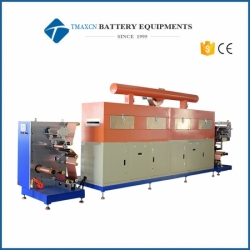 Large 3 Rollers Battery Electrode Film Intermittent Coating Machine for Pilot Production Line
Read More
Large 3 Rollers Battery Electrode Film Intermittent Coating Machine for Pilot Production Line
Read More
-
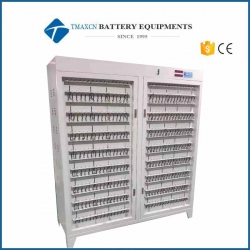 512 Channel 5V3A Battery Grading Machine/Battery Charge Discharge Machine Tester
Read More
512 Channel 5V3A Battery Grading Machine/Battery Charge Discharge Machine Tester
Read More
 David@battery-equipments.com

