 English▼



- Battery Manufacturing Equipment
- Battery Laboratory Assembly Equipment
- Battery Pack Assembly Equipment
- Sodium Ion Battery Manufacturing Equipment
- Solid State Cell Production Line
- Dry Electrode Assembly Equipment
- Supercapacitor Assembly Equipment
- Perovskite Solar Cell Lab Equipment
- Li ion Battery Materials
- Ni / Al / Cu Metal Foam
- Customized Electrode
- Cathode Active Materials
- Anode Active Materials
- Coin Cell Parts
- Lithium Chip
- Cylindrical Cell Parts
- Battery Current Collectors
- Battery Conductive Materials
- Electrolyte
- Battery Binder
- Separator and Tape
- Aluminum Laminate Film
- Nickel Strip/Foil
- Battery Tabs
- Graphene Materials
- Cu / Al / Ni / Stainless steel Foil
- Battery Laboratory Equipment
- Li ion Battery Tester
- Battery Safety Tester
- Material Characterization Tester
- Rolling Press Machine
- Electrode Mixer
- Coin Cell Crimping Machine
- Coin Cell Electrode Disc Punching
- Pouch Cell Sealing Machine
- Pouch Cell Stacking Machine
- Pouch Cell Forming Machine
- Pouch Cell Ultrasonic Welder
- Pouch Cell Electrode Die Cutter
- Cylinder Cell Sealing Machine
- Cylinder Cell Grooving Machine
- Electrode Slitting Machine
- Cylinder Cell Winding Machine
- Cylinder Cell Spot Welding Machine
- Electrolyte Filling
- Type Test Cell
- Other Battery Making Machine
- NMP Solvent Treatment System
- Vacuum Glove Box
- Coating Machine
- Lab Furnaces
- Ball Mill
- Laboratory Press
- Laboratory Equipment
- Press Equipment
blog
Bar Coater
A bar coater, also known as a wire-wound rod coater or Mayer bar coater, is a precision coating device widely used in laboratories and pilot-scale production environments. It is designed to apply uniform and controlled wet films onto a variety of substrates, making it essential in industries such as battery manufacturing, printing, packaging, adhesives, ceramics, biomaterials, and functional thin-film research. With its simple structure yet highly accurate coating output, the bar coater has become a standard tool for material development and quality consistency evaluation.
Overview
The bar coater operates based on the principle of metered coating, where a stainless steel rod wound with precision wire regulates the thickness of the wet film. By dragging the bar across a substrate at a constant speed, the liquid material is evenly distributed, resulting in a smooth and reproducible coating layer. This method is particularly effective for producing thin films ranging from a few microns to hundreds of microns, depending on the wire diameter of the coating rod.
Key Features
One of the main features of the bar coater is its high precision in film thickness control. Each rod is wound with stainless steel wire of specific diameter, allowing coating thicknesses to be standardized and repeatable. The equipment is also easy to operate, requiring minimal setup time, which makes it highly suitable for laboratory-scale experiments.
Another significant characteristic is its wide material compatibility. A bar coater can handle various coating solutions such as slurries, polymers, conductive inks, ceramic pastes, electrode materials, biomaterial gels, and UV-curable resins. Its modular design often includes interchangeable rods, adjustable coating speeds, heating plates, or vacuum chucks to ensure strong substrate adhesion and optimal coating quality.
Coating Process
The bar coating process begins with preparing the substrate, ensuring it is clean and properly fixed on the coating platform. The desired coating liquid is dispensed at one end of the substrate, after which the bar is drawn across at a controlled linear speed. The wire on the rod regulates the volume of the slurry that passes beneath it, thus determining the film thickness.
Many advanced bar coaters integrate motorized drive systems, allowing precise speed control, and temperature-controlled plates that enhance coating uniformity for temperature-sensitive materials. Vacuum suction platforms are also used to prevent substrate movement during the coating process. After coating, the substrate typically undergoes drying or curing depending on material requirements.
Bar coaters are widely used across multiple industries, particularly in material development and testing:
* Lithium-ion and sodium-ion battery research: For coating electrode slurries such as cathode and anode materials on current collectors.
* Adhesives and resin coatings: For evaluating adhesive layer thickness, viscosity, and curing performance.
* Printed electronics: Used to produce uniform conductive layers, screen-printing pastes, or thin-film sensors.
* Packaging and printing: For ink formulation studies, varnish coatings, and surface treatment evaluations.
* Biomaterials and medical films: For membrane casting, hydrogel coating, and drug-delivery film development.
* Ceramic and optical materials: For preparing ceramic slurries, anti-reflective layers, or optical coatings.
Its versatility makes the bar coater indispensable for R&D departments, quality control laboratories, and small-batch production units.
Advantages
The bar coater offers several clear advantages:
* High reproducibility: Standardized wire-wound rods ensure uniform and repeatable film thickness.
* Cost-effective: Compared with advanced roll-to-roll or slot-die systems, bar coaters are inexpensive yet highly functional.
* Flexible film thickness control: By simply changing rods, users can rapidly adjust coating thickness without complex recalibration.
* Easy maintenance: The small, simple structure makes cleaning and rod replacement fast and convenient.
* Scalability: Results obtained from bar coating are reliable references for scaling up to industrial coating processes.
Conclusion
The bar coater is a highly efficient precision coating tool widely used in research and industrial environments for producing uniform thin films. With its straightforward operation, flexible film-thickness control, and broad material compatibility, it continues to be the preferred choice for coating experiments in battery technology, printed electronics, adhesives, and functional materials. Its balance of simplicity and precision ensures consistent, high-quality results crucial for modern material development.
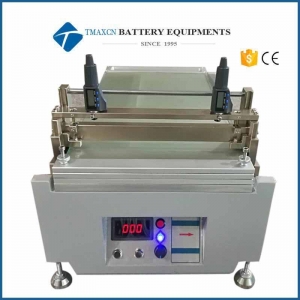
- 2026-01-13
Xiamen Tmax Battery Equipments Limited was set up as a manufacturer in 1995, dealing with lithium battery equipments, technology, etc. We have total manufacturing facilities of around 200000 square foot and more than 230 staff. Owning a group of experie-nced engineers and staffs, we can bring you not only reliable products and technology, but also excellent services and real value you will expect and enjoy.
A bar coater, also known as a wire-wound rod coater or Mayer bar coater, is a precision coating device widely used in laboratories and pilot-scale production environments. It is designed to apply uniform and controlled wet films onto a variety of substrates, making it essential in industries such as battery manufacturing, printing, packaging, adhesives, ceramics, biomaterials, and functional thin-film research. With its simple structure yet highly accurate coating output, the bar coater has become a standard tool for material development and quality consistency evaluation.
Overview
The bar coater operates based on the principle of metered coating, where a stainless steel rod wound with precision wire regulates the thickness of the wet film. By dragging the bar across a substrate at a constant speed, the liquid material is evenly distributed, resulting in a smooth and reproducible coating layer. This method is particularly effective for producing thin films ranging from a few microns to hundreds of microns, depending on the wire diameter of the coating rod.
Key Features
One of the main features of the bar coater is its high precision in film thickness control. Each rod is wound with stainless steel wire of specific diameter, allowing coating thicknesses to be standardized and repeatable. The equipment is also easy to operate, requiring minimal setup time, which makes it highly suitable for laboratory-scale experiments.
Another significant characteristic is its wide material compatibility. A bar coater can handle various coating solutions such as slurries, polymers, conductive inks, ceramic pastes, electrode materials, biomaterial gels, and UV-curable resins. Its modular design often includes interchangeable rods, adjustable coating speeds, heating plates, or vacuum chucks to ensure strong substrate adhesion and optimal coating quality.
Coating Process
The bar coating process begins with preparing the substrate, ensuring it is clean and properly fixed on the coating platform. The desired coating liquid is dispensed at one end of the substrate, after which the bar is drawn across at a controlled linear speed. The wire on the rod regulates the volume of the slurry that passes beneath it, thus determining the film thickness.
Many advanced bar coaters integrate motorized drive systems, allowing precise speed control, and temperature-controlled plates that enhance coating uniformity for temperature-sensitive materials. Vacuum suction platforms are also used to prevent substrate movement during the coating process. After coating, the substrate typically undergoes drying or curing depending on material requirements.
Bar coaters are widely used across multiple industries, particularly in material development and testing:
* Lithium-ion and sodium-ion battery research: For coating electrode slurries such as cathode and anode materials on current collectors.
* Adhesives and resin coatings: For evaluating adhesive layer thickness, viscosity, and curing performance.
* Printed electronics: Used to produce uniform conductive layers, screen-printing pastes, or thin-film sensors.
* Packaging and printing: For ink formulation studies, varnish coatings, and surface treatment evaluations.
* Biomaterials and medical films: For membrane casting, hydrogel coating, and drug-delivery film development.
* Ceramic and optical materials: For preparing ceramic slurries, anti-reflective layers, or optical coatings.
Its versatility makes the bar coater indispensable for R&D departments, quality control laboratories, and small-batch production units.
Advantages
The bar coater offers several clear advantages:
* High reproducibility: Standardized wire-wound rods ensure uniform and repeatable film thickness.
* Cost-effective: Compared with advanced roll-to-roll or slot-die systems, bar coaters are inexpensive yet highly functional.
* Flexible film thickness control: By simply changing rods, users can rapidly adjust coating thickness without complex recalibration.
* Easy maintenance: The small, simple structure makes cleaning and rod replacement fast and convenient.
* Scalability: Results obtained from bar coating are reliable references for scaling up to industrial coating processes.
Conclusion
The bar coater is a highly efficient precision coating tool widely used in research and industrial environments for producing uniform thin films. With its straightforward operation, flexible film-thickness control, and broad material compatibility, it continues to be the preferred choice for coating experiments in battery technology, printed electronics, adhesives, and functional materials. Its balance of simplicity and precision ensures consistent, high-quality results crucial for modern material development.
HOT PRODUCTS
-
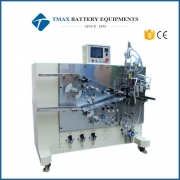 Automatic Cylinderical Battery Electrode Winding Machine
Read More
Automatic Cylinderical Battery Electrode Winding Machine
Read More
-
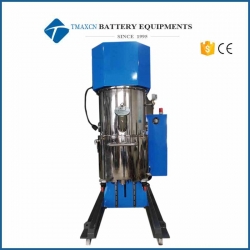 100-200L Double Planetary Vacuum Mixing Machine for Lithium Battery Slurry
Read More
100-200L Double Planetary Vacuum Mixing Machine for Lithium Battery Slurry
Read More
-
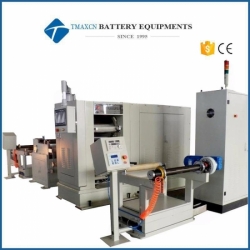 Large Heating Roller Press Machine Calender For Li ion Battery Production Line
Read More
Large Heating Roller Press Machine Calender For Li ion Battery Production Line
Read More
-
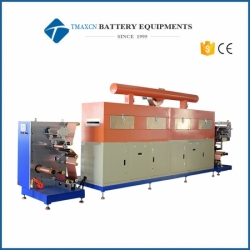 Large 3 Rollers Battery Electrode Film Intermittent Coating Machine for Pilot Production Line
Read More
Large 3 Rollers Battery Electrode Film Intermittent Coating Machine for Pilot Production Line
Read More
-
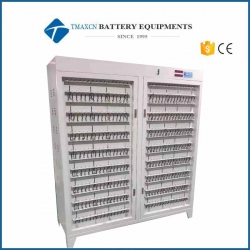 512 Channel 5V3A Battery Grading Machine/Battery Charge Discharge Machine Tester
Read More
512 Channel 5V3A Battery Grading Machine/Battery Charge Discharge Machine Tester
Read More
 David@battery-equipments.com

