 English▼



- Battery Manufacturing Equipment
- Battery Laboratory Assembly Equipment
- Battery Pack Assembly Equipment
- Sodium Ion Battery Manufacturing Equipment
- Solid State Cell Production Line
- Dry Electrode Assembly Equipment
- Supercapacitor Assembly Equipment
- Perovskite Solar Cell Lab Equipment
- Li ion Battery Materials
- Ni / Al / Cu Metal Foam
- Customized Electrode
- Cathode Active Materials
- Anode Active Materials
- Coin Cell Parts
- Lithium Chip
- Cylindrical Cell Parts
- Battery Current Collectors
- Battery Conductive Materials
- Electrolyte
- Battery Binder
- Separator and Tape
- Aluminum Laminate Film
- Nickel Strip/Foil
- Battery Tabs
- Graphene Materials
- Cu / Al / Ni / Stainless steel Foil
- Battery Laboratory Equipment
- Li ion Battery Tester
- Battery Safety Tester
- Material Characterization Tester
- Rolling Press Machine
- Electrode Mixer
- Coin Cell Crimping Machine
- Coin Cell Electrode Disc Punching
- Pouch Cell Sealing Machine
- Pouch Cell Stacking Machine
- Pouch Cell Forming Machine
- Pouch Cell Ultrasonic Welder
- Pouch Cell Electrode Die Cutter
- Cylinder Cell Sealing Machine
- Cylinder Cell Grooving Machine
- Electrode Slitting Machine
- Cylinder Cell Winding Machine
- Cylinder Cell Spot Welding Machine
- Electrolyte Filling
- Type Test Cell
- Other Battery Making Machine
- NMP Solvent Treatment System
- Vacuum Glove Box
- Coating Machine
- Lab Furnaces
- Ball Mill
- Laboratory Press
- Laboratory Equipment
- Press Equipment
blog
Doctor Blade Coating
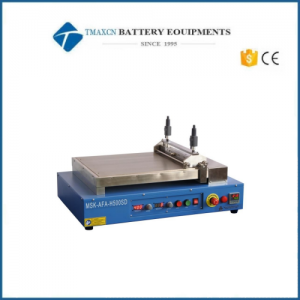
The doctor blade coating technique is one of the most widely used and versatile methods for producing uniform thin films across a broad range of scientific and industrial fields. As material innovation accelerates in sectors such as batteries, ceramics, polymers, electronics, and functional membranes, the need for precise, controllable, and repeatable coating technology has become essential. Doctor blade coating equipment provides a reliable solution for both laboratoryscale experimentation and pilotscale production. This article offers an indepth overview of the equipment’s structure, main features, operating process, application fields, and overall benefits.
Overview of Doctor Blade Coating Equipment
Doctor blade coating equipment is designed to apply a controlled thickness of slurry, solution, or paste onto a substrate through a bladewithgap mechanism. The blade spreads material evenly across the surface, and the gap height determines the film thickness. This method is highly valued for its simplicity, precision, and compatibility with a wide variety of materials.
The equipment typically consists of a coating platform, a heightadjustable doctor blade, a precision motion stage, a slurry feeding mechanism, and optional heating or vacuum systems. Depending on the model, the device can support manual, semiautomatic, or fully automated operation. Because of its excellent thickness control and adaptability, doctor blade coating has become a standard method in advanced research laboratories and material development facilities.
Key Features of Doctor Blade Coating Equipment
1. Precise Thickness Adjustment
The core feature of doctor blade coating equipment is its precise control over coating thickness. With micrometerlevel blade adjustments or servocontrolled gap settings, film thickness can range from a few micrometers to several hundred micrometers.
2. Stable Coating Speed and Motion
Precision linear stages and servo motors ensure smooth and uniform movement during coating. Stable motion reduces defects such as streaks, ridges, or uneven edges.
3. Versatile Coating Compatibility
Doctor blade systems can handle a wide variety of viscosities—from lowviscosity solutions to highviscosity battery slurries—making them suitable for multiple material categories.
4. Support for Various Substrates
The equipment can coat on metal foils (Al/Cu), polymer films (PET/PI), glass plates, ceramics, and composite sheets, enabling broad research possibilities.
5. UserFriendly Digital Control Interface
Advanced models include touchscreen interfaces that allow operators to store recipes, adjust parameters, and ensure consistent repeatability.
6. Optional Heating and Vacuum Modules
Heating beds accelerate drying and improve film stability, while vacuum chucks secure substrates firmly to maintain flatness during coating.
The doctor blade coating process consists of several defined stages:
1. Slurry Preparation
The slurry or coating solution is mixed, dispersed, and degassed to achieve proper viscosity and eliminate bubbles. Material consistency is crucial for achieving defectfree films.
2. Substrate Setup
The substrate is fixed onto the coating platform, typically using a vacuum chuck. This ensures flatness and prevents movement during coating.
3. Blade Height and Parameter Adjustment
Operators set the desired coating thickness by adjusting the blade gap. Coating speed, stroke length, and platform temperature are also configured based on material behavior.
4. Coating Execution
The doctor blade moves over the substrate (or the substrate moves under the blade), forming a uniform wet film. Precise control ensures layer uniformity and smooth surface quality.
5. Drying or Curing
Depending on the material, the coated film may undergo thermal drying, solvent evaporation, UV curing, or subsequent calendaring. For battery electrodes, additional densification steps may follow.
This straightforward yet highly controlled process makes doctor blade coating particularly attractive for experimental and smallscale production purposes.
Applications of Doctor Blade Coating Technology
1. LithiumIon and SodiumIon Battery Electrode Fabrication
The technique is widely used for coating cathode and anode slurries onto metal current collectors, ensuring consistent electrode thickness and uniform active material distribution.
2. Ceramic and Electronic Films
Ceramic tapes, dielectric layers, piezoelectric films, and insulating coatings are commonly produced using doctor blade methods due to their thickness accuracy.
3. Polymer and Functional Membranes
Separation membranes, fuelcell membranes, and filtration layers are frequently fabricated with controlled porosity and surface structures.
4. Optoelectronic and Photovoltaic Materials
Organic semiconductors, perovskite films, and quantum dot layers can be deposited with high uniformity for prototype development.
5. Printed Electronics and Conductive Films
Conductive inks, sensor materials, and flexible electronic circuits often rely on doctor blade coating for consistent film formation.
Advantages of Doctor Blade Coating Equipment
1. High Uniformity and Film Consistency
The ability to tightly control blade gap and coating speed produces smooth, uniform coatings essential for highperformance devices.
2. Wide Material and Viscosity Compatibility
From ceramic slurries to polymer solutions, the equipment accommodates a broad range of formulations.
3. CostEffective R&D and Production
Doctor blade coating is simpler and more affordable than vacuum deposition or highend automation, making it ideal for laboratoryscale experimentation.
4. Highly Repeatable and Reliable
Digital controls and precision mechanics enable reproducible results across multiple trials, supporting material optimization.
5. Simple Operation and Maintenance
The straightforward structure, easy parameter adjustments, and low maintenance requirements allow frequent use in research environments.
- 2026-01-06
Xiamen Tmax Battery Equipments Limited was set up as a manufacturer in 1995, dealing with lithium battery equipments, technology, etc. We have total manufacturing facilities of around 200000 square foot and more than 230 staff. Owning a group of experie-nced engineers and staffs, we can bring you not only reliable products and technology, but also excellent services and real value you will expect and enjoy.
The doctor blade coating technique is one of the most widely used and versatile methods for producing uniform thin films across a broad range of scientific and industrial fields. As material innovation accelerates in sectors such as batteries, ceramics, polymers, electronics, and functional membranes, the need for precise, controllable, and repeatable coating technology has become essential. Doctor blade coating equipment provides a reliable solution for both laboratoryscale experimentation and pilotscale production. This article offers an indepth overview of the equipment’s structure, main features, operating process, application fields, and overall benefits.
Overview of Doctor Blade Coating Equipment
Doctor blade coating equipment is designed to apply a controlled thickness of slurry, solution, or paste onto a substrate through a bladewithgap mechanism. The blade spreads material evenly across the surface, and the gap height determines the film thickness. This method is highly valued for its simplicity, precision, and compatibility with a wide variety of materials.
The equipment typically consists of a coating platform, a heightadjustable doctor blade, a precision motion stage, a slurry feeding mechanism, and optional heating or vacuum systems. Depending on the model, the device can support manual, semiautomatic, or fully automated operation. Because of its excellent thickness control and adaptability, doctor blade coating has become a standard method in advanced research laboratories and material development facilities.
Key Features of Doctor Blade Coating Equipment
1. Precise Thickness Adjustment
The core feature of doctor blade coating equipment is its precise control over coating thickness. With micrometerlevel blade adjustments or servocontrolled gap settings, film thickness can range from a few micrometers to several hundred micrometers.
2. Stable Coating Speed and Motion
Precision linear stages and servo motors ensure smooth and uniform movement during coating. Stable motion reduces defects such as streaks, ridges, or uneven edges.
3. Versatile Coating Compatibility
Doctor blade systems can handle a wide variety of viscosities—from lowviscosity solutions to highviscosity battery slurries—making them suitable for multiple material categories.
4. Support for Various Substrates
The equipment can coat on metal foils (Al/Cu), polymer films (PET/PI), glass plates, ceramics, and composite sheets, enabling broad research possibilities.
5. UserFriendly Digital Control Interface
Advanced models include touchscreen interfaces that allow operators to store recipes, adjust parameters, and ensure consistent repeatability.
6. Optional Heating and Vacuum Modules
Heating beds accelerate drying and improve film stability, while vacuum chucks secure substrates firmly to maintain flatness during coating.
The doctor blade coating process consists of several defined stages:
1. Slurry Preparation
The slurry or coating solution is mixed, dispersed, and degassed to achieve proper viscosity and eliminate bubbles. Material consistency is crucial for achieving defectfree films.
2. Substrate Setup
The substrate is fixed onto the coating platform, typically using a vacuum chuck. This ensures flatness and prevents movement during coating.
3. Blade Height and Parameter Adjustment
Operators set the desired coating thickness by adjusting the blade gap. Coating speed, stroke length, and platform temperature are also configured based on material behavior.
4. Coating Execution
The doctor blade moves over the substrate (or the substrate moves under the blade), forming a uniform wet film. Precise control ensures layer uniformity and smooth surface quality.
5. Drying or Curing
Depending on the material, the coated film may undergo thermal drying, solvent evaporation, UV curing, or subsequent calendaring. For battery electrodes, additional densification steps may follow.
This straightforward yet highly controlled process makes doctor blade coating particularly attractive for experimental and smallscale production purposes.
Applications of Doctor Blade Coating Technology
1. LithiumIon and SodiumIon Battery Electrode Fabrication
The technique is widely used for coating cathode and anode slurries onto metal current collectors, ensuring consistent electrode thickness and uniform active material distribution.
2. Ceramic and Electronic Films
Ceramic tapes, dielectric layers, piezoelectric films, and insulating coatings are commonly produced using doctor blade methods due to their thickness accuracy.
3. Polymer and Functional Membranes
Separation membranes, fuelcell membranes, and filtration layers are frequently fabricated with controlled porosity and surface structures.
4. Optoelectronic and Photovoltaic Materials
Organic semiconductors, perovskite films, and quantum dot layers can be deposited with high uniformity for prototype development.
5. Printed Electronics and Conductive Films
Conductive inks, sensor materials, and flexible electronic circuits often rely on doctor blade coating for consistent film formation.
Advantages of Doctor Blade Coating Equipment
1. High Uniformity and Film Consistency
The ability to tightly control blade gap and coating speed produces smooth, uniform coatings essential for highperformance devices.
2. Wide Material and Viscosity Compatibility
From ceramic slurries to polymer solutions, the equipment accommodates a broad range of formulations.
3. CostEffective R&D and Production
Doctor blade coating is simpler and more affordable than vacuum deposition or highend automation, making it ideal for laboratoryscale experimentation.
4. Highly Repeatable and Reliable
Digital controls and precision mechanics enable reproducible results across multiple trials, supporting material optimization.
5. Simple Operation and Maintenance
The straightforward structure, easy parameter adjustments, and low maintenance requirements allow frequent use in research environments.
HOT PRODUCTS
-
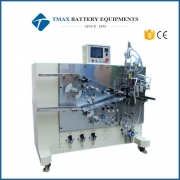 Automatic Cylinderical Battery Electrode Winding Machine
Read More
Automatic Cylinderical Battery Electrode Winding Machine
Read More
-
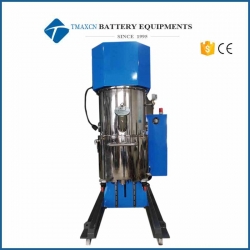 100-200L Double Planetary Vacuum Mixing Machine for Lithium Battery Slurry
Read More
100-200L Double Planetary Vacuum Mixing Machine for Lithium Battery Slurry
Read More
-
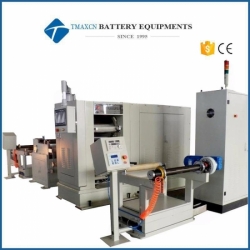 Large Heating Roller Press Machine Calender For Li ion Battery Production Line
Read More
Large Heating Roller Press Machine Calender For Li ion Battery Production Line
Read More
-
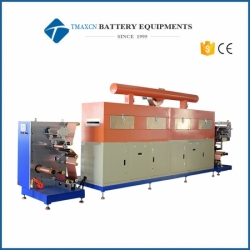 Large 3 Rollers Battery Electrode Film Intermittent Coating Machine for Pilot Production Line
Read More
Large 3 Rollers Battery Electrode Film Intermittent Coating Machine for Pilot Production Line
Read More
-
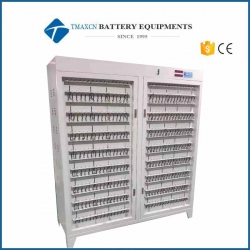 512 Channel 5V3A Battery Grading Machine/Battery Charge Discharge Machine Tester
Read More
512 Channel 5V3A Battery Grading Machine/Battery Charge Discharge Machine Tester
Read More
 David@battery-equipments.com

