 English▼



- Battery Manufacturing Equipment
- Battery Laboratory Assembly Equipment
- Battery Pack Assembly Equipment
- Sodium Ion Battery Manufacturing Equipment
- Solid State Cell Production Line
- Dry Electrode Assembly Equipment
- Supercapacitor Assembly Equipment
- Perovskite Solar Cell Lab Equipment
- Li ion Battery Materials
- Ni / Al / Cu Metal Foam
- Customized Electrode
- Cathode Active Materials
- Anode Active Materials
- Coin Cell Parts
- Lithium Chip
- Cylindrical Cell Parts
- Battery Current Collectors
- Battery Conductive Materials
- Electrolyte
- Battery Binder
- Separator and Tape
- Aluminum Laminate Film
- Nickel Strip/Foil
- Battery Tabs
- Graphene Materials
- Cu / Al / Ni / Stainless steel Foil
- Battery Laboratory Equipment
- Li ion Battery Tester
- Battery Safety Tester
- Material Characterization Tester
- Rolling Press Machine
- Electrode Mixer
- Coin Cell Crimping Machine
- Coin Cell Electrode Disc Punching
- Pouch Cell Sealing Machine
- Pouch Cell Stacking Machine
- Pouch Cell Forming Machine
- Pouch Cell Ultrasonic Welder
- Pouch Cell Electrode Die Cutter
- Cylinder Cell Sealing Machine
- Cylinder Cell Grooving Machine
- Electrode Slitting Machine
- Cylinder Cell Winding Machine
- Cylinder Cell Spot Welding Machine
- Electrolyte Filling
- Type Test Cell
- Other Battery Making Machine
- NMP Solvent Treatment System
- Vacuum Glove Box
- Coating Machine
- Lab Furnaces
- Ball Mill
- Laboratory Press
- Laboratory Equipment
- Press Equipment
blog
Ball Milling
Ball Milling: A Comprehensive Introduction to an Essential Mechanical Processing Technology
Ball milling is a fundamental mechanical technique widely used across materials science, chemical engineering, metallurgy, and advanced manufacturing. This versatile process involves grinding, mixing, or mechanically activating materials within a sealed chamber containing grinding media, typically spherical balls made of steel, ceramics, tungsten carbide, or other high-hardness materials. Over decades of development, ball milling has become an indispensable tool for producing fine powders, preparing composite materials, achieving particle size reduction, and enabling solid-state reactions that cannot be achieved through conventional thermal or chemical routes.
Key Features of Ball Milling
Ball milling equipment exhibits several defining features that make it highly adaptable for both laboratory research and industrial-scale production.
First, the design allows high-energy impact and shear forces, making it efficient for breaking down brittle, fibrous, or crystalline materials. Many modern ball mills provide adjustable rotation speeds, programmable grinding cycles, and variable jar sizes, enabling precise control over final particle properties.
Second, the equipment supports a broad range of grinding environments. Ball milling can be performed under ambient conditions, inert gas protection, vacuum, cryogenic temperatures, or wet/slurry configurations, depending on the material sensitivity and desired outcome. This versatility is essential for processing materials such as reactive metals, battery electrode powders, and temperature-sensitive chemical precursors.
Third, ball mills offer scalability, ranging from benchtop mills used for gram-level research to industrial mills capable of processing multiple tons per hour. This scalability ensures that material synthesis routes optimized in the lab can be reliably transferred to pilot or mass production.
Ball Milling Process and Working Principles
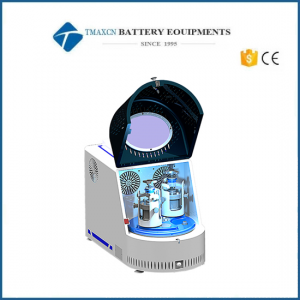
The process relies on rotational or vibrational motion to generate mechanical energy. As the milling jar rotates or oscillates, grinding media are lifted by centrifugal forces and then fall onto the material, creating repeated impacts. These collisions progressively reduce particle size, mix powders, or initiate mechanochemical reactions.
Several forms of ball milling are commonly used:
* Planetary ball milling – utilizes high-energy rotational motion for ultra-fine grinding and advanced material synthesis.
* Vibratory or mixer milling – ideal for rapid blending and mechanochemical reactions.
* Horizontal or tumbling mills – primarily used for large-scale industrial grinding.
Throughout the milling cycle, multiple mechanisms—impact fracture, abrasion, cold welding, and particle deformation—act simultaneously, giving the technique its broad applicability. The final particle size, morphology, and homogeneity depend on factors such as ball-to-powder ratio, milling duration, rotational speed, grinding media hardness, and milling atmosphere.
The versatility of ball milling makes it vital across numerous technological sectors:
1. Advanced Materials and Nanotechnology
Ball milling is widely used to produce nanoscale powders, metal–ceramic composites, and high-entropy alloys. Mechanochemical activation enables the formation of unique phases, extended solid solutions, and amorphous materials that cannot be synthesized via conventional melting or sintering.
2. Battery and Energy Storage
The technique is essential for preparing cathode, anode, and solid electrolyte materials in lithium-ion, sodium-ion, and solid-state batteries. Ball milling ensures uniform mixing, controlled particle size, enhanced electrochemical performance, and improved kinetics.
3. Catalysts and Chemical Synthesis
Mechanochemistry using ball mills is increasingly recognized as a green, solvent-free synthesis method. It enables catalyst precursor formation, surface modification, and chemical reactions with high efficiency and reduced environmental impact.
4. Ceramics, Metallurgy, and Powder Processing
Ball milling is central to producing ceramic raw materials, metallic powders, and pigments. Uniform particle size improves sinterability, mechanical strength, and microstructural consistency in final components.
5. Recycling and Environmental Technologies
The method is also used in e-waste processing, metal recovery, and mechanical alloying for environmental remediation materials, such as adsorbents for wastewater treatment.
Advantages of Ball Milling
Ball milling continues to dominate mechanical processing technologies due to several significant advantages:
* Fine and ultra-fine powder production with precise particle size control.
* Capability for both dry and wet grinding, supporting different material requirements.
* Uniform mixing and dispersion, essential for composite and multi-phase materials.
* Low operational cost relative to high-temperature or chemical processing methods.
* Scalable and flexible, from laboratory R&D to industrial mass production.
* Environmentally friendly, particularly in mechanochemical synthesis where solvents and high-energy inputs can be minimized.
Conclusion
Ball milling remains one of the most effective and versatile mechanical techniques for material processing, synthesis, and refinement. Its ability to produce fine powders, activate chemical reactions, and enable the preparation of advanced materials positions it as a cornerstone technology in modern manufacturing and research. As industries continue to demand higher-performance materials with controlled microstructures, ball milling will play an even more critical role in driving innovation across science and engineering.
- 2025-12-30
Xiamen Tmax Battery Equipments Limited was set up as a manufacturer in 1995, dealing with lithium battery equipments, technology, etc. We have total manufacturing facilities of around 200000 square foot and more than 230 staff. Owning a group of experie-nced engineers and staffs, we can bring you not only reliable products and technology, but also excellent services and real value you will expect and enjoy.
Ball Milling: A Comprehensive Introduction to an Essential Mechanical Processing Technology
Ball milling is a fundamental mechanical technique widely used across materials science, chemical engineering, metallurgy, and advanced manufacturing. This versatile process involves grinding, mixing, or mechanically activating materials within a sealed chamber containing grinding media, typically spherical balls made of steel, ceramics, tungsten carbide, or other high-hardness materials. Over decades of development, ball milling has become an indispensable tool for producing fine powders, preparing composite materials, achieving particle size reduction, and enabling solid-state reactions that cannot be achieved through conventional thermal or chemical routes.
Key Features of Ball Milling
Ball milling equipment exhibits several defining features that make it highly adaptable for both laboratory research and industrial-scale production.
First, the design allows high-energy impact and shear forces, making it efficient for breaking down brittle, fibrous, or crystalline materials. Many modern ball mills provide adjustable rotation speeds, programmable grinding cycles, and variable jar sizes, enabling precise control over final particle properties.
Second, the equipment supports a broad range of grinding environments. Ball milling can be performed under ambient conditions, inert gas protection, vacuum, cryogenic temperatures, or wet/slurry configurations, depending on the material sensitivity and desired outcome. This versatility is essential for processing materials such as reactive metals, battery electrode powders, and temperature-sensitive chemical precursors.
Third, ball mills offer scalability, ranging from benchtop mills used for gram-level research to industrial mills capable of processing multiple tons per hour. This scalability ensures that material synthesis routes optimized in the lab can be reliably transferred to pilot or mass production.
Ball Milling Process and Working Principles
The process relies on rotational or vibrational motion to generate mechanical energy. As the milling jar rotates or oscillates, grinding media are lifted by centrifugal forces and then fall onto the material, creating repeated impacts. These collisions progressively reduce particle size, mix powders, or initiate mechanochemical reactions.
Several forms of ball milling are commonly used:
* Planetary ball milling – utilizes high-energy rotational motion for ultra-fine grinding and advanced material synthesis.
* Vibratory or mixer milling – ideal for rapid blending and mechanochemical reactions.
* Horizontal or tumbling mills – primarily used for large-scale industrial grinding.
Throughout the milling cycle, multiple mechanisms—impact fracture, abrasion, cold welding, and particle deformation—act simultaneously, giving the technique its broad applicability. The final particle size, morphology, and homogeneity depend on factors such as ball-to-powder ratio, milling duration, rotational speed, grinding media hardness, and milling atmosphere.
The versatility of ball milling makes it vital across numerous technological sectors:
1. Advanced Materials and Nanotechnology
Ball milling is widely used to produce nanoscale powders, metal–ceramic composites, and high-entropy alloys. Mechanochemical activation enables the formation of unique phases, extended solid solutions, and amorphous materials that cannot be synthesized via conventional melting or sintering.
2. Battery and Energy Storage
The technique is essential for preparing cathode, anode, and solid electrolyte materials in lithium-ion, sodium-ion, and solid-state batteries. Ball milling ensures uniform mixing, controlled particle size, enhanced electrochemical performance, and improved kinetics.
3. Catalysts and Chemical Synthesis
Mechanochemistry using ball mills is increasingly recognized as a green, solvent-free synthesis method. It enables catalyst precursor formation, surface modification, and chemical reactions with high efficiency and reduced environmental impact.
4. Ceramics, Metallurgy, and Powder Processing
Ball milling is central to producing ceramic raw materials, metallic powders, and pigments. Uniform particle size improves sinterability, mechanical strength, and microstructural consistency in final components.
5. Recycling and Environmental Technologies
The method is also used in e-waste processing, metal recovery, and mechanical alloying for environmental remediation materials, such as adsorbents for wastewater treatment.
Advantages of Ball Milling
Ball milling continues to dominate mechanical processing technologies due to several significant advantages:
* Fine and ultra-fine powder production with precise particle size control.
* Capability for both dry and wet grinding, supporting different material requirements.
* Uniform mixing and dispersion, essential for composite and multi-phase materials.
* Low operational cost relative to high-temperature or chemical processing methods.
* Scalable and flexible, from laboratory R&D to industrial mass production.
* Environmentally friendly, particularly in mechanochemical synthesis where solvents and high-energy inputs can be minimized.
Conclusion
Ball milling remains one of the most effective and versatile mechanical techniques for material processing, synthesis, and refinement. Its ability to produce fine powders, activate chemical reactions, and enable the preparation of advanced materials positions it as a cornerstone technology in modern manufacturing and research. As industries continue to demand higher-performance materials with controlled microstructures, ball milling will play an even more critical role in driving innovation across science and engineering.
HOT PRODUCTS
-
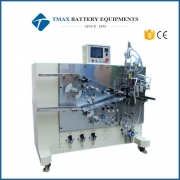 Automatic Cylinderical Battery Electrode Winding Machine
Read More
Automatic Cylinderical Battery Electrode Winding Machine
Read More
-
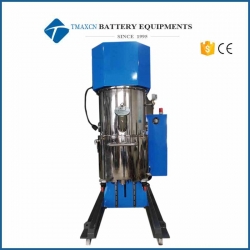 100-200L Double Planetary Vacuum Mixing Machine for Lithium Battery Slurry
Read More
100-200L Double Planetary Vacuum Mixing Machine for Lithium Battery Slurry
Read More
-
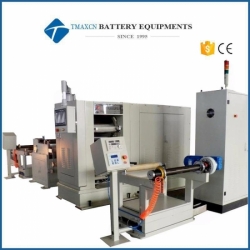 Large Heating Roller Press Machine Calender For Li ion Battery Production Line
Read More
Large Heating Roller Press Machine Calender For Li ion Battery Production Line
Read More
-
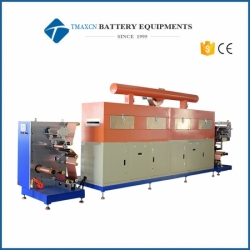 Large 3 Rollers Battery Electrode Film Intermittent Coating Machine for Pilot Production Line
Read More
Large 3 Rollers Battery Electrode Film Intermittent Coating Machine for Pilot Production Line
Read More
-
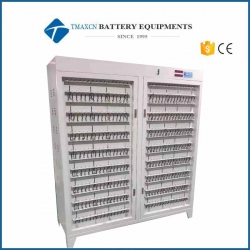 512 Channel 5V3A Battery Grading Machine/Battery Charge Discharge Machine Tester
Read More
512 Channel 5V3A Battery Grading Machine/Battery Charge Discharge Machine Tester
Read More
 David@battery-equipments.com

