 English▼



- Battery Manufacturing Equipment
- Battery Laboratory Assembly Equipment
- Battery Pack Assembly Equipment
- Sodium Ion Battery Manufacturing Equipment
- Solid State Cell Production Line
- Dry Electrode Assembly Equipment
- Supercapacitor Assembly Equipment
- Perovskite Solar Cell Lab Equipment
- Li ion Battery Materials
- Ni / Al / Cu Metal Foam
- Customized Electrode
- Cathode Active Materials
- Anode Active Materials
- Coin Cell Parts
- Lithium Chip
- Cylindrical Cell Parts
- Battery Current Collectors
- Battery Conductive Materials
- Electrolyte
- Battery Binder
- Separator and Tape
- Aluminum Laminate Film
- Nickel Strip/Foil
- Battery Tabs
- Graphene Materials
- Cu / Al / Ni / Stainless steel Foil
- Battery Laboratory Equipment
- Li ion Battery Tester
- Battery Safety Tester
- Material Characterization Tester
- Rolling Press Machine
- Electrode Mixer
- Coin Cell Crimping Machine
- Coin Cell Electrode Disc Punching
- Pouch Cell Sealing Machine
- Pouch Cell Stacking Machine
- Pouch Cell Forming Machine
- Pouch Cell Ultrasonic Welder
- Pouch Cell Electrode Die Cutter
- Cylinder Cell Sealing Machine
- Cylinder Cell Grooving Machine
- Electrode Slitting Machine
- Cylinder Cell Winding Machine
- Cylinder Cell Spot Welding Machine
- Electrolyte Filling
- Type Test Cell
- Other Battery Making Machine
- NMP Solvent Treatment System
- Vacuum Glove Box
- Coating Machine
- Lab Furnaces
- Ball Mill
- Laboratory Press
- Laboratory Equipment
- Press Equipment
blog
Ni Foam
Ni Foam: A High-Performance Porous Material for Advanced Engineering and Energy Applications
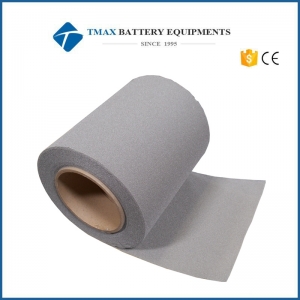
Ni foam, also known as nickel foam, is a lightweight, three-dimensional porous metallic material widely used in energy storage, catalysis, filtration, and thermal management systems. With its open-cell structure, high conductivity, and excellent mechanical strength, ni foam has become an indispensable material in research laboratories and industrial applications. Its unique combination of physical, chemical, and electrical properties makes it particularly advantageous for next-generation batteries, fuel cells, and environmental engineering devices.
Overview
Ni foam is produced by forming a network of interconnected nickel ligaments with uniform or graded pores. This structure provides an extremely high surface area-to-volume ratio, allowing efficient mass transfer, superior reaction kinetics, and enhanced energy interactions. As a metallic foam, its stability under extreme conditions—high temperature, strong alkaline environments, and corrosive atmospheres—significantly differentiates it from polymer- or carbon-based foams.
Initially developed for specialized industrial components, ni foam has expanded into mainstream engineering, especially in electrochemical systems. Its exceptional electrical conductivity and robust framework make it ideal for replacing traditional flat metal current collectors or catalytic substrates. As the demand for high-efficiency and long-cycle energy devices grows, the role of ni foam in laboratory research and high-tech manufacturing continues to increase.
Material Characteristics
Ni foam demonstrates a distinct set of material characteristics that support advanced scientific and industrial applications:
1. High Porosity:
Typically ranging from 75% to 98%, the high porosity ensures abundant pathways for gas and liquid flow, aiding reaction efficiency.
2. Excellent Electrical Conductivity:
As a pure metallic foam, it maintains high electron mobility, enabling efficient current distribution in electrochemical systems.
3. Chemical and Thermal Stability:
Ni foam withstands corrosive environments and can operate under high temperatures, making it suitable for harsh industrial conditions.
4. Uniform Pore Architecture:
Pore sizes can be controlled from 10 ppi to over 100 ppi (pores per inch), enabling tailored performance across various applications.
5. High Mechanical Strength:
Despite its low density, the foam retains a stable structure that resists compression, vibration, and mechanical deformation.
Manufacturing Processes
Several manufacturing technologies are used to produce ni foam, each offering different performance characteristics:
1. Polymer Template Method
This is the most widely used manufacturing route. A polymer foam (usually polyurethane) is coated with nickel through chemical or electroplating processes. The polymer is then removed by high-temperature sintering, leaving behind a nickel network that replicates the original structure.
2. Powder Metallurgy Method
Nickel powder is mixed with a foaming agent or molded with sacrificial pore formers. After sintering, the pore former decomposes, creating an interconnected porous structure.
Advantages: higher uniformity and the ability to achieve fine pore structures.
3. 3D Printing and Additive Manufacturing
Advanced manufacturing allows precise control over pore geometry and mechanical performance. This is an emerging method for specialized or high-performance nickel foams.
Advantages: customizable architectures and higher design flexibility.
Applications
Ni foam's unique combination of conductivity, porosity, and stability allows it to be used across a broad range of scientific and industrial fields:
1. Battery and Supercapacitor Electrodes
Ni foam is one of the most commonly used substrates for:
* Lithium-ion battery current collectors
* Ni-MH and Ni-Cd electrodes
* Supercapacitor active material support
Its porous structure significantly improves electron pathways and ionic diffusion.
2. Fuel Cell Components
In proton-exchange and alkaline fuel cells, ni foam acts as:
* Gas diffusion layers
* Catalyst support substrates
Its corrosion resistance and conductivity play essential roles in reaction efficiency.
3. Catalysis and Environmental Engineering
Ni foam's large surface area makes it ideal for:
* Electrocatalysts for hydrogen generation
* Wastewater treatment electrodes
* Air purification devices
4. Heat Exchangers and Thermal Management
Due to its high thermal conductivity and large surface area, ni foam is used in:
* Heat sinks
* Phase-change thermal storage systems
* Cooling plates for high-power electronics
5. Filtration and Acoustic Absorption
Ni foam can filter liquids or gases under high temperatures and is also used to reduce vibration and noise in engineering systems.
Advantages
The key advantages of ni foam include:
* Superior conductivity for electrochemical reactions
* Large active surface area enabling enhanced reaction kinetics
* Excellent durability under mechanical and thermal stress
* High corrosion resistance in alkaline environments
* Lightweight structure ideal for portable and compact devices
* Customizable pore size to meet specific performance requirements
- 2025-12-26
Xiamen Tmax Battery Equipments Limited was set up as a manufacturer in 1995, dealing with lithium battery equipments, technology, etc. We have total manufacturing facilities of around 200000 square foot and more than 230 staff. Owning a group of experie-nced engineers and staffs, we can bring you not only reliable products and technology, but also excellent services and real value you will expect and enjoy.
Ni Foam: A High-Performance Porous Material for Advanced Engineering and Energy Applications
Ni foam, also known as nickel foam, is a lightweight, three-dimensional porous metallic material widely used in energy storage, catalysis, filtration, and thermal management systems. With its open-cell structure, high conductivity, and excellent mechanical strength, ni foam has become an indispensable material in research laboratories and industrial applications. Its unique combination of physical, chemical, and electrical properties makes it particularly advantageous for next-generation batteries, fuel cells, and environmental engineering devices.
Overview
Ni foam is produced by forming a network of interconnected nickel ligaments with uniform or graded pores. This structure provides an extremely high surface area-to-volume ratio, allowing efficient mass transfer, superior reaction kinetics, and enhanced energy interactions. As a metallic foam, its stability under extreme conditions—high temperature, strong alkaline environments, and corrosive atmospheres—significantly differentiates it from polymer- or carbon-based foams.
Initially developed for specialized industrial components, ni foam has expanded into mainstream engineering, especially in electrochemical systems. Its exceptional electrical conductivity and robust framework make it ideal for replacing traditional flat metal current collectors or catalytic substrates. As the demand for high-efficiency and long-cycle energy devices grows, the role of ni foam in laboratory research and high-tech manufacturing continues to increase.
Material Characteristics
Ni foam demonstrates a distinct set of material characteristics that support advanced scientific and industrial applications:
1. High Porosity:
Typically ranging from 75% to 98%, the high porosity ensures abundant pathways for gas and liquid flow, aiding reaction efficiency.
2. Excellent Electrical Conductivity:
As a pure metallic foam, it maintains high electron mobility, enabling efficient current distribution in electrochemical systems.
3. Chemical and Thermal Stability:
Ni foam withstands corrosive environments and can operate under high temperatures, making it suitable for harsh industrial conditions.
4. Uniform Pore Architecture:
Pore sizes can be controlled from 10 ppi to over 100 ppi (pores per inch), enabling tailored performance across various applications.
5. High Mechanical Strength:
Despite its low density, the foam retains a stable structure that resists compression, vibration, and mechanical deformation.
Manufacturing Processes
Several manufacturing technologies are used to produce ni foam, each offering different performance characteristics:
1. Polymer Template Method
This is the most widely used manufacturing route. A polymer foam (usually polyurethane) is coated with nickel through chemical or electroplating processes. The polymer is then removed by high-temperature sintering, leaving behind a nickel network that replicates the original structure.
2. Powder Metallurgy Method
Nickel powder is mixed with a foaming agent or molded with sacrificial pore formers. After sintering, the pore former decomposes, creating an interconnected porous structure.
Advantages: higher uniformity and the ability to achieve fine pore structures.
3. 3D Printing and Additive Manufacturing
Advanced manufacturing allows precise control over pore geometry and mechanical performance. This is an emerging method for specialized or high-performance nickel foams.
Advantages: customizable architectures and higher design flexibility.
Applications
Ni foam's unique combination of conductivity, porosity, and stability allows it to be used across a broad range of scientific and industrial fields:
1. Battery and Supercapacitor Electrodes
Ni foam is one of the most commonly used substrates for:
* Lithium-ion battery current collectors
* Ni-MH and Ni-Cd electrodes
* Supercapacitor active material support
Its porous structure significantly improves electron pathways and ionic diffusion.
2. Fuel Cell Components
In proton-exchange and alkaline fuel cells, ni foam acts as:
* Gas diffusion layers
* Catalyst support substrates
Its corrosion resistance and conductivity play essential roles in reaction efficiency.
3. Catalysis and Environmental Engineering
Ni foam's large surface area makes it ideal for:
* Electrocatalysts for hydrogen generation
* Wastewater treatment electrodes
* Air purification devices
4. Heat Exchangers and Thermal Management
Due to its high thermal conductivity and large surface area, ni foam is used in:
* Heat sinks
* Phase-change thermal storage systems
* Cooling plates for high-power electronics
5. Filtration and Acoustic Absorption
Ni foam can filter liquids or gases under high temperatures and is also used to reduce vibration and noise in engineering systems.
Advantages
The key advantages of ni foam include:
* Superior conductivity for electrochemical reactions
* Large active surface area enabling enhanced reaction kinetics
* Excellent durability under mechanical and thermal stress
* High corrosion resistance in alkaline environments
* Lightweight structure ideal for portable and compact devices
* Customizable pore size to meet specific performance requirements
HOT PRODUCTS
-
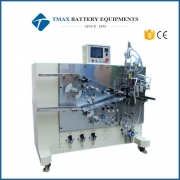 Automatic Cylinderical Battery Electrode Winding Machine
Read More
Automatic Cylinderical Battery Electrode Winding Machine
Read More
-
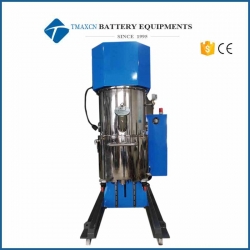 100-200L Double Planetary Vacuum Mixing Machine for Lithium Battery Slurry
Read More
100-200L Double Planetary Vacuum Mixing Machine for Lithium Battery Slurry
Read More
-
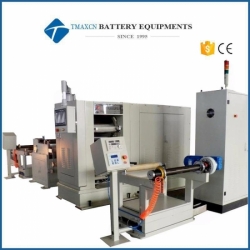 Large Heating Roller Press Machine Calender For Li ion Battery Production Line
Read More
Large Heating Roller Press Machine Calender For Li ion Battery Production Line
Read More
-
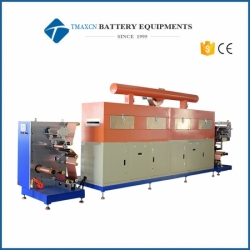 Large 3 Rollers Battery Electrode Film Intermittent Coating Machine for Pilot Production Line
Read More
Large 3 Rollers Battery Electrode Film Intermittent Coating Machine for Pilot Production Line
Read More
-
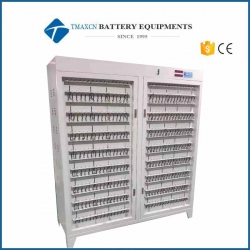 512 Channel 5V3A Battery Grading Machine/Battery Charge Discharge Machine Tester
Read More
512 Channel 5V3A Battery Grading Machine/Battery Charge Discharge Machine Tester
Read More
 David@battery-equipments.com

