 English▼



- Battery Manufacturing Equipment
- Battery Laboratory Assembly Equipment
- Battery Pack Assembly Equipment
- Sodium Ion Battery Manufacturing Equipment
- Solid State Cell Production Line
- Dry Electrode Assembly Equipment
- Supercapacitor Assembly Equipment
- Perovskite Solar Cell Lab Equipment
- Li ion Battery Materials
- Ni / Al / Cu Metal Foam
- Customized Electrode
- Cathode Active Materials
- Anode Active Materials
- Coin Cell Parts
- Lithium Chip
- Cylindrical Cell Parts
- Battery Current Collectors
- Battery Conductive Materials
- Electrolyte
- Battery Binder
- Separator and Tape
- Aluminum Laminate Film
- Nickel Strip/Foil
- Battery Tabs
- Graphene Materials
- Cu / Al / Ni / Stainless steel Foil
- Battery Laboratory Equipment
- Li ion Battery Tester
- Battery Safety Tester
- Material Characterization Tester
- Rolling Press Machine
- Electrode Mixer
- Coin Cell Crimping Machine
- Coin Cell Electrode Disc Punching
- Pouch Cell Sealing Machine
- Pouch Cell Stacking Machine
- Pouch Cell Forming Machine
- Pouch Cell Ultrasonic Welder
- Pouch Cell Electrode Die Cutter
- Cylinder Cell Sealing Machine
- Cylinder Cell Grooving Machine
- Electrode Slitting Machine
- Cylinder Cell Winding Machine
- Cylinder Cell Spot Welding Machine
- Electrolyte Filling
- Type Test Cell
- Other Battery Making Machine
- NMP Solvent Treatment System
- Vacuum Glove Box
- Coating Machine
- Lab Furnaces
- Ball Mill
- Laboratory Press
- Laboratory Equipment
- Press Equipment
- 2026-02-10
Xiamen Tmax Battery Equipments Limited was set up as a manufacturer in 1995, dealing with lithium battery equipments, technology, etc. We have total manufacturing facilities of around 200000 square foot and more than 230 staff. Owning a group of experie-nced engineers and staffs, we can bring you not only reliable products and technology, but also excellent services and real value you will expect and enjoy.
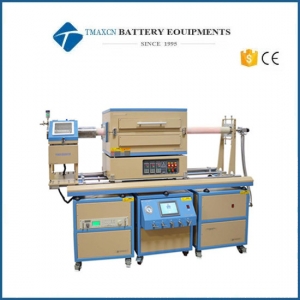
Tube Furnace: Overview, Features, Manufacturing Process, Applications, Advantages, and Conclusion
A tube furnace is a high-precision thermal processing equipment widely used in laboratories, research institutions, and industrial applications. It is designed to provide uniform and controlled heating within a cylindrical tube, allowing precise temperature control for chemical reactions, material synthesis, annealing, and sintering processes. Tube furnaces are essential for applications requiring high temperature stability, clean atmosphere control, and reproducible thermal processing.
Overview
Tube furnaces consist of a cylindrical heating chamber (tube) surrounded by high-performance heating elements, insulated to minimize heat loss. Materials or samples are placed inside the tube, which can be made of quartz, alumina, or other refractory materials depending on the required temperature range and chemical compatibility. The furnace provides uniform heating along the tube length, while external controllers regulate temperature profiles accurately. Tube furnaces can operate in air, vacuum, or controlled atmospheres such as inert gases or reducing environments, making them versatile for various laboratory and industrial processes.
Key Features of Tube Furnaces
Tube furnaces exhibit several important characteristics:
High Temperature Capability: Operates reliably at temperatures ranging from ambient to over 1800°C depending on the model and tube material.
Uniform Heating: Cylindrical design and optimized element placement ensure consistent temperature along the tube length.
Atmosphere Control: Supports vacuum, inert, reducing, or custom gas atmospheres for precise chemical processing.
Programmable Temperature Profiles: Digital controllers allow precise ramping, soaking, and cooling sequences.
Durable Construction: Insulated heating chamber with high-quality refractory or quartz tube ensures long-term stability.
Versatility: Suitable for small-scale laboratory use or pilot-scale industrial applications.
Manufacturing Process
The tube furnace manufacturing and operation involve several critical steps:
Tube Selection and Preparation: Choose a tube material compatible with temperature range and chemical environment. Quartz and alumina tubes are common choices.
Heating Element Installation: Nichrome, Kanthal, or other high-temperature resistant heating elements are arranged uniformly around the tube.
Insulation Assembly: High-quality insulation is used to minimize heat loss and improve energy efficiency.
Controller Integration: Programmable controllers and thermocouples are installed to monitor and regulate temperature accurately.
Calibration and Testing: Each furnace is calibrated to ensure uniform temperature distribution and proper functionality before delivery.
Advanced tube furnaces may incorporate automatic gas flow control, data logging, and safety features for reliable and repeatable thermal processing.
Applications
Tube furnaces are widely used in scientific research, material processing, and industrial applications:
Material Synthesis: Fabrication of ceramics, nanomaterials, and advanced alloys.
Heat Treatment: Annealing, sintering, and tempering of metals and ceramics.
Chemical Processing: Controlled chemical reactions in inert or reactive atmospheres.
Laboratory Research: Thermal analysis, decomposition studies, and catalyst activation.
Semiconductor and Electronics: Fabrication of thin films, diffusion processes, and oxidation treatments.
Environmental Applications: Sample ashing, pollutant analysis, and thermal decomposition studies.
Advantages
The main advantages of tube furnaces include:
Precise Temperature Control: Ensures reproducible thermal processing results.
Uniform Heating: Reduces temperature gradients and improves material quality.
Atmosphere Flexibility: Supports vacuum, inert, and reactive gas environments.
Durability: Long-lasting heating elements and high-quality insulation provide reliable performance.
Ease of Use: Digital controllers and programmable profiles simplify operation.
Versatility: Applicable to a wide range of laboratory and industrial processes.
Conclusion
In conclusion, the tube furnace is a critical piece of equipment for controlled high-temperature processing in research and industrial applications. Its cylindrical design, precise temperature control, and ability to operate under various atmospheres make it suitable for material synthesis, heat treatment, chemical processing, and laboratory experiments. With features such as programmable controllers, uniform heating, and durable construction, tube furnaces provide reliable, efficient, and reproducible thermal processing. As industries and research continue to demand precise, high-quality thermal treatments, tube furnaces remain indispensable tools in modern scientific and industrial workflows.
-
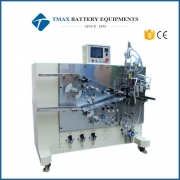 Automatic Cylinderical Battery Electrode Winding Machine
Read More
Automatic Cylinderical Battery Electrode Winding Machine
Read More
-
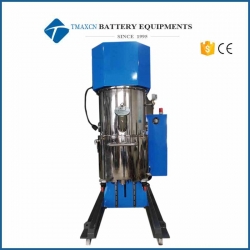 100-200L Double Planetary Vacuum Mixing Machine for Lithium Battery Slurry
Read More
100-200L Double Planetary Vacuum Mixing Machine for Lithium Battery Slurry
Read More
-
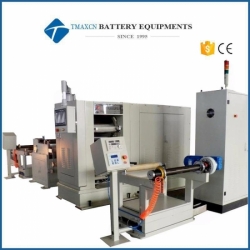 Large Heating Roller Press Machine Calender For Li ion Battery Production Line
Read More
Large Heating Roller Press Machine Calender For Li ion Battery Production Line
Read More
-
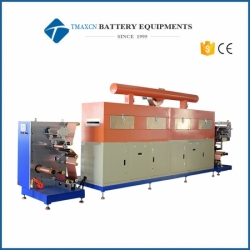 Large 3 Rollers Battery Electrode Film Intermittent Coating Machine for Pilot Production Line
Read More
Large 3 Rollers Battery Electrode Film Intermittent Coating Machine for Pilot Production Line
Read More
-
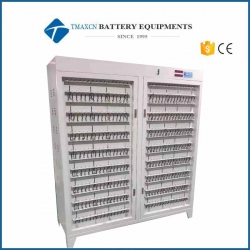 512 Channel 5V3A Battery Grading Machine/Battery Charge Discharge Machine Tester
Read More
512 Channel 5V3A Battery Grading Machine/Battery Charge Discharge Machine Tester
Read More
 David@battery-equipments.com

