 English▼



- Battery Manufacturing Equipment
- Battery Laboratory Assembly Equipment
- Battery Pack Assembly Equipment
- Sodium Ion Battery Manufacturing Equipment
- Solid State Cell Production Line
- Dry Electrode Assembly Equipment
- Supercapacitor Assembly Equipment
- Perovskite Solar Cell Lab Equipment
- Li ion Battery Materials
- Ni / Al / Cu Metal Foam
- Customized Electrode
- Cathode Active Materials
- Anode Active Materials
- Coin Cell Parts
- Lithium Chip
- Cylindrical Cell Parts
- Battery Current Collectors
- Battery Conductive Materials
- Electrolyte
- Battery Binder
- Separator and Tape
- Aluminum Laminate Film
- Nickel Strip/Foil
- Battery Tabs
- Graphene Materials
- Cu / Al / Ni / Stainless steel Foil
- Battery Laboratory Equipment
- Li ion Battery Tester
- Battery Safety Tester
- Material Characterization Tester
- Rolling Press Machine
- Electrode Mixer
- Coin Cell Crimping Machine
- Coin Cell Electrode Disc Punching
- Pouch Cell Sealing Machine
- Pouch Cell Stacking Machine
- Pouch Cell Forming Machine
- Pouch Cell Ultrasonic Welder
- Pouch Cell Electrode Die Cutter
- Cylinder Cell Sealing Machine
- Cylinder Cell Grooving Machine
- Electrode Slitting Machine
- Cylinder Cell Winding Machine
- Cylinder Cell Spot Welding Machine
- Electrolyte Filling
- Type Test Cell
- Other Battery Making Machine
- NMP Solvent Treatment System
- Vacuum Glove Box
- Coating Machine
- Lab Furnaces
- Ball Mill
- Laboratory Press
- Laboratory Equipment
- Press Equipment
- 2026-03-03
Xiamen Tmax Battery Equipments Limited was set up as a manufacturer in 1995, dealing with lithium battery equipments, technology, etc. We have total manufacturing facilities of around 200000 square foot and more than 230 staff. Owning a group of experie-nced engineers and staffs, we can bring you not only reliable products and technology, but also excellent services and real value you will expect and enjoy.
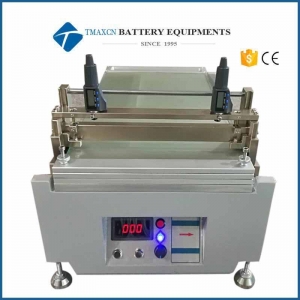
Doctor Blade Coater: Overview, Features, Manufacturing Process, Applications, Advantages, and Conclusion
A doctor blade coater is a precision coating device widely used in laboratories and industrial production to apply uniform thin films of liquid or slurry onto flat substrates. It is commonly employed in industries such as batteries, electronics, coatings, pharmaceuticals, and materials science, where precise control over coating thickness, uniformity, and surface quality is essential. The doctor blade coater enables efficient and reproducible deposition of active materials, ensuring high-quality products and reliable performance.
Overview
The doctor blade coater consists of a blade, a substrate support, and a mechanism for moving the substrate or the coating material. The blade spreads the coating material across the substrate, and the gap between the blade and the substrate determines the thickness of the applied film. By adjusting the blade height, coating speed, and material viscosity, users can achieve consistent and precise coatings. Doctor blade coating is a versatile and cost-effective method suitable for both small-scale laboratory experiments and large-scale industrial production.
Key Features of Doctor Blade Coaters
Doctor blade coaters possess several important characteristics:
Precise Thickness Control: Adjustable blade height allows consistent coating thickness, typically ranging from a few microns to several hundred microns.
Uniform Coating: Ensures even distribution of the material across the substrate surface.
Versatile Material Compatibility: Can handle slurries, pastes, inks, and other liquid formulations.
Manual or Automated Operation: Laboratory models for research and pilot-scale models with automation for production.
Scalable and Customizable: Accommodates substrates of various sizes and materials.
Ease of Use and Maintenance: Simple blade adjustment and cleaning procedures enhance operational efficiency.
Manufacturing Process
The doctor blade coating process typically involves the following steps:
Substrate Preparation: Clean and prepare the substrate to ensure proper adhesion and smooth surface.
Material Loading: Apply a controlled amount of coating material in front of the blade.
Film Application: Move the blade across the substrate to spread the material uniformly. Blade height and substrate speed determine the final thickness.
Drying or Curing: Depending on the coating material, the substrate may undergo thermal drying, UV curing, or solvent evaporation.
Quality Inspection: Check the coated film for thickness uniformity, defects, and adhesion quality.
Advanced doctor blade coater systems can incorporate automated substrate movement, real-time thickness monitoring, and programmable coating parameters to enhance reproducibility.
Applications
Doctor blade coaters are widely used across multiple industries:
Battery Industry: Coating electrode materials onto foils for lithium-ion and other battery types.
Electronics: Deposition of conductive or insulating films for sensors, displays, and printed circuits.
Coatings and Paints: Applying paints, inks, and protective coatings for material testing and production.
Pharmaceuticals: Coating tablets, membranes, or films for controlled release and barrier properties.
Material Science: Producing uniform films for research, nanomaterial layers, and thin-film composites.
Advantages
The main advantages of doctor blade coaters include:
High Precision and Reproducibility: Ensures consistent film thickness and uniformity.
Cost-Effective: Simple design reduces equipment and operational costs.
Versatility: Suitable for a wide range of materials, viscosities, and substrate types.
Scalable: Can be used for laboratory testing, pilot production, or industrial-scale coating.
Ease of Operation: User-friendly design and simple adjustments minimize training requirements.
Enhanced Product Quality: Produces uniform films that improve device performance and reliability.
Conclusion
In conclusion, the doctor blade coater is a highly versatile and essential tool for precise film deposition in laboratories and industrial production. Its ability to deliver uniform, reproducible coatings with controlled thickness makes it indispensable in the battery, electronics, coatings, pharmaceutical, and materials research sectors. With features such as adjustable blade height, compatibility with various materials, and options for automation, doctor blade coaters provide efficient, reliable, and high-quality solutions for modern material processing. By ensuring consistent film application and reducing material waste, doctor blade coating technology continues to play a critical role in producing high-performance products and advancing scientific research.
-
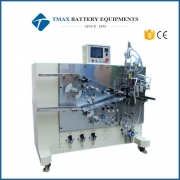 Automatic Cylinderical Battery Electrode Winding Machine
Read More
Automatic Cylinderical Battery Electrode Winding Machine
Read More
-
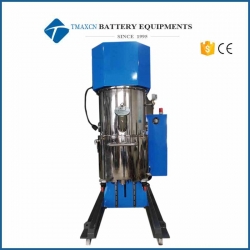 100-200L Double Planetary Vacuum Mixing Machine for Lithium Battery Slurry
Read More
100-200L Double Planetary Vacuum Mixing Machine for Lithium Battery Slurry
Read More
-
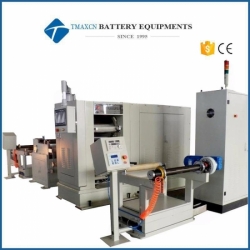 Large Heating Roller Press Machine Calender For Li ion Battery Production Line
Read More
Large Heating Roller Press Machine Calender For Li ion Battery Production Line
Read More
-
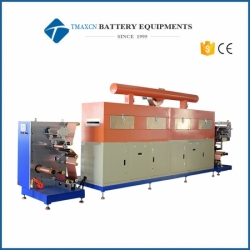 Large 3 Rollers Battery Electrode Film Intermittent Coating Machine for Pilot Production Line
Read More
Large 3 Rollers Battery Electrode Film Intermittent Coating Machine for Pilot Production Line
Read More
-
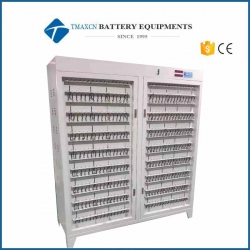 512 Channel 5V3A Battery Grading Machine/Battery Charge Discharge Machine Tester
Read More
512 Channel 5V3A Battery Grading Machine/Battery Charge Discharge Machine Tester
Read More
 David@battery-equipments.com

