 English▼



- Battery Manufacturing Equipment
- Battery Laboratory Assembly Equipment
- Battery Pack Assembly Equipment
- Sodium Ion Battery Manufacturing Equipment
- Solid State Cell Production Line
- Dry Electrode Assembly Equipment
- Supercapacitor Assembly Equipment
- Perovskite Solar Cell Lab Equipment
- Li ion Battery Materials
- Ni / Al / Cu Metal Foam
- Customized Electrode
- Cathode Active Materials
- Anode Active Materials
- Coin Cell Parts
- Lithium Chip
- Cylindrical Cell Parts
- Battery Current Collectors
- Battery Conductive Materials
- Electrolyte
- Battery Binder
- Separator and Tape
- Aluminum Laminate Film
- Nickel Strip/Foil
- Battery Tabs
- Graphene Materials
- Cu / Al / Ni / Stainless steel Foil
- Battery Laboratory Equipment
- Li ion Battery Tester
- Battery Safety Tester
- Material Characterization Tester
- Rolling Press Machine
- Electrode Mixer
- Coin Cell Crimping Machine
- Coin Cell Electrode Disc Punching
- Pouch Cell Sealing Machine
- Pouch Cell Stacking Machine
- Pouch Cell Forming Machine
- Pouch Cell Ultrasonic Welder
- Pouch Cell Electrode Die Cutter
- Cylinder Cell Sealing Machine
- Cylinder Cell Grooving Machine
- Electrode Slitting Machine
- Cylinder Cell Winding Machine
- Cylinder Cell Spot Welding Machine
- Electrolyte Filling
- Type Test Cell
- Other Battery Making Machine
- NMP Solvent Treatment System
- Vacuum Glove Box
- Coating Machine
- Lab Furnaces
- Ball Mill
- Laboratory Press
- Laboratory Equipment
- Press Equipment
- 2026-01-27
Xiamen Tmax Battery Equipments Limited was set up as a manufacturer in 1995, dealing with lithium battery equipments, technology, etc. We have total manufacturing facilities of around 200000 square foot and more than 230 staff. Owning a group of experie-nced engineers and staffs, we can bring you not only reliable products and technology, but also excellent services and real value you will expect and enjoy.
Coin Cell Assembly: Overview, Features, Manufacturing Process, Applications, Advantages, and Conclusion
Coin cell assembly refers to the process of fabricating small, cylindrical button-type batteries commonly used in electronics such as watches, sensors, medical devices, and small-scale energy storage systems. Coin cell assembly equipment is designed to automate or semi-automate the precise handling, stacking, and sealing of battery components, including the anode, cathode, separator, electrolyte, and casing. The process requires high precision and cleanliness to ensure battery performance, safety, and longevity.
Overview
Coin cell batteries are compact, lightweight, and reliable energy sources for low-power applications. The coin cell assembly process involves stacking the electrode materials with a separator, introducing the electrolyte, and sealing the cell within a metallic casing. Advanced assembly machines provide consistent alignment, uniform electrolyte distribution, and precise sealing, which are crucial for achieving optimal electrochemical performance. Modern coin cell assembly systems are designed to improve throughput, reduce human error, and maintain cleanroom standards.
Key Features of Coin Cell Assembly Equipment
Coin cell assembly machines are characterized by several essential features:
High Precision Handling: Accurate alignment and stacking of electrodes and separators.
Automated Sealing: Ensures uniform pressure and airtight sealing for safety and longevity.
Electrolyte Injection Capability: Controlled dispensing to optimize performance and minimize leakage.
Cleanroom Compatibility: Minimizes contamination during assembly to ensure high battery quality.
Modular and Scalable Design: Supports different coin cell sizes and capacities.
Process Monitoring and Quality Control: Real-time inspection systems to detect defects and ensure consistency.
Manufacturing Process
The coin cell assembly process generally involves several critical steps:
Material Preparation: Anode, cathode, separator, and electrolyte are prepared to precise specifications.
Stacking: Electrodes and separators are stacked in the correct sequence within the coin cell casing.
Electrolyte Filling: Electrolyte is dispensed into the cell with precise volume control to ensure optimal ion conductivity.
Sealing: The top cover is applied, and the cell is crimped or sealed to create an airtight enclosure.
Testing and Inspection: Completed cells are subjected to electrical testing, leakage checks, and visual inspection to ensure performance and safety.
Automated coin cell assembly machines can integrate all these steps into a continuous production process, enhancing efficiency and reproducibility.
Coin cells assembled using these machines are widely used in various industries:
Consumer Electronics: Watches, calculators, cameras, and remote controls.
Medical Devices: Glucose meters, hearing aids, and portable health monitors.
Internet of Things (IoT) Devices: Sensors, trackers, and small wireless modules.
Renewable Energy Storage: Backup power for small-scale energy harvesting devices.
Research and Development: Laboratory-scale energy storage prototypes and experimental batteries.
Advantages
The main advantages of automated coin cell assembly include:
High Production Efficiency: Significantly faster and more consistent than manual assembly.
Improved Quality Control: Ensures uniformity in cell capacity, voltage, and safety.
Reduced Contamination Risk: Cleanroom-compatible design minimizes defects and electrolyte leakage.
Scalability: Machines can be adapted to different coin cell sizes and production volumes.
Cost-Effective: Reduces labor costs and material waste while increasing yield.
Enhanced Safety: Precise sealing and controlled processes reduce the risk of short circuits and leaks.
Conclusion
In conclusion, coin cell assembly is a critical process in the production of compact and reliable batteries for electronics, medical devices, IoT applications, and small-scale energy storage. Advanced coin cell assembly equipment ensures high precision, consistent quality, and cleanroom compliance, which are essential for battery performance, safety, and longevity. By automating stacking, electrolyte filling, and sealing, manufacturers can achieve higher throughput, reduce defects, and maintain scalability for different battery designs. With the increasing demand for compact and efficient energy solutions, coin cell assembly technology continues to play a vital role in modern battery manufacturing and energy storage innovation.
-
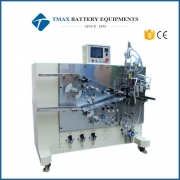 Automatic Cylinderical Battery Electrode Winding Machine
Read More
Automatic Cylinderical Battery Electrode Winding Machine
Read More
-
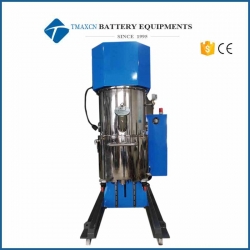 100-200L Double Planetary Vacuum Mixing Machine for Lithium Battery Slurry
Read More
100-200L Double Planetary Vacuum Mixing Machine for Lithium Battery Slurry
Read More
-
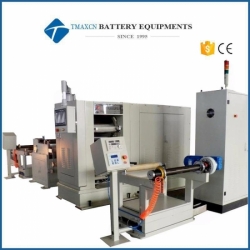 Large Heating Roller Press Machine Calender For Li ion Battery Production Line
Read More
Large Heating Roller Press Machine Calender For Li ion Battery Production Line
Read More
-
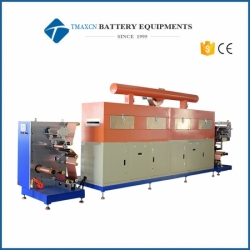 Large 3 Rollers Battery Electrode Film Intermittent Coating Machine for Pilot Production Line
Read More
Large 3 Rollers Battery Electrode Film Intermittent Coating Machine for Pilot Production Line
Read More
-
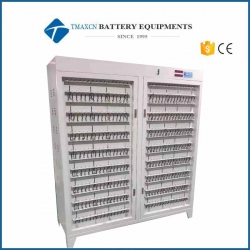 512 Channel 5V3A Battery Grading Machine/Battery Charge Discharge Machine Tester
Read More
512 Channel 5V3A Battery Grading Machine/Battery Charge Discharge Machine Tester
Read More
 David@battery-equipments.com

