 English▼



- Battery Manufacturing Equipment
- Battery Laboratory Assembly Equipment
- Battery Pack Assembly Equipment
- Sodium Ion Battery Manufacturing Equipment
- Solid State Cell Production Line
- Dry Electrode Assembly Equipment
- Supercapacitor Assembly Equipment
- Perovskite Solar Cell Lab Equipment
- Li ion Battery Materials
- Ni / Al / Cu Metal Foam
- Customized Electrode
- Cathode Active Materials
- Anode Active Materials
- Coin Cell Parts
- Lithium Chip
- Cylindrical Cell Parts
- Battery Current Collectors
- Battery Conductive Materials
- Electrolyte
- Battery Binder
- Separator and Tape
- Aluminum Laminate Film
- Nickel Strip/Foil
- Battery Tabs
- Graphene Materials
- Cu / Al / Ni / Stainless steel Foil
- Battery Laboratory Equipment
- Li ion Battery Tester
- Battery Safety Tester
- Material Characterization Tester
- Rolling Press Machine
- Electrode Mixer
- Coin Cell Crimping Machine
- Coin Cell Electrode Disc Punching
- Pouch Cell Sealing Machine
- Pouch Cell Stacking Machine
- Pouch Cell Forming Machine
- Pouch Cell Ultrasonic Welder
- Pouch Cell Electrode Die Cutter
- Cylinder Cell Sealing Machine
- Cylinder Cell Grooving Machine
- Electrode Slitting Machine
- Cylinder Cell Winding Machine
- Cylinder Cell Spot Welding Machine
- Electrolyte Filling
- Type Test Cell
- Other Battery Making Machine
- NMP Solvent Treatment System
- Vacuum Glove Box
- Coating Machine
- Lab Furnaces
- Ball Mill
- Laboratory Press
- Laboratory Equipment
- Press Equipment
blog
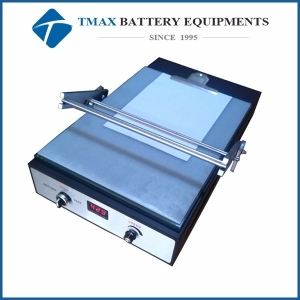
Bar Coating Machine
A bar coating machine is a type of coating equipment that uses a rotating or stationary bar to apply a uniform layer of material (such as slurries, inks, or adhesives) onto a substrate. In the context of battery manufacturing, bar coating machines are used to deposit active material slurries (e.g., cathode or anode slurries) onto metal foils (e.g., aluminum for cathodes, copper for anodes).
Bar coating machines are known for their simplicity, costeffectiveness, and ability to produce consistent coatings across large areas. Below is a detailed overview of bar coating machines, including their design, functionality, advantages, challenges, and applications.
●1. What Is a Bar Coating Machine?
A bar coating machine uses a cylindrical or grooved bar positioned above the moving substrate to spread a thin layer of liquid or slurry uniformly. The gap between the bar and the substrate determines the thickness of the applied coating. This method is particularly effective for applying coatings with medium to high viscosity and achieving precise control over thickness.
Key features of bar coating machines:
Simple mechanical design.
Adjustable parameters such as bar pressure, speed, and substrate tension.
Suitable for a wide range of materials and applications.
●2. Key Components of a Bar Coating Machine
The main components of a bar coating machine include:
A. Coating Bar
A cylindrical or grooved bar made from materials like stainless steel or ceramic to resist wear and corrosion.
Positioned at a controlled distance from the substrate to regulate coating thickness.
B. Substrate Handling System
Mechanism to move the substrate (e.g., metal foil) under the bar at a controlled speed.
C. Slurry Delivery System
Pumps and pipes that supply the slurry to the coating area.
Ensures consistent flow rate and pressure.
D. Drying System
Ovens or dryers to remove solvents from the coated layer after application.
E. Thickness Measurement System
Sensors (e.g., laser or ultrasonic) to measure the thickness of the coated layer in realtime.
F. Cleaning System
Devices to clean the bar and other components between batches to avoid contamination.
●3. Operation of a Bar Coating Machine
The operation of a bar coating machine involves the following steps:
1. Material Preparation:
Active material slurry is prepared and delivered to the coating area.
2. Coating Process:
The substrate (e.g., metal foil) moves under the bar.
The bar spreads the slurry evenly across the substrate, controlling the thickness based on the gap between the bar and the substrate.
3. Drying Process:
The coated substrate passes through a drying oven to evaporate solvents, leaving behind a solid layer of active material.
4. Output:
The dried coated substrate is collected and sent to the next stage of production (e.g., calendering).
●4. Importance of Bar Coating Machines in Battery Production
Bar coating machines play a critical role in battery manufacturing by ensuring uniform deposition of active material slurries onto metal foils. This process affects several key parameters:
A. Electrode Thickness
Uniform coating ensures consistent electrode thickness, which is essential for achieving desired energy density and capacity.
B. Material Distribution
Proper coating ensures even distribution of active materials, improving electrochemical performance.
C. Surface Quality
Smooth and defectfree coatings enhance mechanical integrity and reduce the risk of delamination.
D. Cost Efficiency
Precise coating minimizes material waste and reduces production costs.
A. LithiumIon Batteries
Used to coat cathodes (e.g., NMC, LFP, NCA) and anodes (e.g., graphite, silicon) onto aluminum and copper foils.
B. Research and Development
Ideal for smallscale experiments and prototyping in labs.
C. Flexible Electronics
Used in the production of flexible circuits, sensors, and displays.
D. Photovoltaics
Applied in the manufacturing of solar cells to deposit thin layers of functional materials.
E. Packaging
Used to apply barrier coatings, adhesives, or decorative finishes onto films and papers.
●6. Advantages of Bar Coating Machines
| Advantage | Description |
|||
| Simplicity | Straightforward design and operation, making it easy to use. |
| CostEffectiveness | Lower initial investment compared to more complex coating systems. |
| Uniformity | Provides consistent coating thickness and material distribution. |
| Versatility | Suitable for a wide range of materials and applications. |
| Scalability | Can be scaled up for industrial production with appropriate modifications. |
●7. Challenges in Using Bar Coating Machines
A. Coating Uniformity
Achieving consistent thickness and weight distribution can be challenging, especially for thick coatings or viscous slurries.
B. Solvent Management
Efficient removal of solvents during drying is critical to avoid defects or damage to the coated layer.
C. Material Contamination
Crosscontamination between batches must be avoided through thorough cleaning of the bar and system.
D. Speed Limitations
Bar coaters may have lower throughput compared to advanced systems like slot die coaters.
E. Maintenance Requirements
Regular maintenance is necessary to ensure proper functioning of the bar, pumps, and ovens.
●8. Types of Bar Coating Machines
A. Rotary Bar Coater
Uses a rotating bar to spread the slurry more effectively.
Advantages: Improved uniformity and reduced streaking.
B. Stationary Bar Coater
Uses a fixed bar positioned at a controlled distance from the substrate.
Advantages: Simplicity and low cost.
C. Grooved Bar Coater
Uses a bar with grooves to control the amount of material applied.
Advantages: Greater precision and consistency in coating thickness.
●9. Market Trends and Future Outlook
A. Increasing Demand for LithiumIon Batteries
Growth in electric vehicles (EVs), renewable energy storage, and consumer electronics drives demand for efficient coating technologies.
B. Emerging Technologies
Development of new bar designs and materials to improve performance and durability.
C. Automation and Digitalization
Integration of sensors and control systems to enhance precision and data collection.
D. Sustainability
Focus on reducing solvent emissions and improving recyclability in battery manufacturing.
●10. Conclusion
Bar coating machines are versatile and costeffective tools for applying uniform coatings in battery production and other industries. While they may not match the precision or throughput of advanced systems like slot die coaters, they remain valuable for applications where simplicity and affordability are priorities.
- 2025-06-03
Xiamen Tmax Battery Equipments Limited was set up as a manufacturer in 1995, dealing with lithium battery equipments, technology, etc. We have total manufacturing facilities of around 200000 square foot and more than 230 staff. Owning a group of experie-nced engineers and staffs, we can bring you not only reliable products and technology, but also excellent services and real value you will expect and enjoy.
A bar coating machine is a type of coating equipment that uses a rotating or stationary bar to apply a uniform layer of material (such as slurries, inks, or adhesives) onto a substrate. In the context of battery manufacturing, bar coating machines are used to deposit active material slurries (e.g., cathode or anode slurries) onto metal foils (e.g., aluminum for cathodes, copper for anodes).
Bar coating machines are known for their simplicity, costeffectiveness, and ability to produce consistent coatings across large areas. Below is a detailed overview of bar coating machines, including their design, functionality, advantages, challenges, and applications.
●1. What Is a Bar Coating Machine?
A bar coating machine uses a cylindrical or grooved bar positioned above the moving substrate to spread a thin layer of liquid or slurry uniformly. The gap between the bar and the substrate determines the thickness of the applied coating. This method is particularly effective for applying coatings with medium to high viscosity and achieving precise control over thickness.
Key features of bar coating machines:
Simple mechanical design.
Adjustable parameters such as bar pressure, speed, and substrate tension.
Suitable for a wide range of materials and applications.
●2. Key Components of a Bar Coating Machine
The main components of a bar coating machine include:
A. Coating Bar
A cylindrical or grooved bar made from materials like stainless steel or ceramic to resist wear and corrosion.
Positioned at a controlled distance from the substrate to regulate coating thickness.
B. Substrate Handling System
Mechanism to move the substrate (e.g., metal foil) under the bar at a controlled speed.
C. Slurry Delivery System
Pumps and pipes that supply the slurry to the coating area.
Ensures consistent flow rate and pressure.
D. Drying System
Ovens or dryers to remove solvents from the coated layer after application.
E. Thickness Measurement System
Sensors (e.g., laser or ultrasonic) to measure the thickness of the coated layer in realtime.
F. Cleaning System
Devices to clean the bar and other components between batches to avoid contamination.
●3. Operation of a Bar Coating Machine
The operation of a bar coating machine involves the following steps:
1. Material Preparation:
Active material slurry is prepared and delivered to the coating area.
2. Coating Process:
The substrate (e.g., metal foil) moves under the bar.
The bar spreads the slurry evenly across the substrate, controlling the thickness based on the gap between the bar and the substrate.
3. Drying Process:
The coated substrate passes through a drying oven to evaporate solvents, leaving behind a solid layer of active material.
4. Output:
The dried coated substrate is collected and sent to the next stage of production (e.g., calendering).
●4. Importance of Bar Coating Machines in Battery Production
Bar coating machines play a critical role in battery manufacturing by ensuring uniform deposition of active material slurries onto metal foils. This process affects several key parameters:
A. Electrode Thickness
Uniform coating ensures consistent electrode thickness, which is essential for achieving desired energy density and capacity.
B. Material Distribution
Proper coating ensures even distribution of active materials, improving electrochemical performance.
C. Surface Quality
Smooth and defectfree coatings enhance mechanical integrity and reduce the risk of delamination.
D. Cost Efficiency
Precise coating minimizes material waste and reduces production costs.
A. LithiumIon Batteries
Used to coat cathodes (e.g., NMC, LFP, NCA) and anodes (e.g., graphite, silicon) onto aluminum and copper foils.
B. Research and Development
Ideal for smallscale experiments and prototyping in labs.
C. Flexible Electronics
Used in the production of flexible circuits, sensors, and displays.
D. Photovoltaics
Applied in the manufacturing of solar cells to deposit thin layers of functional materials.
E. Packaging
Used to apply barrier coatings, adhesives, or decorative finishes onto films and papers.
●6. Advantages of Bar Coating Machines
| Advantage | Description |
|||
| Simplicity | Straightforward design and operation, making it easy to use. |
| CostEffectiveness | Lower initial investment compared to more complex coating systems. |
| Uniformity | Provides consistent coating thickness and material distribution. |
| Versatility | Suitable for a wide range of materials and applications. |
| Scalability | Can be scaled up for industrial production with appropriate modifications. |
●7. Challenges in Using Bar Coating Machines
A. Coating Uniformity
Achieving consistent thickness and weight distribution can be challenging, especially for thick coatings or viscous slurries.
B. Solvent Management
Efficient removal of solvents during drying is critical to avoid defects or damage to the coated layer.
C. Material Contamination
Crosscontamination between batches must be avoided through thorough cleaning of the bar and system.
D. Speed Limitations
Bar coaters may have lower throughput compared to advanced systems like slot die coaters.
E. Maintenance Requirements
Regular maintenance is necessary to ensure proper functioning of the bar, pumps, and ovens.
●8. Types of Bar Coating Machines
A. Rotary Bar Coater
Uses a rotating bar to spread the slurry more effectively.
Advantages: Improved uniformity and reduced streaking.
B. Stationary Bar Coater
Uses a fixed bar positioned at a controlled distance from the substrate.
Advantages: Simplicity and low cost.
C. Grooved Bar Coater
Uses a bar with grooves to control the amount of material applied.
Advantages: Greater precision and consistency in coating thickness.
●9. Market Trends and Future Outlook
A. Increasing Demand for LithiumIon Batteries
Growth in electric vehicles (EVs), renewable energy storage, and consumer electronics drives demand for efficient coating technologies.
B. Emerging Technologies
Development of new bar designs and materials to improve performance and durability.
C. Automation and Digitalization
Integration of sensors and control systems to enhance precision and data collection.
D. Sustainability
Focus on reducing solvent emissions and improving recyclability in battery manufacturing.
●10. Conclusion
Bar coating machines are versatile and costeffective tools for applying uniform coatings in battery production and other industries. While they may not match the precision or throughput of advanced systems like slot die coaters, they remain valuable for applications where simplicity and affordability are priorities.
If you're planning to acquire or operate a bar coating machine, carefully consider factors such as material compatibility, precision requirements, scalability, and cost. For further details or assistance, feel free to ask!
HOT PRODUCTS
-
 Automatic Cylinderical Battery Electrode Winding Machine
Read More
Automatic Cylinderical Battery Electrode Winding Machine
Read More
-
 100-200L Double Planetary Vacuum Mixing Machine for Lithium Battery Slurry
Read More
100-200L Double Planetary Vacuum Mixing Machine for Lithium Battery Slurry
Read More
-
 Large Heating Roller Press Machine Calender For Li ion Battery Production Line
Read More
Large Heating Roller Press Machine Calender For Li ion Battery Production Line
Read More
-
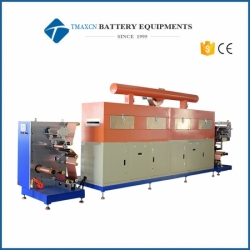 Large 3 Rollers Battery Electrode Film Intermittent Coating Machine for Pilot Production Line
Read More
Large 3 Rollers Battery Electrode Film Intermittent Coating Machine for Pilot Production Line
Read More
-
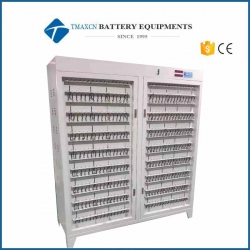 512 Channel 5V3A Battery Grading Machine/Battery Charge Discharge Machine Tester
Read More
512 Channel 5V3A Battery Grading Machine/Battery Charge Discharge Machine Tester
Read More
 David@battery-equipments.com

