 English▼



- Battery Manufacturing Equipment
- Battery Laboratory Assembly Equipment
- Battery Pack Assembly Equipment
- Sodium Ion Battery Manufacturing Equipment
- Solid State Cell Production Line
- Dry Electrode Assembly Equipment
- Supercapacitor Assembly Equipment
- Perovskite Solar Cell Lab Equipment
- Li ion Battery Materials
- Ni / Al / Cu Metal Foam
- Customized Electrode
- Cathode Active Materials
- Anode Active Materials
- Coin Cell Parts
- Lithium Chip
- Cylindrical Cell Parts
- Battery Current Collectors
- Battery Conductive Materials
- Electrolyte
- Battery Binder
- Separator and Tape
- Aluminum Laminate Film
- Nickel Strip/Foil
- Battery Tabs
- Graphene Materials
- Cu / Al / Ni / Stainless steel Foil
- Battery Laboratory Equipment
- Li ion Battery Tester
- Battery Safety Tester
- Material Characterization Tester
- Rolling Press Machine
- Electrode Mixer
- Coin Cell Crimping Machine
- Coin Cell Electrode Disc Punching
- Pouch Cell Sealing Machine
- Pouch Cell Stacking Machine
- Pouch Cell Forming Machine
- Pouch Cell Ultrasonic Welder
- Pouch Cell Electrode Die Cutter
- Cylinder Cell Sealing Machine
- Cylinder Cell Grooving Machine
- Electrode Slitting Machine
- Cylinder Cell Winding Machine
- Cylinder Cell Spot Welding Machine
- Electrolyte Filling
- Type Test Cell
- Other Battery Making Machine
- NMP Solvent Treatment System
- Vacuum Glove Box
- Coating Machine
- Lab Furnaces
- Ball Mill
- Laboratory Press
- Laboratory Equipment
- Press Equipment
blog
Battery Pilot Plant
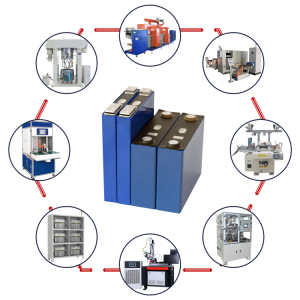
A battery pilot plant is a scaleddown version of a fullscale battery manufacturing facility. It serves as a testing ground for new battery technologies, processes, and chemistries before they are deployed in largescale production. Pilot plants play a critical role in the development of advanced batteries, such as lithiumion, solidstate, and nextgeneration chemistries.
Below is a detailed overview of battery pilot plants, including their purpose, design, key components, and importance.
●1. Purpose of Battery Pilot Plants
The primary goal of a battery pilot plant is to bridge the gap between laboratoryscale research and commercialscale manufacturing. It allows researchers and manufacturers to:
Validate New Technologies: Test and refine new battery chemistries, materials, and manufacturing processes.
Optimize Processes: Identify bottlenecks, improve efficiency, and reduce costs in battery production.
ScaleUp Production: Demonstrate the feasibility of scaling up from labscale prototypes to larger volumes.
Quality Assurance: Ensure consistency and reliability of batteries produced at higher volumes.
Cost Estimation: Gather data on material usage, labor, and equipment costs to estimate production expenses.
●2. Key Components of a Battery Pilot Plant
A battery pilot plant typically includes the following key components:
A. Material Preparation Area
Mixing Machines: Homogenize active materials, binders, and conductive additives.
Coating Machines: Apply slurries onto metal foils (aluminum for cathodes, copper for anodes).
Drying Machines: Remove solvents from coated electrodes.
Calendering Machines: Compress dried electrodes to increase density and conductivity.
B. Electrode Processing Area
Cutting Machines: Cut electrodes into specific dimensions.
Tab Welding Machines: Attach current collectors (tabs) to electrodes.
C. Cell Assembly Area
Stacking/Lamination Machines: Assemble cathode, separator, and anode layers into a stacked or wound configuration.
Casing Machines: Place electrode stacks into casings (prismatic cells) or pouches (pouch cells).
Sealing Machines: Hermetically seal the casing or pouch to prevent electrolyte leakage.
D. Electrolyte Filling Area
Filling Machines: Inject electrolyte solution into the cell under controlled conditions.
Formation Chambers: Activate the battery through controlled charging and discharging cycles.
E. Testing and Quality Control Area
Formation Machines: Form the solidelectrolyte interphase (SEI) layer.
Testing Equipment: Evaluate key performance parameters such as capacity, internal resistance, cycle life, and safety.
●3. Design Considerations for Battery Pilot Plants
Designing a battery pilot plant requires careful planning to ensure it meets the needs of both research and manufacturing. Key considerations include:
A. Scalability
The pilot plant should be modular and scalable to accommodate future growth and changes in technology.
B. Flexibility
The equipment should be versatile enough to handle different battery types (e.g., cylindrical, prismatic, pouch) and chemistries (e.g., lithiumion, solidstate).
C. Automation
Incorporate automation to improve precision, reduce labor costs, and increase throughput.
D. Safety
Implement safeguards to handle hazardous materials (e.g., electrolytes) safely and comply with environmental regulations.
E. Data Collection
Equip the pilot plant with sensors and data analytics tools to monitor and optimize processes in realtime.
●4. Importance of Battery Pilot Plants
Battery pilot plants are essential for advancing battery technology and ensuring successful commercialization. Their importance can be summarized as follows:
A. Technology Development
Pilot plants allow researchers to test and refine new battery chemistries and materials, such as siliconbased anodes, solidstate electrolytes, and highenergy cathodes.
B. Process Optimization
By simulating realworld manufacturing conditions, pilot plants help identify inefficiencies and improve process yields.
C. Cost Reduction
Pilot plants provide valuable insights into material and labor costs, enabling manufacturers to optimize production economics.
D. Risk Mitigation
Before investing in largescale production facilities, pilot plants allow companies to validate technologies and processes, reducing financial and technical risks.
E. Collaboration
Pilot plants serve as hubs for collaboration between academia, industry, and government agencies, fostering innovation and knowledge sharing.
●5. Types of Battery Pilot Plants
A. ResearchOriented Pilot Plants
Focus on developing and testing new battery chemistries and materials.
Often operated by universities, national laboratories, or research institutions.
B. IndustryOriented Pilot Plants
Designed to bridge the gap between research and commercial production.
Operated by battery manufacturers to scale up promising technologies.
C. Customizable Pilot Plants
Modular designs that can be reconfigured to accommodate different battery types and chemistries.
Ideal for companies exploring multiple technology options.
Despite their benefits, battery pilot plants face several challenges:
A. High Initial Costs
Building and equipping a pilot plant requires significant investment in specialized machinery and infrastructure.
B. Complexity
Managing the integration of various processes and systems can be complex, especially for emerging technologies.
C. Material Availability
Securing sufficient quantities of advanced materials for testing can be difficult, particularly for rare or proprietary substances.
D. Regulatory Compliance
Ensuring compliance with environmental and safety regulations adds complexity to pilot plant operations.
●7. Examples of Battery Pilot Plants
A. National Laboratories
Argonne National Laboratory (USA): Develops advanced battery chemistries and provides pilotscale manufacturing capabilities.
Fraunhofer Institute (Germany): Offers pilotscale production facilities for lithiumion and solidstate batteries.
B. Industry Leaders
Tesla Gigafactory Nevada (USA): Includes pilot lines for testing new battery technologies before fullscale production.
CATL (China): Operates pilot plants to develop and validate nextgeneration battery chemistries.
C. Startups
Many startups in the battery space use pilot plants to scale up their innovations before entering mass production.
●8. Future Trends in Battery Pilot Plants
A. SolidState Batteries
Pilot plants are increasingly being developed to produce solidstate batteries, which require new techniques for electrolyte deposition and cell assembly.
B. Sustainable Practices
Ecofriendly designs and recycling technologies are becoming integral to pilot plant operations.
C. Digital Twin Technology
Virtual models of pilot plants (digital twins) are used to simulate and optimize processes before physical implementation.
D. Artificial Intelligence
AIdriven analytics and machine learning algorithms are being integrated into pilot plants to enhance process control and predict outcomes.
●9. Conclusion
Battery pilot plants are vital for advancing battery technology and ensuring successful commercialization. They enable researchers and manufacturers to test, refine, and scale up new battery chemistries and processes in a controlled environment. By addressing technical, economic, and regulatory challenges, pilot plants play a crucial role in driving innovation and accelerating the adoption of advanced batteries in industries such as electric vehicles, consumer electronics, and energy storage systems.
- 2025-07-25
Xiamen Tmax Battery Equipments Limited was set up as a manufacturer in 1995, dealing with lithium battery equipments, technology, etc. We have total manufacturing facilities of around 200000 square foot and more than 230 staff. Owning a group of experie-nced engineers and staffs, we can bring you not only reliable products and technology, but also excellent services and real value you will expect and enjoy.
A battery pilot plant is a scaleddown version of a fullscale battery manufacturing facility. It serves as a testing ground for new battery technologies, processes, and chemistries before they are deployed in largescale production. Pilot plants play a critical role in the development of advanced batteries, such as lithiumion, solidstate, and nextgeneration chemistries.
Below is a detailed overview of battery pilot plants, including their purpose, design, key components, and importance.
●1. Purpose of Battery Pilot Plants
The primary goal of a battery pilot plant is to bridge the gap between laboratoryscale research and commercialscale manufacturing. It allows researchers and manufacturers to:
Validate New Technologies: Test and refine new battery chemistries, materials, and manufacturing processes.
Optimize Processes: Identify bottlenecks, improve efficiency, and reduce costs in battery production.
ScaleUp Production: Demonstrate the feasibility of scaling up from labscale prototypes to larger volumes.
Quality Assurance: Ensure consistency and reliability of batteries produced at higher volumes.
Cost Estimation: Gather data on material usage, labor, and equipment costs to estimate production expenses.
●2. Key Components of a Battery Pilot Plant
A battery pilot plant typically includes the following key components:
A. Material Preparation Area
Mixing Machines: Homogenize active materials, binders, and conductive additives.
Coating Machines: Apply slurries onto metal foils (aluminum for cathodes, copper for anodes).
Drying Machines: Remove solvents from coated electrodes.
Calendering Machines: Compress dried electrodes to increase density and conductivity.
B. Electrode Processing Area
Cutting Machines: Cut electrodes into specific dimensions.
Tab Welding Machines: Attach current collectors (tabs) to electrodes.
C. Cell Assembly Area
Stacking/Lamination Machines: Assemble cathode, separator, and anode layers into a stacked or wound configuration.
Casing Machines: Place electrode stacks into casings (prismatic cells) or pouches (pouch cells).
Sealing Machines: Hermetically seal the casing or pouch to prevent electrolyte leakage.
D. Electrolyte Filling Area
Filling Machines: Inject electrolyte solution into the cell under controlled conditions.
Formation Chambers: Activate the battery through controlled charging and discharging cycles.
E. Testing and Quality Control Area
Formation Machines: Form the solidelectrolyte interphase (SEI) layer.
Testing Equipment: Evaluate key performance parameters such as capacity, internal resistance, cycle life, and safety.
●3. Design Considerations for Battery Pilot Plants
Designing a battery pilot plant requires careful planning to ensure it meets the needs of both research and manufacturing. Key considerations include:
A. Scalability
The pilot plant should be modular and scalable to accommodate future growth and changes in technology.
B. Flexibility
The equipment should be versatile enough to handle different battery types (e.g., cylindrical, prismatic, pouch) and chemistries (e.g., lithiumion, solidstate).
C. Automation
Incorporate automation to improve precision, reduce labor costs, and increase throughput.
D. Safety
Implement safeguards to handle hazardous materials (e.g., electrolytes) safely and comply with environmental regulations.
E. Data Collection
Equip the pilot plant with sensors and data analytics tools to monitor and optimize processes in realtime.
●4. Importance of Battery Pilot Plants
Battery pilot plants are essential for advancing battery technology and ensuring successful commercialization. Their importance can be summarized as follows:
A. Technology Development
Pilot plants allow researchers to test and refine new battery chemistries and materials, such as siliconbased anodes, solidstate electrolytes, and highenergy cathodes.
B. Process Optimization
By simulating realworld manufacturing conditions, pilot plants help identify inefficiencies and improve process yields.
C. Cost Reduction
Pilot plants provide valuable insights into material and labor costs, enabling manufacturers to optimize production economics.
D. Risk Mitigation
Before investing in largescale production facilities, pilot plants allow companies to validate technologies and processes, reducing financial and technical risks.
E. Collaboration
Pilot plants serve as hubs for collaboration between academia, industry, and government agencies, fostering innovation and knowledge sharing.
●5. Types of Battery Pilot Plants
A. ResearchOriented Pilot Plants
Focus on developing and testing new battery chemistries and materials.
Often operated by universities, national laboratories, or research institutions.
B. IndustryOriented Pilot Plants
Designed to bridge the gap between research and commercial production.
Operated by battery manufacturers to scale up promising technologies.
C. Customizable Pilot Plants
Modular designs that can be reconfigured to accommodate different battery types and chemistries.
Ideal for companies exploring multiple technology options.
Despite their benefits, battery pilot plants face several challenges:
A. High Initial Costs
Building and equipping a pilot plant requires significant investment in specialized machinery and infrastructure.
B. Complexity
Managing the integration of various processes and systems can be complex, especially for emerging technologies.
C. Material Availability
Securing sufficient quantities of advanced materials for testing can be difficult, particularly for rare or proprietary substances.
D. Regulatory Compliance
Ensuring compliance with environmental and safety regulations adds complexity to pilot plant operations.
●7. Examples of Battery Pilot Plants
A. National Laboratories
Argonne National Laboratory (USA): Develops advanced battery chemistries and provides pilotscale manufacturing capabilities.
Fraunhofer Institute (Germany): Offers pilotscale production facilities for lithiumion and solidstate batteries.
B. Industry Leaders
Tesla Gigafactory Nevada (USA): Includes pilot lines for testing new battery technologies before fullscale production.
CATL (China): Operates pilot plants to develop and validate nextgeneration battery chemistries.
C. Startups
Many startups in the battery space use pilot plants to scale up their innovations before entering mass production.
●8. Future Trends in Battery Pilot Plants
A. SolidState Batteries
Pilot plants are increasingly being developed to produce solidstate batteries, which require new techniques for electrolyte deposition and cell assembly.
B. Sustainable Practices
Ecofriendly designs and recycling technologies are becoming integral to pilot plant operations.
C. Digital Twin Technology
Virtual models of pilot plants (digital twins) are used to simulate and optimize processes before physical implementation.
D. Artificial Intelligence
AIdriven analytics and machine learning algorithms are being integrated into pilot plants to enhance process control and predict outcomes.
●9. Conclusion
Battery pilot plants are vital for advancing battery technology and ensuring successful commercialization. They enable researchers and manufacturers to test, refine, and scale up new battery chemistries and processes in a controlled environment. By addressing technical, economic, and regulatory challenges, pilot plants play a crucial role in driving innovation and accelerating the adoption of advanced batteries in industries such as electric vehicles, consumer electronics, and energy storage systems.
If you're involved in battery research or manufacturing, consider leveraging pilot plants to accelerate your technology development and market entry. For further details or assistance, feel free to ask!
HOT PRODUCTS
-
 Automatic Cylinderical Battery Electrode Winding Machine
Read More
Automatic Cylinderical Battery Electrode Winding Machine
Read More
-
 100-200L Double Planetary Vacuum Mixing Machine for Lithium Battery Slurry
Read More
100-200L Double Planetary Vacuum Mixing Machine for Lithium Battery Slurry
Read More
-
 Large Heating Roller Press Machine Calender For Li ion Battery Production Line
Read More
Large Heating Roller Press Machine Calender For Li ion Battery Production Line
Read More
-
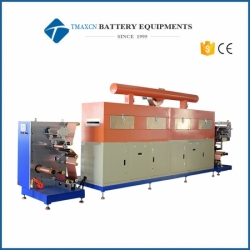 Large 3 Rollers Battery Electrode Film Intermittent Coating Machine for Pilot Production Line
Read More
Large 3 Rollers Battery Electrode Film Intermittent Coating Machine for Pilot Production Line
Read More
-
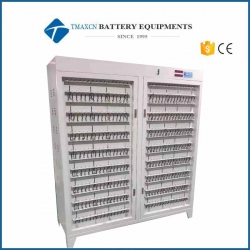 512 Channel 5V3A Battery Grading Machine/Battery Charge Discharge Machine Tester
Read More
512 Channel 5V3A Battery Grading Machine/Battery Charge Discharge Machine Tester
Read More
 David@battery-equipments.com

