 English▼



- Battery Manufacturing Equipment
- Battery Laboratory Assembly Equipment
- Battery Pack Assembly Equipment
- Sodium Ion Battery Manufacturing Equipment
- Solid State Cell Production Line
- Dry Electrode Assembly Equipment
- Supercapacitor Assembly Equipment
- Perovskite Solar Cell Lab Equipment
- Li ion Battery Materials
- Ni / Al / Cu Metal Foam
- Customized Electrode
- Cathode Active Materials
- Anode Active Materials
- Coin Cell Parts
- Lithium Chip
- Cylindrical Cell Parts
- Battery Current Collectors
- Battery Conductive Materials
- Electrolyte
- Battery Binder
- Separator and Tape
- Aluminum Laminate Film
- Nickel Strip/Foil
- Battery Tabs
- Graphene Materials
- Cu / Al / Ni / Stainless steel Foil
- Battery Laboratory Equipment
- Li ion Battery Tester
- Battery Safety Tester
- Material Characterization Tester
- Rolling Press Machine
- Electrode Mixer
- Coin Cell Crimping Machine
- Coin Cell Electrode Disc Punching
- Pouch Cell Sealing Machine
- Pouch Cell Stacking Machine
- Pouch Cell Forming Machine
- Pouch Cell Ultrasonic Welder
- Pouch Cell Electrode Die Cutter
- Cylinder Cell Sealing Machine
- Cylinder Cell Grooving Machine
- Electrode Slitting Machine
- Cylinder Cell Winding Machine
- Cylinder Cell Spot Welding Machine
- Electrolyte Filling
- Type Test Cell
- Other Battery Making Machine
- NMP Solvent Treatment System
- Vacuum Glove Box
- Coating Machine
- Lab Furnaces
- Ball Mill
- Laboratory Press
- Laboratory Equipment
- Press Equipment
- 2026-03-17
Xiamen Tmax Battery Equipments Limited was set up as a manufacturer in 1995, dealing with lithium battery equipments, technology, etc. We have total manufacturing facilities of around 200000 square foot and more than 230 staff. Owning a group of experie-nced engineers and staffs, we can bring you not only reliable products and technology, but also excellent services and real value you will expect and enjoy.
Nickel Foam Electrode: Overview, Features, Manufacturing Process, Applications, Advantages, and Conclusion
A nickel foam electrode is a three-dimensional, porous metal electrode widely used in electrochemical devices, including batteries, fuel cells, and supercapacitors. Its unique foam structure combines the excellent electrical conductivity and chemical stability of nickel with a high surface area, enabling enhanced electrochemical performance. Nickel foam electrodes are essential components in advanced energy storage and conversion systems, providing high current density, rapid ion transport, and long-term durability.
Overview
Nickel foam electrodes consist of interconnected open-cell structures that allow electrolyte penetration, facilitating efficient electron and ion transport. The high porosity of nickel foam reduces the internal resistance of the electrode while providing a large active surface area for electrochemical reactions. These electrodes are commonly used in nickel-metal hydride (NiMH) batteries, alkaline fuel cells, and other energy devices where high power and energy density are required. Modern manufacturing techniques enable the production of nickel foam electrodes with controlled thickness, porosity, and surface morphology, ensuring consistent performance.
Key Features of Nickel Foam Electrodes
Nickel foam electrodes possess several notable characteristics:
High Electrical Conductivity: Ensures efficient electron transfer during electrochemical reactions.
Large Surface Area: Provides extensive active sites for electrochemical processes, enhancing current density and energy storage.
Open-Cell Porosity: Facilitates uniform electrolyte distribution and rapid ion transport.
Mechanical Stability: Maintains structural integrity under compression and repeated charge/discharge cycles.
Chemical Durability: Resistant to corrosion in alkaline and other common electrolytes.
Customizable Properties: Porosity, thickness, and pore size can be tailored to specific device requirements.
Manufacturing Process
The production of nickel foam electrodes typically involves several steps:
Foam Fabrication: Nickel foam is produced using a template method, electrodeposition, or powder metallurgy to create a porous, interconnected structure.
Cleaning and Activation: The foam is cleaned to remove residual contaminants and may be chemically treated to enhance surface wettability.
Coating or Impregnation (Optional): Active materials, such as nickel hydroxide or other electrochemically active compounds, are deposited onto the foam surface.
Drying and Heat Treatment: The coated foam is dried and sintered if necessary to improve adhesion and structural stability.
Quality Inspection: Porosity, conductivity, thickness, and surface uniformity are evaluated to ensure performance consistency.
Advanced manufacturing systems can automate the coating and drying process, ensuring high throughput and reproducibility for industrial applications.
Nickel foam electrodes are used in a wide range of electrochemical devices:
Batteries: As current collectors and active electrodes in NiMH and nickel-zinc batteries.
Supercapacitors: Providing high power density and rapid charge/discharge capabilities.
Fuel Cells: Serving as electrodes in alkaline fuel cells and hydrogen generation systems.
Electrochemical Sensors: Enhancing sensitivity due to large surface area and fast electron transfer.
Electroplating and Electrolysis: Acting as conductive, porous substrates for metal deposition and chemical reactions.
Advantages
The primary advantages of nickel foam electrodes include:
Enhanced Electrochemical Performance: Large surface area and high conductivity improve energy and power density.
Rapid Ion and Electron Transport: Open-cell structure ensures fast charge and discharge rates.
Mechanical and Chemical Durability: Maintains performance under cycling and corrosive environments.
Customizable Structure: Tailored porosity and thickness optimize performance for specific applications.
Scalable Production: Suitable for laboratory, pilot-scale, and industrial manufacturing.
Versatility: Can be combined with various active materials and electrolytes to meet diverse energy device requirements.
Conclusion
In conclusion, the nickel foam electrode is a high-performance, versatile component critical to modern electrochemical devices. Its combination of high conductivity, large surface area, open-cell porosity, and chemical durability enables superior energy storage and conversion performance. Widely used in batteries, supercapacitors, fuel cells, and electrochemical sensors, nickel foam electrodes provide rapid ion transport, high current density, and long-term stability. Advanced manufacturing techniques ensure consistent quality, scalability, and adaptability, making nickel foam electrodes indispensable in next-generation energy storage and conversion technologies.
-
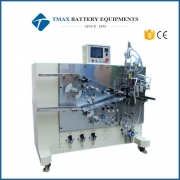 Automatic Cylinderical Battery Electrode Winding Machine
Read More
Automatic Cylinderical Battery Electrode Winding Machine
Read More
-
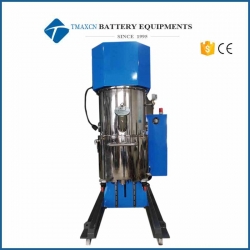 100-200L Double Planetary Vacuum Mixing Machine for Lithium Battery Slurry
Read More
100-200L Double Planetary Vacuum Mixing Machine for Lithium Battery Slurry
Read More
-
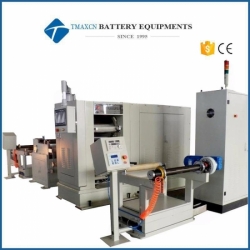 Large Heating Roller Press Machine Calender For Li ion Battery Production Line
Read More
Large Heating Roller Press Machine Calender For Li ion Battery Production Line
Read More
-
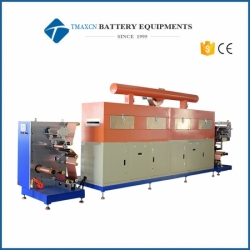 Large 3 Rollers Battery Electrode Film Intermittent Coating Machine for Pilot Production Line
Read More
Large 3 Rollers Battery Electrode Film Intermittent Coating Machine for Pilot Production Line
Read More
-
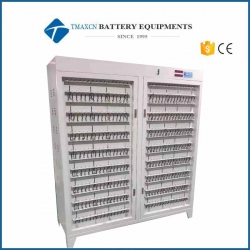 512 Channel 5V3A Battery Grading Machine/Battery Charge Discharge Machine Tester
Read More
512 Channel 5V3A Battery Grading Machine/Battery Charge Discharge Machine Tester
Read More
 David@battery-equipments.com

