 English▼



- Battery Manufacturing Equipment
- Battery Laboratory Assembly Equipment
- Battery Pack Assembly Equipment
- Sodium Ion Battery Manufacturing Equipment
- Solid State Cell Production Line
- Dry Electrode Assembly Equipment
- Supercapacitor Assembly Equipment
- Perovskite Solar Cell Lab Equipment
- Li ion Battery Materials
- Ni / Al / Cu Metal Foam
- Customized Electrode
- Cathode Active Materials
- Anode Active Materials
- Coin Cell Parts
- Lithium Chip
- Cylindrical Cell Parts
- Battery Current Collectors
- Battery Conductive Materials
- Electrolyte
- Battery Binder
- Separator and Tape
- Aluminum Laminate Film
- Nickel Strip/Foil
- Battery Tabs
- Graphene Materials
- Cu / Al / Ni / Stainless steel Foil
- Battery Laboratory Equipment
- Li ion Battery Tester
- Battery Safety Tester
- Material Characterization Tester
- Rolling Press Machine
- Electrode Mixer
- Coin Cell Crimping Machine
- Coin Cell Electrode Disc Punching
- Pouch Cell Sealing Machine
- Pouch Cell Stacking Machine
- Pouch Cell Forming Machine
- Pouch Cell Ultrasonic Welder
- Pouch Cell Electrode Die Cutter
- Cylinder Cell Sealing Machine
- Cylinder Cell Grooving Machine
- Electrode Slitting Machine
- Cylinder Cell Winding Machine
- Cylinder Cell Spot Welding Machine
- Electrolyte Filling
- Type Test Cell
- Other Battery Making Machine
- NMP Solvent Treatment System
- Vacuum Glove Box
- Coating Machine
- Lab Furnaces
- Ball Mill
- Laboratory Press
- Laboratory Equipment
- Press Equipment
blog
Battery Pilot Machine
- 2024-12-12
Battery Pilot Machine: A Critical Tool for Battery Development and Testing
A battery pilot machine is an essential piece of equipment used in the development, testing, and manufacturing of battery cells, packs, and modules. It serves as an intermediate step between laboratory-scale research and full-scale production, enabling manufacturers to fine-tune processes, assess new materials, and optimize performance before mass production begins.
In essence, a battery pilot machine allows for the controlled, small-scale production of batteries to simulate real-world conditions, ensuring that the final products meet performance, safety, and durability standards. These machines are commonly used in the development of lithium-ion batteries, nickel-metal hydride (NiMH) batteries, solid-state batteries, and other types of energy storage solutions.
---
● What is a Battery Pilot Machine?
A battery pilot machine is a versatile piece of equipment used to scale up the manufacturing of battery cells, packs, and modules from the laboratory or prototype phase to larger-scale production. It provides a platform for simulating full-scale manufacturing conditions while allowing for process optimization, validation, and troubleshooting.
The primary function of a Automatic Coating Machine is to produce small batches of batteries for testing and experimentation. This helps manufacturers identify potential issues, experiment with new materials, and refine their processes before committing to large-scale production.
Key Functions of a Battery Coating Machine
- Small-Scale Production: It replicates the manufacturing steps involved in creating battery cells, allowing for small-volume production.
- Process Optimization: Enables optimization of key manufacturing steps, such as electrode coating, cell assembly, electrolyte filling, and testing.
- Material Testing: Used to evaluate new materials or chemistries to see how they perform in real-world battery manufacturing.
- Performance Testing: Facilitates testing of battery performance, including charge/discharge cycles, capacity, and efficiency.
- Quality Control: Ensures that the manufacturing process produces consistent results, identifying any defects or issues before scaling up production.
---
● Applications of Battery Pilot Machines
1. Battery R&D (Research and Development)
Battery pilot machines are commonly used in the R&D phase of battery development. Researchers use them to test novel battery chemistries, electrode materials, and manufacturing techniques before scaling up to mass production.
2. Process Development
They play a crucial role in refining the production process for both existing and new battery technologies. By simulating full-scale production in a controlled environment, pilot machines allow manufacturers to fine-tune processes for efficiency, cost-effectiveness, and quality control.
3. Scale-Up Studies
Pilot machines allow for a better understanding of how new materials and processes will perform at larger scales, which is critical for planning large-scale production lines.
4. Prototype Testing
Once prototype battery cells or modules are developed, a pilot machine is used to create initial test batches. These batches are then tested for their performance, safety, and reliability, simulating real-world use in the final product.
5. Training and Education
Battery pilot machines are also used in training facilities and educational settings to teach students and professionals about the processes involved in battery manufacturing.
---
● Key Features of a Battery Pilot Machine
1. Flexible Production Capabilities
A battery pilot machine typically supports the production of various battery types and sizes, allowing for flexibility in testing different chemistries and configurations, such as cylindrical, prismatic, or pouch cells.
2. Automated Process Control
Modern battery pilot machines come equipped with advanced control systems that manage and automate critical production processes, including:
- Slurry mixing and electrode coating
- Drying and calendaring
- Electrode cutting
- Cell assembly and electrolyte filling
- Sealing and final testing
3. High-Precision Measurement
Battery pilot machines are equipped with sensors and diagnostic tools that measure key parameters such as voltage, temperature, current, capacity, and cycle life during testing. This ensures that any issues can be detected early, and adjustments can be made to the process.
4. Environmental Control
Many pilot machines are designed to maintain strict environmental conditions, such as temperature and humidity, to simulate actual production environments. This is crucial for ensuring consistent results, particularly when dealing with sensitive materials like lithium or new electrode materials.
5. Batch Production and Customization
These machines are capable of producing small batches of battery cells, typically in the range of hundreds or thousands of cells, allowing manufacturers to test the scalability of their processes while maintaining control over batch quality.
---
● Components of a Battery Pilot Machine
1. Electrode Coating Unit
The electrode coating machine applies a thin layer of active materials onto conductive substrates (e.g., copper for the anode, aluminum for the cathode). This step is critical for ensuring the uniform distribution of materials and is usually by drying and calendaring.
2. Cell Assembly Station
In this stage, the anode, cathode, and separator materials are arranged and assembled into cells. Different types of battery designs (cylindrical, prismatic, or pouch) may require specialized assembly systems.
3. Electrolyte Filling Station
The cell is filled with the electrolyte solution, a critical step for enabling ionic conductivity in the battery. This process often requires precise handling to avoid contamination and ensure correct electrolyte volumes.
4. Sealing and Packaging Station
After electrolyte filling, the cell is sealed using heat sealing or welding methods. This ensures that the cell remains airtight and prevents leakage of the electrolyte.
5. Formation and Cycling Station
During the formation process, the cell undergoes its first charge and discharge cycle to activate its electrochemical properties. This stage is by cycling tests to evaluate the battery's capacity, efficiency, and cycle life.
6. Testing and Inspection Systems
These systems perform quality control and diagnostic tests to check the integrity and performance of the battery. This includes tests for capacity, internal resistance, voltage stability, and cycle life.
---
● Advantages of Using a Battery Pilot Machine
1. Process Optimization
Pilot machines allow manufacturers to identify inefficiencies and bottlenecks in the production process, leading to better quality control and more cost-effective production methods.
2. Material Evaluation
These machines enable the testing of new materials, allowing companies to evaluate their potential before large-scale adoption in production.
3. Reduced Risk
By testing manufacturing processes on a small scale before ramping up to full production, companies can reduce the risk of costly mistakes or defects in the final product.
4. Faster Time-to-Market
Battery pilot machines help speed up the development cycle for new batteries, which is especially important for industries like electric vehicles (EVs) and consumer electronics that require fast innovation to stay competitive.
5. Customization
Pilot machines are highly customizable, allowing manufacturers to tailor the production process to meet the unique needs of different battery chemistries and designs.
---
● Challenges of Battery Pilot Machines
1. High Initial Investment
Setting up a battery pilot production line can be expensive, particularly for advanced equipment that incorporates automated processes and high-precision tools.
2. Complexity in Scaling
While pilot machines simulate large-scale production, there may still be challenges in transitioning to full-scale manufacturing, especially when scaling up new or experimental technologies.
3. Material Handling
Handling sensitive materials such as lithium and other electrochemical compounds can be tricky, requiring advanced safety and handling protocols.
4. Technical Expertise
Operating and maintaining battery pilot machines requires highly trained personnel with expertise in battery chemistry, manufacturing processes, and machine operations.
---
● Conclusion
A battery pilot machine plays a crucial role in advancing battery technology, from early-stage research and development to the production of high-quality energy storage devices. By enabling small-scale, high-fidelity production, pilot machines help companies optimize manufacturing processes, test new materials, and ensure that battery cells meet performance, safety, and durability standards before moving into large-scale production. With the growing demand for advanced energy storage solutions, particularly in electric vehicles and renewable energy storage, the importance of these machines in the battery manufacturing ecosystem cannot be overstated.
A battery pilot machine is an essential piece of equipment used in the development, testing, and manufacturing of battery cells, packs, and modules. It serves as an intermediate step between laboratory-scale research and full-scale production, enabling manufacturers to fine-tune processes, assess new materials, and optimize performance before mass production begins.
In essence, a battery pilot machine allows for the controlled, small-scale production of batteries to simulate real-world conditions, ensuring that the final products meet performance, safety, and durability standards. These machines are commonly used in the development of lithium-ion batteries, nickel-metal hydride (NiMH) batteries, solid-state batteries, and other types of energy storage solutions.
---
● What is a Battery Pilot Machine?
A battery pilot machine is a versatile piece of equipment used to scale up the manufacturing of battery cells, packs, and modules from the laboratory or prototype phase to larger-scale production. It provides a platform for simulating full-scale manufacturing conditions while allowing for process optimization, validation, and troubleshooting.
The primary function of a Automatic Coating Machine is to produce small batches of batteries for testing and experimentation. This helps manufacturers identify potential issues, experiment with new materials, and refine their processes before committing to large-scale production.
Key Functions of a Battery Coating Machine
- Small-Scale Production: It replicates the manufacturing steps involved in creating battery cells, allowing for small-volume production.
- Process Optimization: Enables optimization of key manufacturing steps, such as electrode coating, cell assembly, electrolyte filling, and testing.
- Material Testing: Used to evaluate new materials or chemistries to see how they perform in real-world battery manufacturing.
- Performance Testing: Facilitates testing of battery performance, including charge/discharge cycles, capacity, and efficiency.
- Quality Control: Ensures that the manufacturing process produces consistent results, identifying any defects or issues before scaling up production.
---
● Applications of Battery Pilot Machines
1. Battery R&D (Research and Development)
Battery pilot machines are commonly used in the R&D phase of battery development. Researchers use them to test novel battery chemistries, electrode materials, and manufacturing techniques before scaling up to mass production.
2. Process Development
They play a crucial role in refining the production process for both existing and new battery technologies. By simulating full-scale production in a controlled environment, pilot machines allow manufacturers to fine-tune processes for efficiency, cost-effectiveness, and quality control.
3. Scale-Up Studies
Pilot machines allow for a better understanding of how new materials and processes will perform at larger scales, which is critical for planning large-scale production lines.
4. Prototype Testing
Once prototype battery cells or modules are developed, a pilot machine is used to create initial test batches. These batches are then tested for their performance, safety, and reliability, simulating real-world use in the final product.
5. Training and Education
Battery pilot machines are also used in training facilities and educational settings to teach students and professionals about the processes involved in battery manufacturing.
---
● Key Features of a Battery Pilot Machine
1. Flexible Production Capabilities
A battery pilot machine typically supports the production of various battery types and sizes, allowing for flexibility in testing different chemistries and configurations, such as cylindrical, prismatic, or pouch cells.
2. Automated Process Control
Modern battery pilot machines come equipped with advanced control systems that manage and automate critical production processes, including:
- Slurry mixing and electrode coating
- Drying and calendaring
- Electrode cutting
- Cell assembly and electrolyte filling
- Sealing and final testing
3. High-Precision Measurement
Battery pilot machines are equipped with sensors and diagnostic tools that measure key parameters such as voltage, temperature, current, capacity, and cycle life during testing. This ensures that any issues can be detected early, and adjustments can be made to the process.
4. Environmental Control
Many pilot machines are designed to maintain strict environmental conditions, such as temperature and humidity, to simulate actual production environments. This is crucial for ensuring consistent results, particularly when dealing with sensitive materials like lithium or new electrode materials.
5. Batch Production and Customization
These machines are capable of producing small batches of battery cells, typically in the range of hundreds or thousands of cells, allowing manufacturers to test the scalability of their processes while maintaining control over batch quality.
---
● Components of a Battery Pilot Machine
1. Electrode Coating Unit
The electrode coating machine applies a thin layer of active materials onto conductive substrates (e.g., copper for the anode, aluminum for the cathode). This step is critical for ensuring the uniform distribution of materials and is usually by drying and calendaring.
2. Cell Assembly Station
In this stage, the anode, cathode, and separator materials are arranged and assembled into cells. Different types of battery designs (cylindrical, prismatic, or pouch) may require specialized assembly systems.
3. Electrolyte Filling Station
The cell is filled with the electrolyte solution, a critical step for enabling ionic conductivity in the battery. This process often requires precise handling to avoid contamination and ensure correct electrolyte volumes.
4. Sealing and Packaging Station
After electrolyte filling, the cell is sealed using heat sealing or welding methods. This ensures that the cell remains airtight and prevents leakage of the electrolyte.
5. Formation and Cycling Station
During the formation process, the cell undergoes its first charge and discharge cycle to activate its electrochemical properties. This stage is by cycling tests to evaluate the battery's capacity, efficiency, and cycle life.
6. Testing and Inspection Systems
These systems perform quality control and diagnostic tests to check the integrity and performance of the battery. This includes tests for capacity, internal resistance, voltage stability, and cycle life.
---
● Advantages of Using a Battery Pilot Machine
1. Process Optimization
Pilot machines allow manufacturers to identify inefficiencies and bottlenecks in the production process, leading to better quality control and more cost-effective production methods.
2. Material Evaluation
These machines enable the testing of new materials, allowing companies to evaluate their potential before large-scale adoption in production.
3. Reduced Risk
By testing manufacturing processes on a small scale before ramping up to full production, companies can reduce the risk of costly mistakes or defects in the final product.
4. Faster Time-to-Market
Battery pilot machines help speed up the development cycle for new batteries, which is especially important for industries like electric vehicles (EVs) and consumer electronics that require fast innovation to stay competitive.
5. Customization
Pilot machines are highly customizable, allowing manufacturers to tailor the production process to meet the unique needs of different battery chemistries and designs.
---
● Challenges of Battery Pilot Machines
1. High Initial Investment
Setting up a battery pilot production line can be expensive, particularly for advanced equipment that incorporates automated processes and high-precision tools.
2. Complexity in Scaling
While pilot machines simulate large-scale production, there may still be challenges in transitioning to full-scale manufacturing, especially when scaling up new or experimental technologies.
3. Material Handling
Handling sensitive materials such as lithium and other electrochemical compounds can be tricky, requiring advanced safety and handling protocols.
4. Technical Expertise
Operating and maintaining battery pilot machines requires highly trained personnel with expertise in battery chemistry, manufacturing processes, and machine operations.
---
● Conclusion
A battery pilot machine plays a crucial role in advancing battery technology, from early-stage research and development to the production of high-quality energy storage devices. By enabling small-scale, high-fidelity production, pilot machines help companies optimize manufacturing processes, test new materials, and ensure that battery cells meet performance, safety, and durability standards before moving into large-scale production. With the growing demand for advanced energy storage solutions, particularly in electric vehicles and renewable energy storage, the importance of these machines in the battery manufacturing ecosystem cannot be overstated.
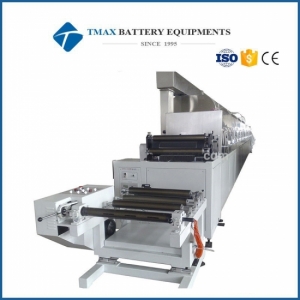
HOT PRODUCTS
-
 Automatic Cylinderical Battery Electrode Winding Machine
Read More
Automatic Cylinderical Battery Electrode Winding Machine
Read More
-
 100-200L Double Planetary Vacuum Mixing Machine for Lithium Battery Slurry
Read More
100-200L Double Planetary Vacuum Mixing Machine for Lithium Battery Slurry
Read More
-
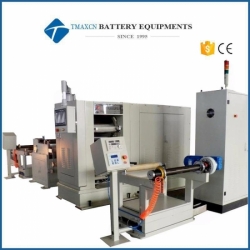 Large Heating Roller Press Machine Calender For Li ion Battery Production Line
Read More
Large Heating Roller Press Machine Calender For Li ion Battery Production Line
Read More
-
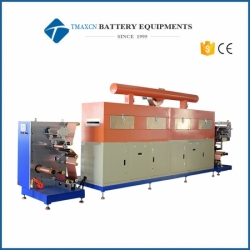 Large 3 Rollers Battery Electrode Film Intermittent Coating Machine for Pilot Production Line
Read More
Large 3 Rollers Battery Electrode Film Intermittent Coating Machine for Pilot Production Line
Read More
-
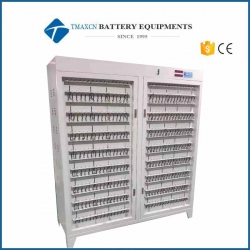 512 Channel 5V3A Battery Grading Machine/Battery Charge Discharge Machine Tester
Read More
512 Channel 5V3A Battery Grading Machine/Battery Charge Discharge Machine Tester
Read More
 David@battery-equipments.com

