 English▼



- Battery Manufacturing Equipment
- Battery Laboratory Assembly Equipment
- Battery Pack Assembly Equipment
- Sodium Ion Battery Manufacturing Equipment
- Solid State Cell Production Line
- Dry Electrode Assembly Equipment
- Supercapacitor Assembly Equipment
- Perovskite Solar Cell Lab Equipment
- Li ion Battery Materials
- Ni / Al / Cu Metal Foam
- Customized Electrode
- Cathode Active Materials
- Anode Active Materials
- Coin Cell Parts
- Lithium Chip
- Cylindrical Cell Parts
- Battery Current Collectors
- Battery Conductive Materials
- Electrolyte
- Battery Binder
- Separator and Tape
- Aluminum Laminate Film
- Nickel Strip/Foil
- Battery Tabs
- Graphene Materials
- Cu / Al / Ni / Stainless steel Foil
- Battery Laboratory Equipment
- Li ion Battery Tester
- Battery Safety Tester
- Material Characterization Tester
- Rolling Press Machine
- Electrode Mixer
- Coin Cell Crimping Machine
- Coin Cell Electrode Disc Punching
- Pouch Cell Sealing Machine
- Pouch Cell Stacking Machine
- Pouch Cell Forming Machine
- Pouch Cell Ultrasonic Welder
- Pouch Cell Electrode Die Cutter
- Cylinder Cell Sealing Machine
- Cylinder Cell Grooving Machine
- Electrode Slitting Machine
- Cylinder Cell Winding Machine
- Cylinder Cell Spot Welding Machine
- Electrolyte Filling
- Type Test Cell
- Other Battery Making Machine
- NMP Solvent Treatment System
- Vacuum Glove Box
- Coating Machine
- Lab Furnaces
- Ball Mill
- Laboratory Press
- Laboratory Equipment
- Press Equipment
blog
Battery Vibration Tester
- 2025-02-21
Battery Vibration Tester: Ensuring Reliability in Motion
A Battery Vibration Tester is a specialized device or system used to evaluate the performance, durability, and safety of batteries under simulated vibration conditions. Vibration testing is critical for ensuring that batteries can withstand real-world stresses, especially in applications where they are exposed to dynamic environments, such as automotive, aerospace, marine, and industrial settings. In this blog post, we’ll explore what battery vibration testers are, why they’re important, how they work, and their role in improving battery reliability.
---
● What Is a Battery Vibration Tester?
A battery vibration tester is a piece of equipment designed to subject batteries to controlled vibrations that mimic the mechanical stresses they might encounter during operation. These testers simulate various types of vibrations, including random, sinusoidal, and shock waves, to assess how well the battery performs and maintains its integrity under these conditions.
- Vibration Table: The platform where the battery is mounted and subjected to vibrations.
- Control System: A computerized interface that allows operators to program specific vibration profiles, frequencies, and amplitudes.
- Data Acquisition System: Sensors and software that monitor and record battery performance metrics, such as voltage, current, temperature, and internal resistance, during testing.
---
● Why Are Battery Vibration Testers Important?
1. Durability Assessment: Vibration testing helps determine whether a battery can maintain its structural integrity and functionality over time when exposed to repeated mechanical stress.
2. Safety Assurance: By identifying potential failure points, vibration testing ensures that batteries won’t leak, short-circuit, or explode under harsh conditions.
3. Performance Validation: Testing confirms that the battery continues to deliver consistent power output even after prolonged exposure to vibrations.
4. Regulatory Compliance: Many industries have strict standards (e.g., ISO, IEC, MIL-STD) requiring vibration testing for batteries used in vehicles, aircraft, and other high-stress environments.
---
● How Does a Battery Vibration Tester Work?
The process typically involves the following steps:
1. Preparation
- Batteries are securely mounted on the vibration table.
- Sensors are attached to measure key parameters like voltage, current, and temperature.
- The test environment is set up to replicate real-world conditions, including temperature and humidity if necessary.
2. Simulation of Vibration Profiles
- The tester generates specific vibration patterns based on industry standards or custom requirements.
- Sinusoidal Vibration: A smooth, repetitive oscillation at varying frequencies.
- Random Vibration: Simulates unpredictable, real-world vibrations, such as those experienced in road transport.
- Shock Testing: Evaluates the battery’s response to sudden impacts or jolts.
3. Monitoring and Data Collection
- During the test, sensors continuously monitor the battery’s performance.
- Data is collected and analyzed to detect any anomalies, such as drops in voltage, increases in internal resistance, or signs of physical damage.
4. Post-Test Analysis
- After the test, the battery is inspected for visible damage, leaks, or other defects.
- Performance data is compared against baseline measurements to evaluate the battery’s overall resilience.
---
● Applications of Battery Vibration Testers
1. Automotive Industry
- Electric Vehicles (EVs): Ensures that EV batteries can handle vibrations from rough roads and high-speed driving.
- Hybrid Vehicles: Tests the durability of batteries in hybrid systems that experience frequent charge/discharge cycles and mechanical stress.
2. Aerospace Industry
- Satellites and Aircraft: Verifies that batteries used in space missions or aviation can withstand extreme vibrations during launch and flight.
3. Marine Industry
- Ships and Submarines: Confirms that marine batteries remain reliable despite constant motion and wave impacts.
4. Industrial Equipment
- Heavy Machinery: Ensures that batteries powering construction equipment, mining vehicles, and other rugged machinery perform reliably.
5. Consumer Electronics
- Laptops, Smartphones, and Wearables: Validates that portable devices with built-in batteries can endure daily wear and tear.
---
● Benefits of Using a Battery Vibration Tester
1. Improved Product Quality: Identifies weak points early in the design phase, leading to more robust and reliable batteries.
2. Cost Savings: Reduces the risk of costly recalls or warranty claims by catching issues before mass production.
3. Enhanced Safety: Prevents catastrophic failures, such as explosions or fires, caused by mechanical stress.
4. Competitive Advantage: Demonstrates compliance with industry standards and builds consumer trust.
---
● Challenges in Battery Vibration Testing
While battery vibration testers are invaluable tools, there are challenges to consider:
1. Complex Test Scenarios: Simulating all possible real-world vibration conditions can be difficult and resource-intensive.
2. Battery Size and Weight: Larger batteries, such as those in EVs, require specialized equipment capable of handling their size and weight.
3. Environmental Factors: Incorporating additional variables like temperature and humidity into the test adds complexity but is often necessary for accurate results.
---
● The Future of Battery Vibration Testing
As battery technology continues to evolve, so too will the methods and tools used to test them. Advances in sensor technology, artificial intelligence, and machine learning are paving the way for smarter, more efficient vibration testing systems. Some trends to watch include:
1. Real-Time Monitoring: Enhanced data acquisition systems that provide instant feedback during tests.
2. Predictive Analytics: AI-driven algorithms that predict battery failure modes based on historical data.
3. Customizable Test Profiles: Software platforms that allow users to create highly tailored vibration scenarios for specific applications.
4. Integration with Other Tests: Combining vibration testing with thermal cycling, drop testing, and other evaluations to create comprehensive battery validation protocols.
---
● Conclusion
Battery vibration testers play a crucial role in ensuring the reliability, safety, and performance of batteries across a wide range of industries. By simulating real-world conditions and identifying potential failure points, these devices help manufacturers produce better, more durable products. As global demand for advanced energy storage solutions grows, the importance of battery vibration testing will only continue to rise.
A Battery Vibration Tester is a specialized device or system used to evaluate the performance, durability, and safety of batteries under simulated vibration conditions. Vibration testing is critical for ensuring that batteries can withstand real-world stresses, especially in applications where they are exposed to dynamic environments, such as automotive, aerospace, marine, and industrial settings. In this blog post, we’ll explore what battery vibration testers are, why they’re important, how they work, and their role in improving battery reliability.
---
● What Is a Battery Vibration Tester?
A battery vibration tester is a piece of equipment designed to subject batteries to controlled vibrations that mimic the mechanical stresses they might encounter during operation. These testers simulate various types of vibrations, including random, sinusoidal, and shock waves, to assess how well the battery performs and maintains its integrity under these conditions.
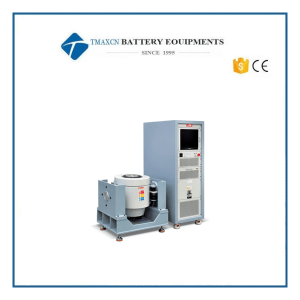
Battery Electromagnetic Vibration Tester
- Vibration Table: The platform where the battery is mounted and subjected to vibrations.
- Control System: A computerized interface that allows operators to program specific vibration profiles, frequencies, and amplitudes.
- Data Acquisition System: Sensors and software that monitor and record battery performance metrics, such as voltage, current, temperature, and internal resistance, during testing.
---
● Why Are Battery Vibration Testers Important?
1. Durability Assessment: Vibration testing helps determine whether a battery can maintain its structural integrity and functionality over time when exposed to repeated mechanical stress.
2. Safety Assurance: By identifying potential failure points, vibration testing ensures that batteries won’t leak, short-circuit, or explode under harsh conditions.
3. Performance Validation: Testing confirms that the battery continues to deliver consistent power output even after prolonged exposure to vibrations.
4. Regulatory Compliance: Many industries have strict standards (e.g., ISO, IEC, MIL-STD) requiring vibration testing for batteries used in vehicles, aircraft, and other high-stress environments.
---
● How Does a Battery Vibration Tester Work?
The process typically involves the following steps:
1. Preparation
- Batteries are securely mounted on the vibration table.
- Sensors are attached to measure key parameters like voltage, current, and temperature.
- The test environment is set up to replicate real-world conditions, including temperature and humidity if necessary.
2. Simulation of Vibration Profiles
- The tester generates specific vibration patterns based on industry standards or custom requirements.
- Sinusoidal Vibration: A smooth, repetitive oscillation at varying frequencies.
- Random Vibration: Simulates unpredictable, real-world vibrations, such as those experienced in road transport.
- Shock Testing: Evaluates the battery’s response to sudden impacts or jolts.
3. Monitoring and Data Collection
- During the test, sensors continuously monitor the battery’s performance.
- Data is collected and analyzed to detect any anomalies, such as drops in voltage, increases in internal resistance, or signs of physical damage.
4. Post-Test Analysis
- After the test, the battery is inspected for visible damage, leaks, or other defects.
- Performance data is compared against baseline measurements to evaluate the battery’s overall resilience.
---
● Applications of Battery Vibration Testers
1. Automotive Industry
- Electric Vehicles (EVs): Ensures that EV batteries can handle vibrations from rough roads and high-speed driving.
- Hybrid Vehicles: Tests the durability of batteries in hybrid systems that experience frequent charge/discharge cycles and mechanical stress.
2. Aerospace Industry
- Satellites and Aircraft: Verifies that batteries used in space missions or aviation can withstand extreme vibrations during launch and flight.
3. Marine Industry
- Ships and Submarines: Confirms that marine batteries remain reliable despite constant motion and wave impacts.
4. Industrial Equipment
- Heavy Machinery: Ensures that batteries powering construction equipment, mining vehicles, and other rugged machinery perform reliably.
5. Consumer Electronics
- Laptops, Smartphones, and Wearables: Validates that portable devices with built-in batteries can endure daily wear and tear.
---
● Benefits of Using a Battery Vibration Tester
1. Improved Product Quality: Identifies weak points early in the design phase, leading to more robust and reliable batteries.
2. Cost Savings: Reduces the risk of costly recalls or warranty claims by catching issues before mass production.
3. Enhanced Safety: Prevents catastrophic failures, such as explosions or fires, caused by mechanical stress.
4. Competitive Advantage: Demonstrates compliance with industry standards and builds consumer trust.
---
● Challenges in Battery Vibration Testing
While battery vibration testers are invaluable tools, there are challenges to consider:
1. Complex Test Scenarios: Simulating all possible real-world vibration conditions can be difficult and resource-intensive.
2. Battery Size and Weight: Larger batteries, such as those in EVs, require specialized equipment capable of handling their size and weight.
3. Environmental Factors: Incorporating additional variables like temperature and humidity into the test adds complexity but is often necessary for accurate results.
---
● The Future of Battery Vibration Testing
As battery technology continues to evolve, so too will the methods and tools used to test them. Advances in sensor technology, artificial intelligence, and machine learning are paving the way for smarter, more efficient vibration testing systems. Some trends to watch include:
1. Real-Time Monitoring: Enhanced data acquisition systems that provide instant feedback during tests.
2. Predictive Analytics: AI-driven algorithms that predict battery failure modes based on historical data.
3. Customizable Test Profiles: Software platforms that allow users to create highly tailored vibration scenarios for specific applications.
4. Integration with Other Tests: Combining vibration testing with thermal cycling, drop testing, and other evaluations to create comprehensive battery validation protocols.
---
● Conclusion
Battery vibration testers play a crucial role in ensuring the reliability, safety, and performance of batteries across a wide range of industries. By simulating real-world conditions and identifying potential failure points, these devices help manufacturers produce better, more durable products. As global demand for advanced energy storage solutions grows, the importance of battery vibration testing will only continue to rise.
What do you think about the future of battery vibration testing? Share your thoughts in the comments below! Together, let’s explore how innovation in testing technologies can shape a safer, more sustainable world.
HOT PRODUCTS
-
 Automatic Cylinderical Battery Electrode Winding Machine
Read More
Automatic Cylinderical Battery Electrode Winding Machine
Read More
-
 100-200L Double Planetary Vacuum Mixing Machine for Lithium Battery Slurry
Read More
100-200L Double Planetary Vacuum Mixing Machine for Lithium Battery Slurry
Read More
-
 Large Heating Roller Press Machine Calender For Li ion Battery Production Line
Read More
Large Heating Roller Press Machine Calender For Li ion Battery Production Line
Read More
-
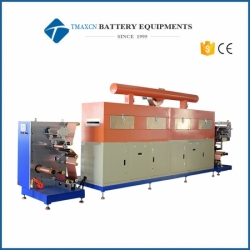 Large 3 Rollers Battery Electrode Film Intermittent Coating Machine for Pilot Production Line
Read More
Large 3 Rollers Battery Electrode Film Intermittent Coating Machine for Pilot Production Line
Read More
-
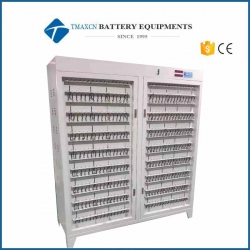 512 Channel 5V3A Battery Grading Machine/Battery Charge Discharge Machine Tester
Read More
512 Channel 5V3A Battery Grading Machine/Battery Charge Discharge Machine Tester
Read More
 David@battery-equipments.com

