 English▼



- Battery Manufacturing Equipment
- Battery Laboratory Assembly Equipment
- Battery Pack Assembly Equipment
- Sodium Ion Battery Manufacturing Equipment
- Solid State Cell Production Line
- Dry Electrode Assembly Equipment
- Supercapacitor Assembly Equipment
- Perovskite Solar Cell Lab Equipment
- Li ion Battery Materials
- Ni / Al / Cu Metal Foam
- Customized Electrode
- Cathode Active Materials
- Anode Active Materials
- Coin Cell Parts
- Lithium Chip
- Cylindrical Cell Parts
- Battery Current Collectors
- Battery Conductive Materials
- Electrolyte
- Battery Binder
- Separator and Tape
- Aluminum Laminate Film
- Nickel Strip/Foil
- Battery Tabs
- Graphene Materials
- Cu / Al / Ni / Stainless steel Foil
- Battery Laboratory Equipment
- Li ion Battery Tester
- Battery Safety Tester
- Material Characterization Tester
- Rolling Press Machine
- Electrode Mixer
- Coin Cell Crimping Machine
- Coin Cell Electrode Disc Punching
- Pouch Cell Sealing Machine
- Pouch Cell Stacking Machine
- Pouch Cell Forming Machine
- Pouch Cell Ultrasonic Welder
- Pouch Cell Electrode Die Cutter
- Cylinder Cell Sealing Machine
- Cylinder Cell Grooving Machine
- Electrode Slitting Machine
- Cylinder Cell Winding Machine
- Cylinder Cell Spot Welding Machine
- Electrolyte Filling
- Type Test Cell
- Other Battery Making Machine
- NMP Solvent Treatment System
- Vacuum Glove Box
- Coating Machine
- Lab Furnaces
- Ball Mill
- Laboratory Press
- Laboratory Equipment
- Press Equipment
- 2026-03-24
Xiamen Tmax Battery Equipments Limited was set up as a manufacturer in 1995, dealing with lithium battery equipments, technology, etc. We have total manufacturing facilities of around 200000 square foot and more than 230 staff. Owning a group of experie-nced engineers and staffs, we can bring you not only reliable products and technology, but also excellent services and real value you will expect and enjoy.
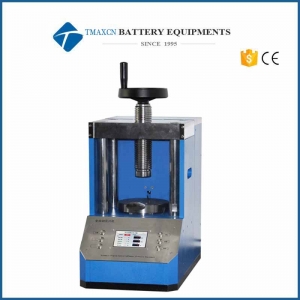
Mini Hydraulic Press: Overview, Features, Manufacturing Process, Applications, Advantages, and Conclusion
A mini hydraulic press is a compact version of the traditional hydraulic press, designed to deliver precise and controlled force in a smaller footprint. It is widely used in laboratories, small-scale manufacturing, workshops, and educational settings for tasks that require high accuracy and moderate pressing force. Mini hydraulic presses combine the advantages of hydraulic technology with portability and ease of use, making them ideal for a variety of material forming, assembly, and testing applications.
Overview
Mini hydraulic presses operate on the principle of hydraulics, where fluid pressure is used to generate a controlled compressive force. Despite their smaller size, these presses are capable of producing significant force, sufficient for metal forming, powder compaction, molding, and assembly tasks. Their compact design allows installation in limited spaces while providing high precision and repeatability. Unlike mechanical presses, mini hydraulic presses offer adjustable pressure and stroke, enhancing operational flexibility.
Key Features of Mini Hydraulic Presses
Mini hydraulic presses are distinguished by several important features:
Compact and Portable Design: Small footprint suitable for laboratories, workshops, and portable applications.
Adjustable Force and Stroke: Precise control over pressing pressure and displacement for various materials.
Uniform Pressure Distribution: Ensures consistent deformation and material forming.
User-Friendly Operation: Manual, semi-automatic, or fully automated controls for ease of use.
Durable Construction: High-strength frames and hydraulic components for reliable performance.
Safety Features: Equipped with pressure relief valves and protective guards to prevent overloading and accidents.
Manufacturing Process
The operation and manufacturing process of a mini hydraulic press typically involve several steps:
Material Preparation: The workpiece or material is prepared and positioned between the pressing plates.
Force Application: Hydraulic fluid is pumped into the cylinder, moving the piston and applying compressive force on the material.
Pressing Process: The material is compressed, shaped, or formed according to the required specifications.
Release and Removal: After reaching the desired compression or shaping, the hydraulic pressure is released, and the finished piece is removed.
Inspection: The pressed component is checked for uniformity, dimensions, and structural integrity.
Advanced mini hydraulic presses may include programmable pressure settings, digital displays, and automated cycles for enhanced precision and repeatability.
Mini hydraulic presses are used across a wide range of industries and applications:
Material Forming: Bending, punching, embossing, and shaping metals, plastics, and composites.
Powder Compaction: Manufacturing small metal or ceramic components from powder materials.
Laboratory Testing: Conducting compressive strength tests and material characterization.
Assembly Operations: Press-fitting bearings, bushings, and small mechanical components.
Prototyping and R&D: Developing new components and testing materials at a small scale.
Jewelry and Crafting: Precision pressing for shaping and assembling delicate parts.
Advantages
The main advantages of mini hydraulic presses include:
High Precision and Control: Adjustable pressure and stroke ensure accurate and consistent results.
Space-Efficient: Compact size allows use in limited areas without sacrificing functionality.
Versatility: Suitable for a variety of materials and tasks, from metal forming to assembly.
Durable and Reliable: Robust construction ensures long-term performance and minimal maintenance.
Ease of Use: Simple operation reduces operator training and enhances safety.
Cost-Effective: Lower power and maintenance requirements compared to full-size hydraulic presses.
Conclusion
In conclusion, the mini hydraulic press is a versatile, compact, and reliable tool for laboratories, workshops, and small-scale production environments. Its ability to deliver precise compressive force, adjustable pressure, and consistent performance makes it suitable for material forming, assembly, powder compaction, and laboratory testing. With a combination of portability, durability, and ease of use, mini hydraulic presses provide an efficient and cost-effective solution for high-precision pressing tasks. As industries and research sectors continue to demand versatile and space-saving equipment, mini hydraulic presses remain an indispensable tool for modern manufacturing, prototyping, and material processing applications.
-
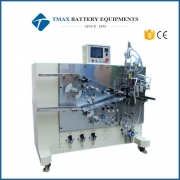 Automatic Cylinderical Battery Electrode Winding Machine
Read More
Automatic Cylinderical Battery Electrode Winding Machine
Read More
-
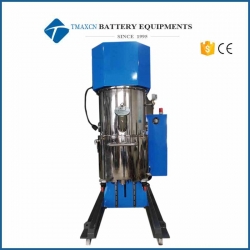 100-200L Double Planetary Vacuum Mixing Machine for Lithium Battery Slurry
Read More
100-200L Double Planetary Vacuum Mixing Machine for Lithium Battery Slurry
Read More
-
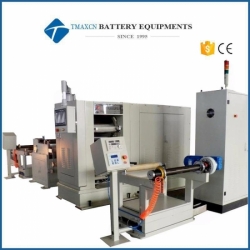 Large Heating Roller Press Machine Calender For Li ion Battery Production Line
Read More
Large Heating Roller Press Machine Calender For Li ion Battery Production Line
Read More
-
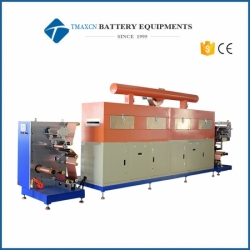 Large 3 Rollers Battery Electrode Film Intermittent Coating Machine for Pilot Production Line
Read More
Large 3 Rollers Battery Electrode Film Intermittent Coating Machine for Pilot Production Line
Read More
-
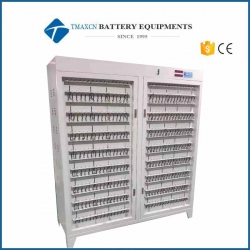 512 Channel 5V3A Battery Grading Machine/Battery Charge Discharge Machine Tester
Read More
512 Channel 5V3A Battery Grading Machine/Battery Charge Discharge Machine Tester
Read More
 David@battery-equipments.com

