 English▼



- Battery Manufacturing Equipment
- Battery Laboratory Assembly Equipment
- Battery Pack Assembly Equipment
- Sodium Ion Battery Manufacturing Equipment
- Solid State Cell Production Line
- Dry Electrode Assembly Equipment
- Supercapacitor Assembly Equipment
- Perovskite Solar Cell Lab Equipment
- Li ion Battery Materials
- Ni / Al / Cu Metal Foam
- Customized Electrode
- Cathode Active Materials
- Anode Active Materials
- Coin Cell Parts
- Lithium Chip
- Cylindrical Cell Parts
- Battery Current Collectors
- Battery Conductive Materials
- Electrolyte
- Battery Binder
- Separator and Tape
- Aluminum Laminate Film
- Nickel Strip/Foil
- Battery Tabs
- Graphene Materials
- Cu / Al / Ni / Stainless steel Foil
- Battery Laboratory Equipment
- Li ion Battery Tester
- Battery Safety Tester
- Material Characterization Tester
- Rolling Press Machine
- Electrode Mixer
- Coin Cell Crimping Machine
- Coin Cell Electrode Disc Punching
- Pouch Cell Sealing Machine
- Pouch Cell Stacking Machine
- Pouch Cell Forming Machine
- Pouch Cell Ultrasonic Welder
- Pouch Cell Electrode Die Cutter
- Cylinder Cell Sealing Machine
- Cylinder Cell Grooving Machine
- Electrode Slitting Machine
- Cylinder Cell Winding Machine
- Cylinder Cell Spot Welding Machine
- Electrolyte Filling
- Type Test Cell
- Other Battery Making Machine
- NMP Solvent Treatment System
- Vacuum Glove Box
- Coating Machine
- Lab Furnaces
- Ball Mill
- Laboratory Press
- Laboratory Equipment
- Press Equipment
blog
Roller Press
Overview
A roller press is a high-precision mechanical device used for compressing, densifying, or granulating materials through the application of high pressure between rotating rollers. It is widely utilized in industries such as cement production, mineral processing, powder metallurgy, chemical manufacturing, and fertilizer production. The equipment offers an energy-efficient alternative to traditional ball mills and other grinding or compaction methods by combining compression, shear, and friction forces to achieve material densification or size reduction.
Modern roller presses are designed for continuous operation and precise control, enabling uniform compaction of materials with high throughput. The technology has gained popularity due to its ability to produce consistent product quality while reducing energy consumption and operational costs. In experimental and industrial settings, roller presses are often used to prepare powders for further processing or to improve bulk density and handling properties.
Features
Roller presses integrate several key features that optimize performance, efficiency, and safety:
1. High-Pressure Rollers
The primary feature is a pair of counter-rotating rollers, which apply extremely high pressure to the feed material. Roll surfaces may be smooth, grooved, or toothed to achieve specific material properties or compaction patterns.
2. Adjustable Pressure and Gap Control
Modern systems allow precise adjustment of roller pressure and the gap between rollers, enabling control over final product density, granule size, and compaction characteristics.
3. Variable Speed Drives
Rollers are driven by high-torque motors with adjustable speeds, allowing adaptation to material properties and production requirements.
4. Feeding System
Roller presses are equipped with uniform feeding systems, such as screw feeders or vibrating hoppers, to ensure consistent material flow and optimal compression.
5. Material-Specific Roll Designs
Roll surfaces can be customized (smooth, corrugated, or chevron patterns) to suit specific materials, from powders and minerals to chemical compounds and refractory materials.
6. Robust Construction and Safety Features
Frames, housings, and bearings are designed to withstand high pressure and heavy loads. Safety interlocks and overload protection protect the equipment and operators.
Process
The operation of a roller press involves controlled material feeding, compression, and discharge:
1. Material Feeding
The feed material, often a powder or granular mixture, is delivered to the gap between the rotating rollers through a hopper and feeder system, ensuring uniform distribution.
2. Compression and Densification
As the material passes through the rollers, extreme pressure is applied, compacting the particles, reducing porosity, and, in some cases, inducing partial granulation or micro-cracking for easier downstream processing.
3. Product Discharge
Compressed or densified material is discharged from the bottom of the rollers, often as flakes, sheets, or granules depending on the application.
4. Optional Secondary Processing
The compressed product may undergo additional processes, such as milling, screening, or coating, to achieve desired size, shape, or surface properties.
Roller presses are used in a wide range of industrial and experimental applications:
* Cement and Minerals
Pre-grinding and compaction of raw materials or clinker to increase grinding efficiency and reduce energy consumption.
* Powder Metallurgy
Compaction of metal powders into billets, sheets, or preforms for sintering and component manufacturing.
* Fertilizer Production
Granulation and densification of phosphate, urea, and mixed fertilizers for uniform particle size and improved handling.
* Chemical Industry
Compression of chemicals, catalysts, and refractory powders to improve bulk density and process stability.
* Experimental Material Research
Preparation of powders and granular materials for laboratory testing, prototyping, and small-scale production studies.
Advantages
Roller presses provide several benefits that make them an attractive solution for material compaction and processing:
1. High Efficiency and Low Energy Consumption
Compared to ball mills and traditional grinders, roller presses achieve the same level of densification with lower energy input.
2. Uniform Product Quality
Adjustable roller pressure, gap, and roll pattern allow consistent density, granulation, and particle size distribution.
3. Versatility
Suitable for a wide range of materials, including powders, minerals, chemicals, and metal composites.
4. Reduced Wear and Maintenance
Modern designs use wear-resistant roll surfaces and robust components, minimizing downtime and operational costs.
5. Space Efficiency
Compact design allows installation in limited floor space compared to traditional grinding and compaction systems.
6. Environmental Benefits
Lower energy consumption and reduced dust emissions improve sustainability and workplace safety.
Conclusion
The roller press is a versatile, high-performance mechanical device for material compression, densification, and granulation. By applying high pressure between rotating rollers, it achieves uniform product quality, high throughput, and energy-efficient operation.
With applications spanning cement and mineral processing, powder metallurgy, chemical manufacturing, fertilizer production, and experimental materials research, roller presses enable efficient and reliable processing of a wide range of materials. Their compact design, adjustable pressure control, and customizable roll surfaces make them an essential piece of equipment for both industrial production and laboratory-scale experimental studies, supporting innovation in materials processing, energy efficiency, and high-performance product manufacturing.
- 2026-04-07
Xiamen Tmax Battery Equipments Limited was set up as a manufacturer in 1995, dealing with lithium battery equipments, technology, etc. We have total manufacturing facilities of around 200000 square foot and more than 230 staff. Owning a group of experie-nced engineers and staffs, we can bring you not only reliable products and technology, but also excellent services and real value you will expect and enjoy.
Roller Press: Advanced Mechanical Equipment for Material Compression and Processing
Overview
A roller press is a high-precision mechanical device used for compressing, densifying, or granulating materials through the application of high pressure between rotating rollers. It is widely utilized in industries such as cement production, mineral processing, powder metallurgy, chemical manufacturing, and fertilizer production. The equipment offers an energy-efficient alternative to traditional ball mills and other grinding or compaction methods by combining compression, shear, and friction forces to achieve material densification or size reduction.
Modern roller presses are designed for continuous operation and precise control, enabling uniform compaction of materials with high throughput. The technology has gained popularity due to its ability to produce consistent product quality while reducing energy consumption and operational costs. In experimental and industrial settings, roller presses are often used to prepare powders for further processing or to improve bulk density and handling properties.
Features
Roller presses integrate several key features that optimize performance, efficiency, and safety:
1. High-Pressure Rollers
The primary feature is a pair of counter-rotating rollers, which apply extremely high pressure to the feed material. Roll surfaces may be smooth, grooved, or toothed to achieve specific material properties or compaction patterns.
2. Adjustable Pressure and Gap Control
Modern systems allow precise adjustment of roller pressure and the gap between rollers, enabling control over final product density, granule size, and compaction characteristics.
3. Variable Speed Drives
Rollers are driven by high-torque motors with adjustable speeds, allowing adaptation to material properties and production requirements.
4. Feeding System
Roller presses are equipped with uniform feeding systems, such as screw feeders or vibrating hoppers, to ensure consistent material flow and optimal compression.
5. Material-Specific Roll Designs
Roll surfaces can be customized (smooth, corrugated, or chevron patterns) to suit specific materials, from powders and minerals to chemical compounds and refractory materials.
6. Robust Construction and Safety Features
Frames, housings, and bearings are designed to withstand high pressure and heavy loads. Safety interlocks and overload protection protect the equipment and operators.
Process
The operation of a roller press involves controlled material feeding, compression, and discharge:
1. Material Feeding
The feed material, often a powder or granular mixture, is delivered to the gap between the rotating rollers through a hopper and feeder system, ensuring uniform distribution.
2. Compression and Densification
As the material passes through the rollers, extreme pressure is applied, compacting the particles, reducing porosity, and, in some cases, inducing partial granulation or micro-cracking for easier downstream processing.
3. Product Discharge
Compressed or densified material is discharged from the bottom of the rollers, often as flakes, sheets, or granules depending on the application.
4. Optional Secondary Processing
The compressed product may undergo additional processes, such as milling, screening, or coating, to achieve desired size, shape, or surface properties.
Roller presses are used in a wide range of industrial and experimental applications:
* Cement and Minerals
Pre-grinding and compaction of raw materials or clinker to increase grinding efficiency and reduce energy consumption.
* Powder Metallurgy
Compaction of metal powders into billets, sheets, or preforms for sintering and component manufacturing.
* Fertilizer Production
Granulation and densification of phosphate, urea, and mixed fertilizers for uniform particle size and improved handling.
* Chemical Industry
Compression of chemicals, catalysts, and refractory powders to improve bulk density and process stability.
* Experimental Material Research
Preparation of powders and granular materials for laboratory testing, prototyping, and small-scale production studies.
Advantages
Roller presses provide several benefits that make them an attractive solution for material compaction and processing:
1. High Efficiency and Low Energy Consumption
Compared to ball mills and traditional grinders, roller presses achieve the same level of densification with lower energy input.
2. Uniform Product Quality
Adjustable roller pressure, gap, and roll pattern allow consistent density, granulation, and particle size distribution.
3. Versatility
Suitable for a wide range of materials, including powders, minerals, chemicals, and metal composites.
4. Reduced Wear and Maintenance
Modern designs use wear-resistant roll surfaces and robust components, minimizing downtime and operational costs.
5. Space Efficiency
Compact design allows installation in limited floor space compared to traditional grinding and compaction systems.
6. Environmental Benefits
Lower energy consumption and reduced dust emissions improve sustainability and workplace safety.
Conclusion
The roller press is a versatile, high-performance mechanical device for material compression, densification, and granulation. By applying high pressure between rotating rollers, it achieves uniform product quality, high throughput, and energy-efficient operation.
With applications spanning cement and mineral processing, powder metallurgy, chemical manufacturing, fertilizer production, and experimental materials research, roller presses enable efficient and reliable processing of a wide range of materials. Their compact design, adjustable pressure control, and customizable roll surfaces make them an essential piece of equipment for both industrial production and laboratory-scale experimental studies, supporting innovation in materials processing, energy efficiency, and high-performance product manufacturing.
HOT PRODUCTS
-
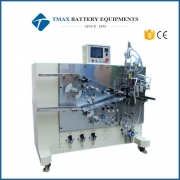 Automatic Cylinderical Battery Electrode Winding Machine
Read More
Automatic Cylinderical Battery Electrode Winding Machine
Read More
-
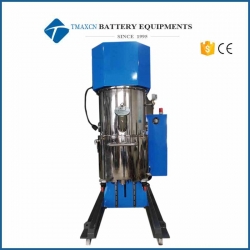 100-200L Double Planetary Vacuum Mixing Machine for Lithium Battery Slurry
Read More
100-200L Double Planetary Vacuum Mixing Machine for Lithium Battery Slurry
Read More
-
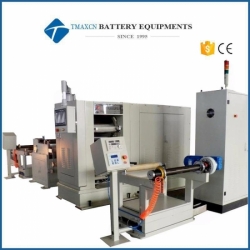 Large Heating Roller Press Machine Calender For Li ion Battery Production Line
Read More
Large Heating Roller Press Machine Calender For Li ion Battery Production Line
Read More
-
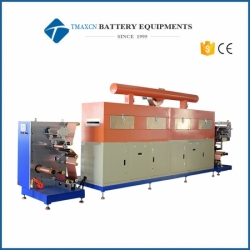 Large 3 Rollers Battery Electrode Film Intermittent Coating Machine for Pilot Production Line
Read More
Large 3 Rollers Battery Electrode Film Intermittent Coating Machine for Pilot Production Line
Read More
-
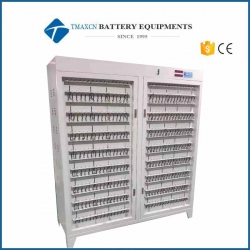 512 Channel 5V3A Battery Grading Machine/Battery Charge Discharge Machine Tester
Read More
512 Channel 5V3A Battery Grading Machine/Battery Charge Discharge Machine Tester
Read More
 David@battery-equipments.com

